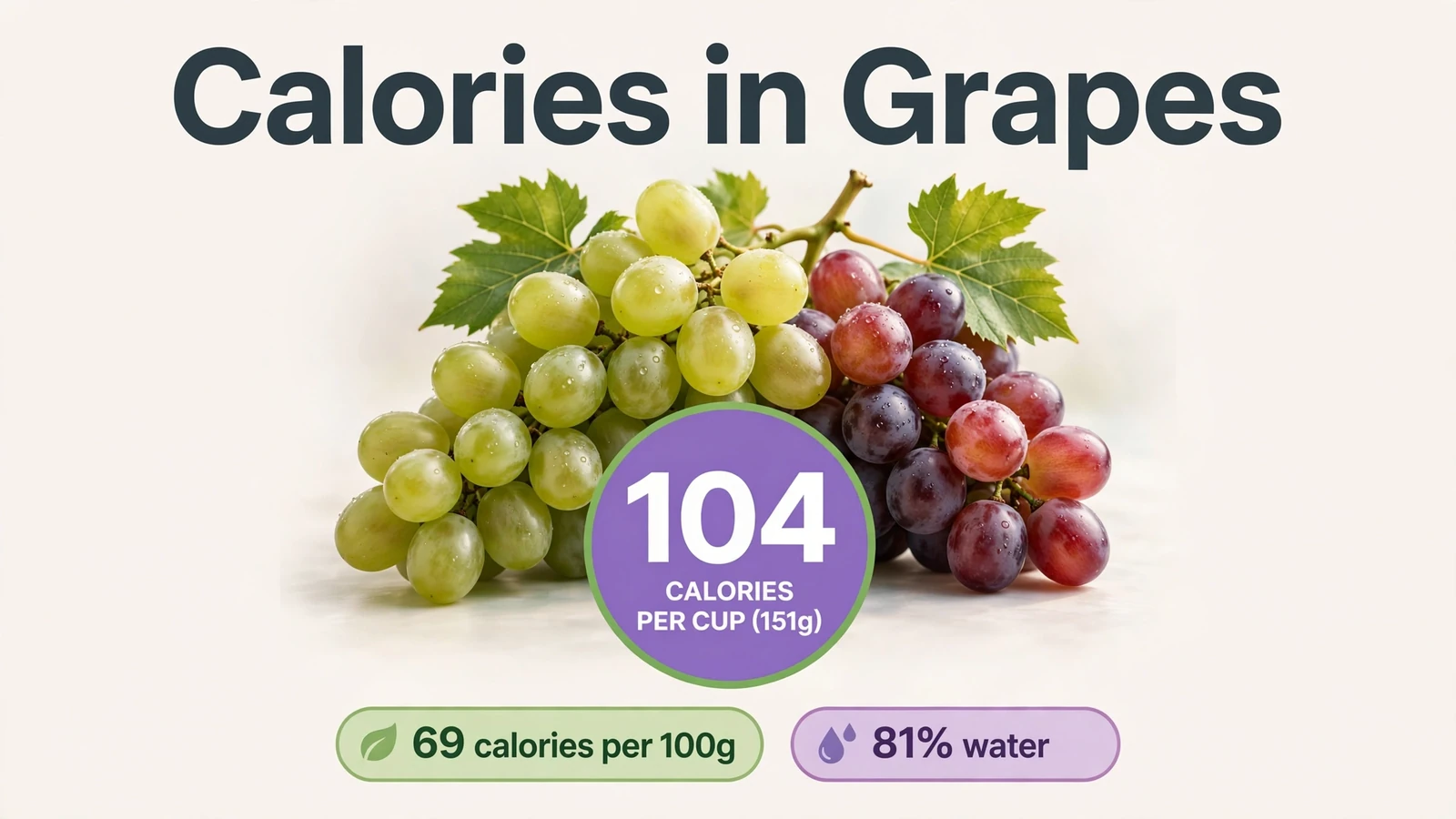
One cup of grapes, about 151 grams, has 104 calories according to USDA FoodData Central. That makes grapes one of the lighter snacking fruits, sweet enough to satisfy a craving but light enough to fit comfortably into almost any daily calorie target.
If you track what you eat, grapes are refreshingly easy to count. A single grape carries roughly 3 calories, so even a generous handful barely moves the needle. Because they are mostly water and naturally portioned into bite-size pieces, overeating them takes real effort.
In this guide you will find the calories in grapes by serving size, whether red and green grapes differ, how grapes compare with other popular fruits, and the nutrition packed into those 104 calories. And if you are planning a full day of eating, our calorie calculator can show you exactly where a bowl of grapes fits into your personal target.
How Many Calories Are in Grapes?
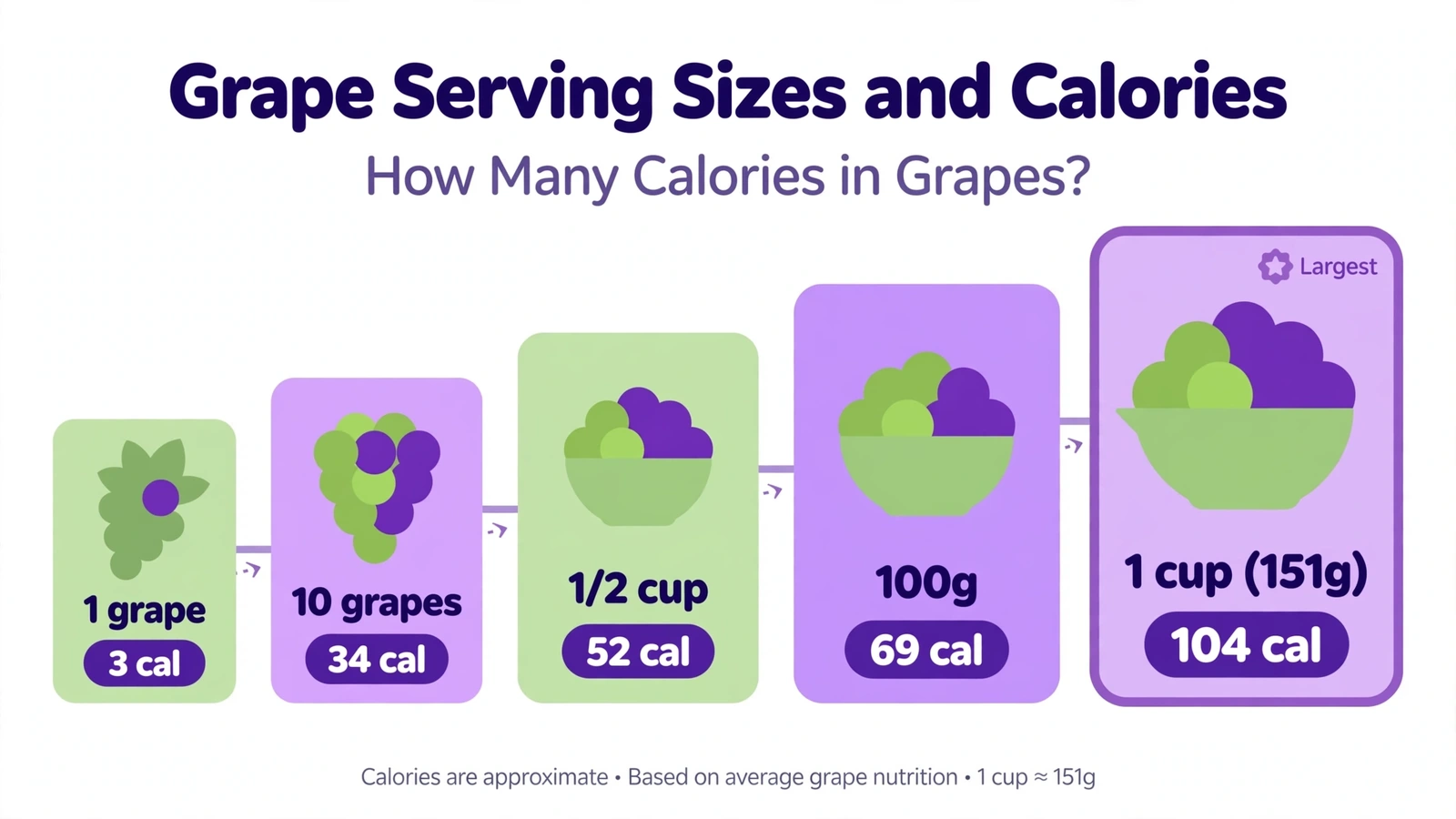
Wondering about the calories in grapes? A full cup, which weighs 151 grams, contains 104 calories, and every smaller serving scales down from that number in a straight line, which makes the math unusually friendly.
| Serving size | Approximate weight | Calories |
|---|---|---|
| 1 grape | 5 g | 3 |
| 10 grapes | 50 g | 34 |
| 1/2 cup | 75 g | 52 |
| 100 g (about 21 grapes) | 100 g | 69 |
| 1 cup | 151 g | 104 |
The per-grape figure is the most useful one in real life. Few people weigh their fruit, but almost everyone can count to ten. Ten grapes at 34 calories work as a light bridge between meals, while a full cup at 104 calories counts as one standard fruit serving and makes a genuinely satisfying snack.
One practical note: cups measure volume, and grape sizes vary. Large globe grapes can weigh almost twice as much as small seedless ones, so if you want precision, use a kitchen scale with the 69-calories-per-100-grams figure.
Freezing grapes changes nothing about the calories in grapes, by the way. A frozen grape has the same 3 calories as a fresh one. Many people find frozen grapes even better for snacking because the icy texture forces you to eat slowly, which gives fullness signals time to register.
Do Red and Green Grapes Have the Same Calories?
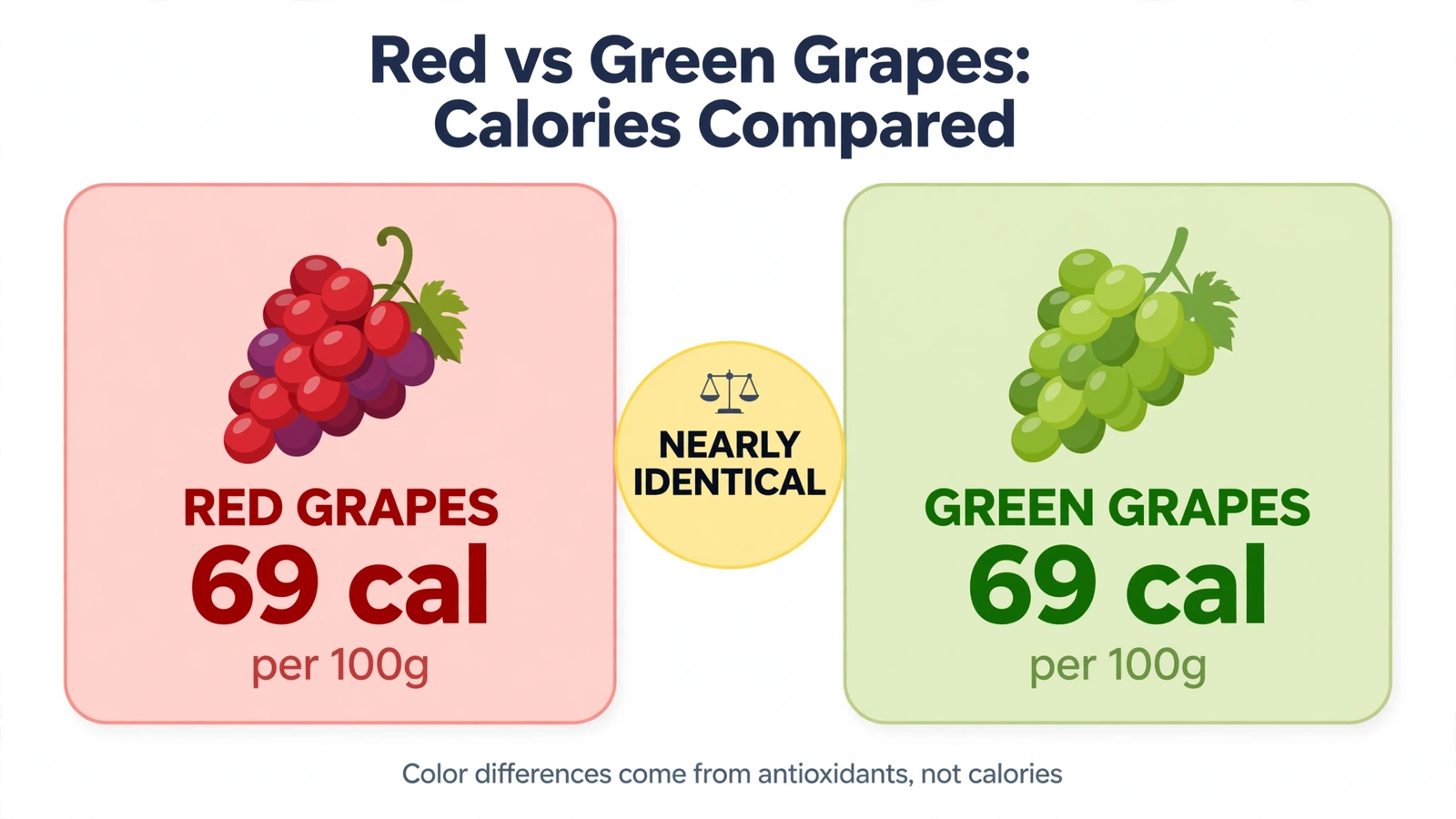
Yes. Red and green grapes have nearly identical calorie counts, about 69 calories per 100 grams for both varieties. The color difference changes the antioxidant profile, not the energy content.
The red and purple color comes from anthocyanins, a family of plant pigments that act as antioxidants. Green grapes simply do not produce these pigments, which is why they stay pale. Either way, the sugar and water balance that determines calories stays essentially the same across the common table varieties, including red globe, crimson seedless, and green Thompson seedless.
If you want to pick between them on nutrition rather than taste, the darker varieties have a small edge. Resveratrol, the much-discussed antioxidant in grape skins, is concentrated in red and black grapes, and their total polyphenol content runs higher. But the difference is modest at snacking quantities, and the best grape for your diet is the one you reach for instead of a less healthy snack.
How Do Grapes Compare to Other Fruits?
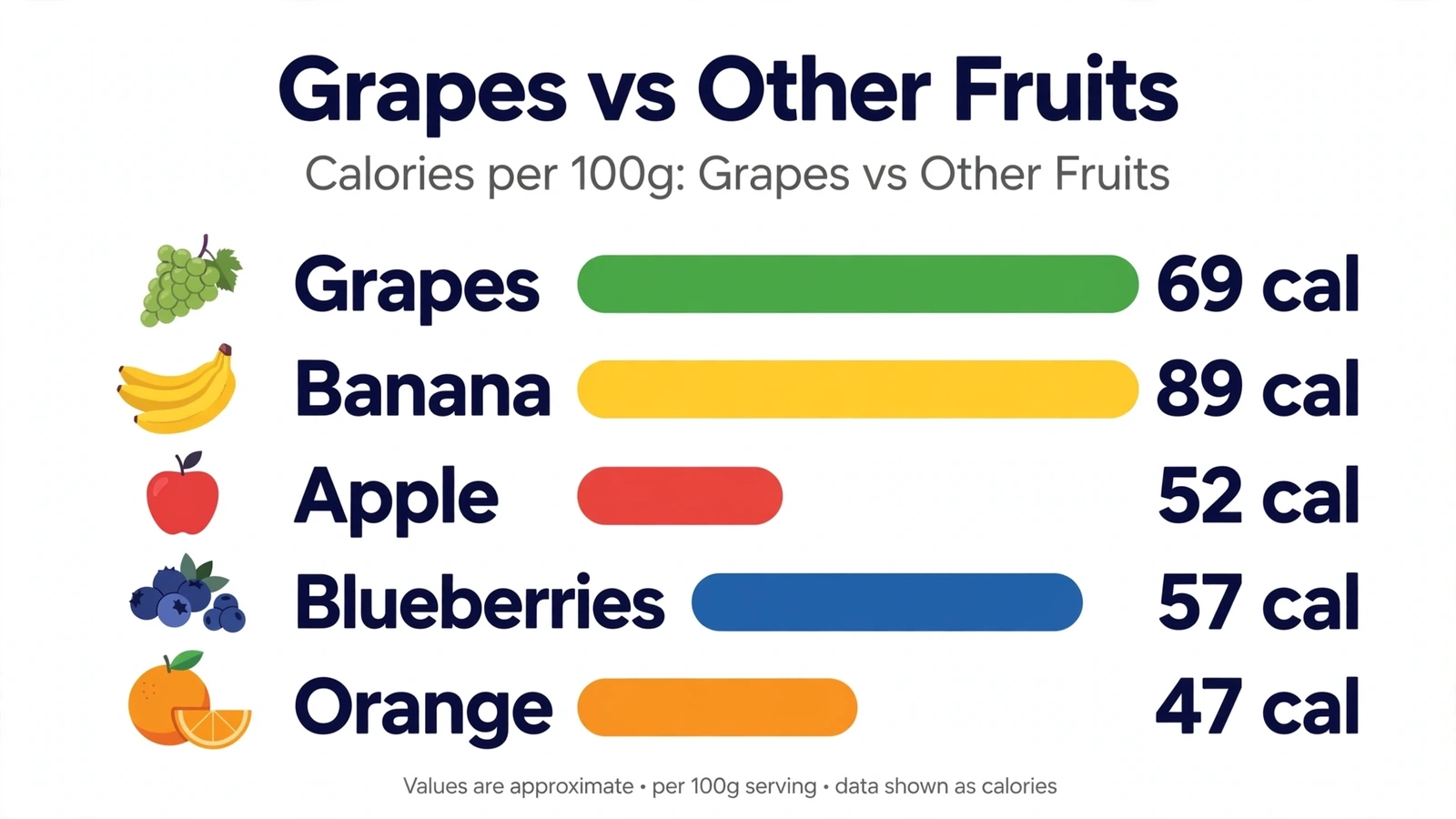
Grapes sit comfortably in the middle of the fruit world. At 69 calories per 100 grams, the calories in grapes run lighter than a banana but heavier than strawberries, making them a solid middle-ground choice for everyday snacking.
| Fruit (per 100 g) | Calories |
|---|---|
| Banana | 89 |
| Grapes | 69 |
| Blueberries | 57 |
| Apple | 52 |
| Orange | 47 |
| Strawberries | 32 |
What the table does not show is how the eating experience differs. Grapes have a far lower calorie density than dried fruit: raisins pack roughly 300 calories per 100 grams because the water is gone. Fresh, water-rich fruits let you eat a satisfying volume for few calories, while dried versions concentrate the energy.
Compared with an apple at 52 calories per 100 grams, grapes run a little higher because they contain more natural sugar and slightly less fiber per bite. Compared with a banana at 89, they are clearly the lighter pick. For someone managing weight, swapping a banana for a cup of grapes at snack time saves about 50 calories without giving up sweetness, and those small swaps compound over weeks. You can check what that kind of change means for your own numbers with our BMI calculator and a realistic daily target.
One more comparison that matters: whole grapes versus grape juice. A cup of grape juice carries around 154 calories and almost none of the fiber, which means the calories arrive faster and satisfy less. If the calories in grapes appeal to you, eat the fruit, not the juice.
What Nutrition Do You Get for Those Calories?
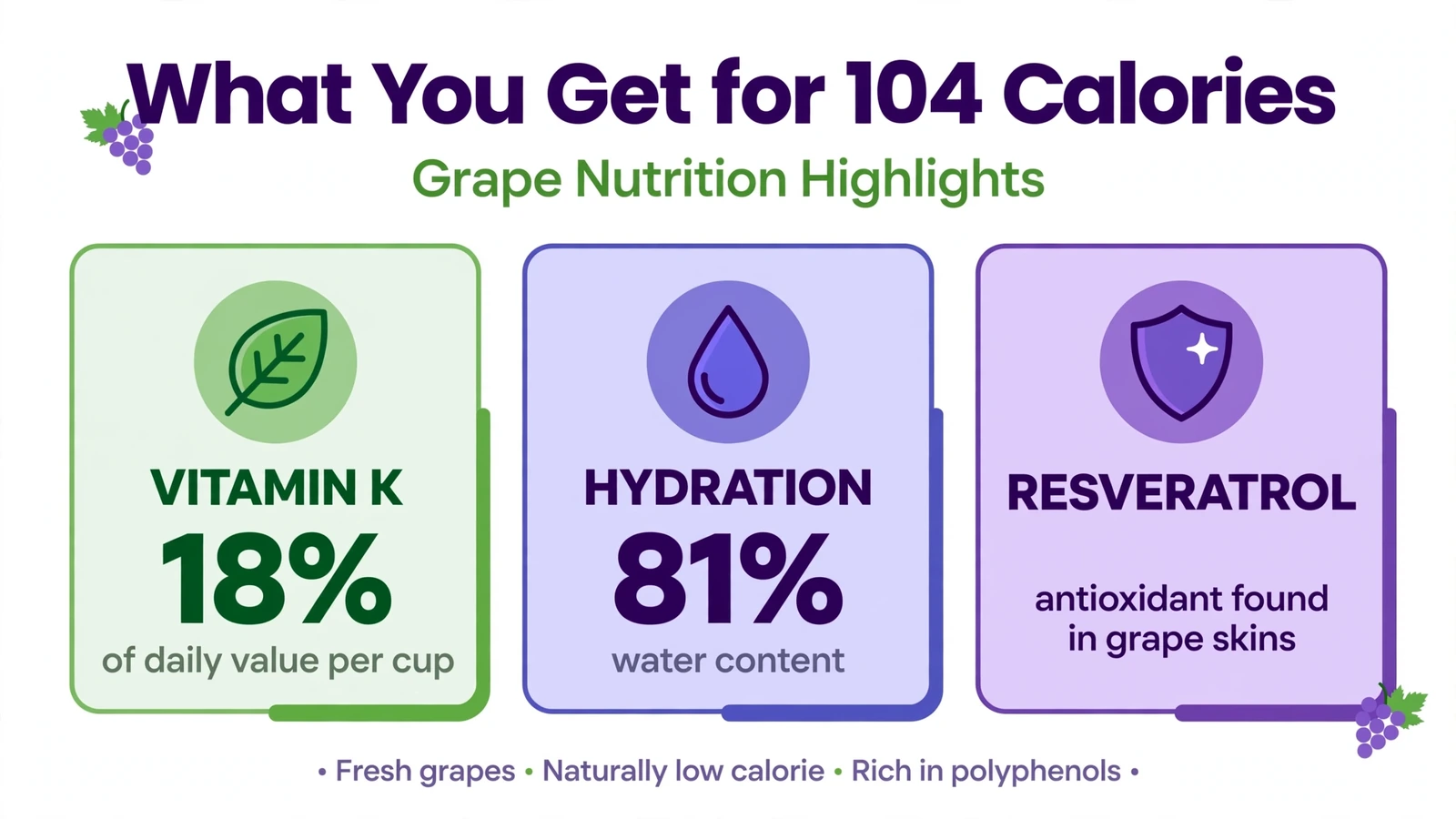
For 104 calories, a cup of grapes delivers a genuinely useful package: about 18 percent of your daily vitamin K, a meaningful amount of vitamin C, 81 percent water by weight for hydration, and resveratrol plus other polyphenols concentrated in the skins.
Vitamin K deserves the headline because few fruits provide this much of it. It plays a central role in blood clotting and bone health, and most people get far less than they think. A cup of grapes quietly covers nearly a fifth of the daily need, which is impressive for a food most people eat purely for pleasure.
The vitamin C content is smaller, roughly 5 percent of daily value per cup, but it still contributes to the total. Then there is the hydration angle. At 81 percent water, grapes are among the more hydrating fruits you can eat, which partly explains why a cup feels more filling than its 104 calories would suggest.
The skins are where the interesting plant compounds live. Resveratrol gets the most attention, and while the amounts in table grapes are modest, the broader family of polyphenols in grape skins is consistently linked with healthy eating patterns. Eating the skins, rather than peeling grapes or drinking strained juice, is what keeps those compounds on your plate. That is the real nutritional story behind the calories in grapes: an everyday fruit whose energy comes with water, vitamins, and fiber attached, which is exactly what a good snack should be.
Frequently Asked Questions
How many calories are in 20 grapes?
About 65 to 70 calories. Twenty average grapes weigh close to 100 grams, and grapes contain 69 calories per 100 grams, so 20 grapes land right around that figure. Larger varieties will run a little higher and smaller ones a little lower.
Are grapes good for weight loss?
They can be. The calories in grapes are low relative to their volume because the fruit is 81 percent water, and the natural portioning of individual grapes makes mindless overeating difficult. Like any sweet food, they still contain sugar, so the cup measure matters more than the fact that they are fruit.
Do seedless grapes have the same calories as seeded grapes?
Essentially, yes. Seeds add a tiny amount of fiber and fat, but the difference is under a calorie per grape and disappears in any practical counting. Use 3 calories per grape or 69 per 100 grams for both types without worry.
Do frozen grapes have more calories than fresh grapes?
No. Freezing only removes heat, not water or sugar, so a frozen grape has the same 3 calories as a fresh one. Frozen grapes can even support lighter snacking because their firm texture slows down eating.
How many calories are in grape juice compared with whole grapes?
A cup of grape juice has about 154 calories versus 104 for a cup of whole grapes, and the juice loses nearly all the fiber. Whole grapes are the better choice whenever the goal is getting full on fewer calories.
How many grapes should I eat per day?
One cup, roughly 21 grapes, counts as a standard fruit serving and fits easily into the commonly recommended two cups of fruit per day. There is no strict upper limit, but keeping servings near a cup keeps the natural sugar in a reasonable range.
Conclusion
The calories in grapes are refreshingly modest: 104 per cup, 69 per 100 grams, and about 3 per grape. Red and green varieties are interchangeable on calories, grapes compare favorably with most other snacking fruits, and those calories arrive with vitamin K, vitamin C, hydration, and skin-based antioxidants included.
If you want to verify any of these numbers yourself, the USDA FoodData Central database is the authoritative source for food nutrition data in the United States, and Nutrition.gov offers practical, dietitian-reviewed guidance on building fruit servings into a balanced diet. Between the two, you can confirm every figure in this article and plan the rest of your plate with confidence.