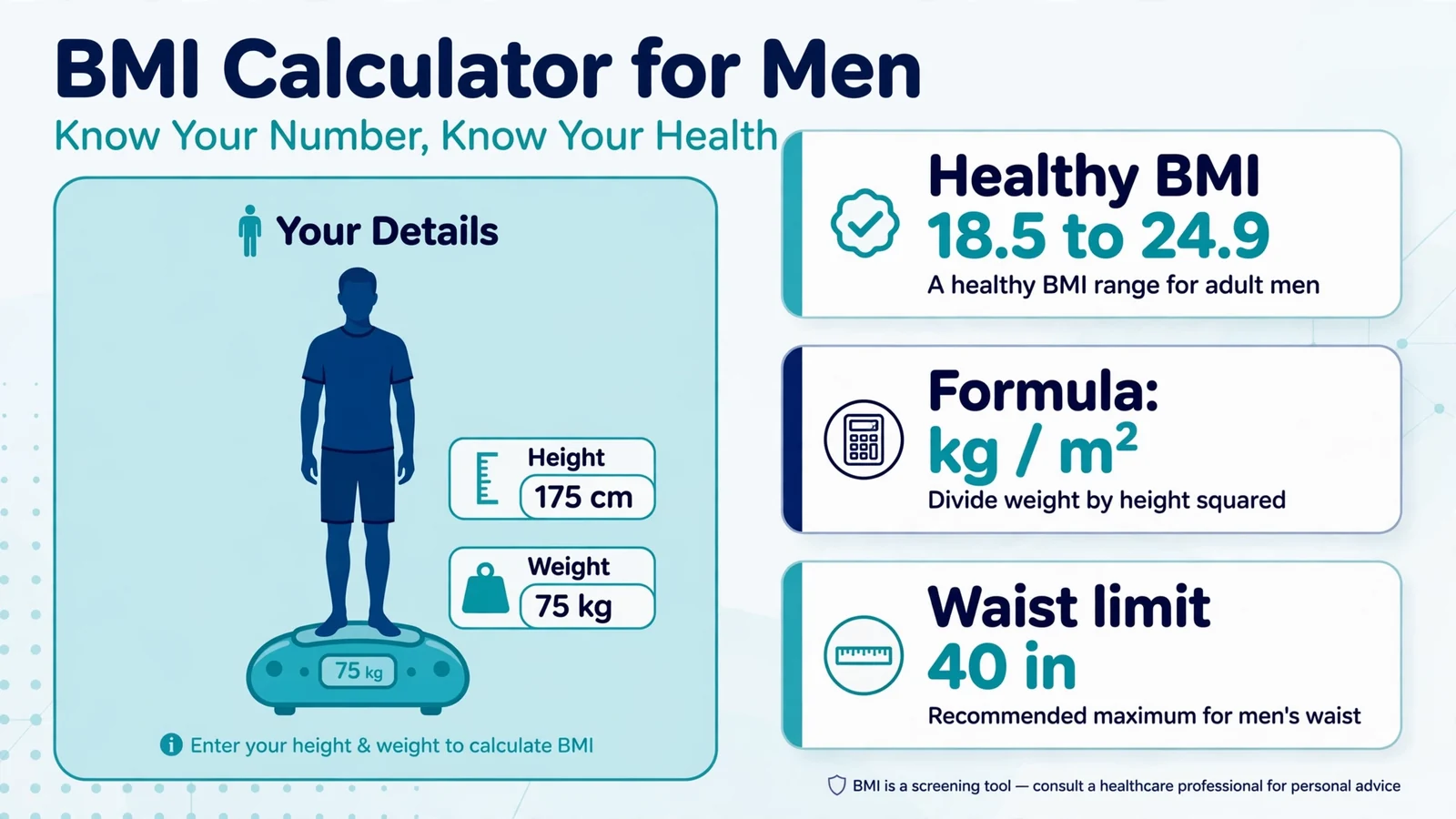
A BMI calculator for men gives you a fast, reliable estimate of your body composition from just your height and weight. Within seconds it shows whether you fall into the underweight, healthy weight, overweight, or obese category, which makes it one of the simplest screening tools you can use at home.
Body mass index has been used by doctors and fitness professionals for decades because it distills a complicated question into a single number. That number does not tell the whole story of your health, but it is an excellent starting point. Once you know your score, you can decide whether to maintain your current habits, adjust your diet and training, or talk to a healthcare professional about a plan that fits your body. Learn more here.
Men benefit from reading BMI a little differently than women do. Higher average muscle mass, a larger frame, and a tendency to store fat around the waist all influence what the number means. This guide explains how a BMI calculator for men works, what your result really says about your health, and which measurements to use alongside it for the full picture.
What Is a BMI Calculator for Men?
A BMI calculator for men is a simple tool that applies the body mass index formula to your measurements and interprets the result using the standard adult categories. It works the same way as any adult BMI calculator, but it is framed around the health concerns and body composition patterns that matter most to men, such as muscle mass, waist size, and visceral fat around the organs.
How the BMI Formula Works
The math behind it is straightforward:
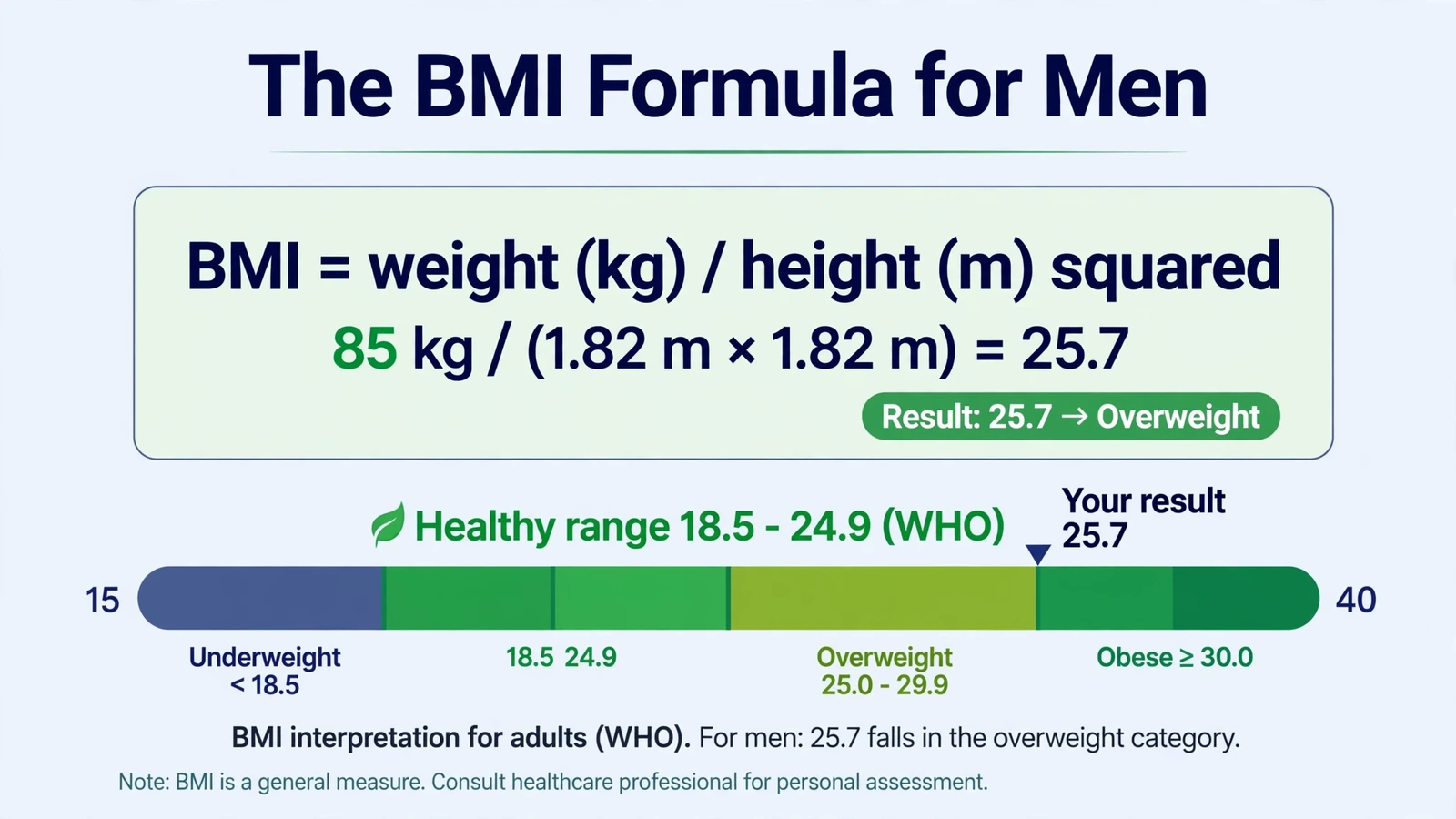
BMI = weight in kilograms divided by height in meters squared
If you use pounds and inches, the formula looks like this:
BMI = (weight in pounds divided by height in inches squared) multiplied by 703
You do not need to do this calculation by hand. Enter your numbers and the calculator handles the conversions for you. The value it returns lands on a scale used by the World Health Organization worldwide:
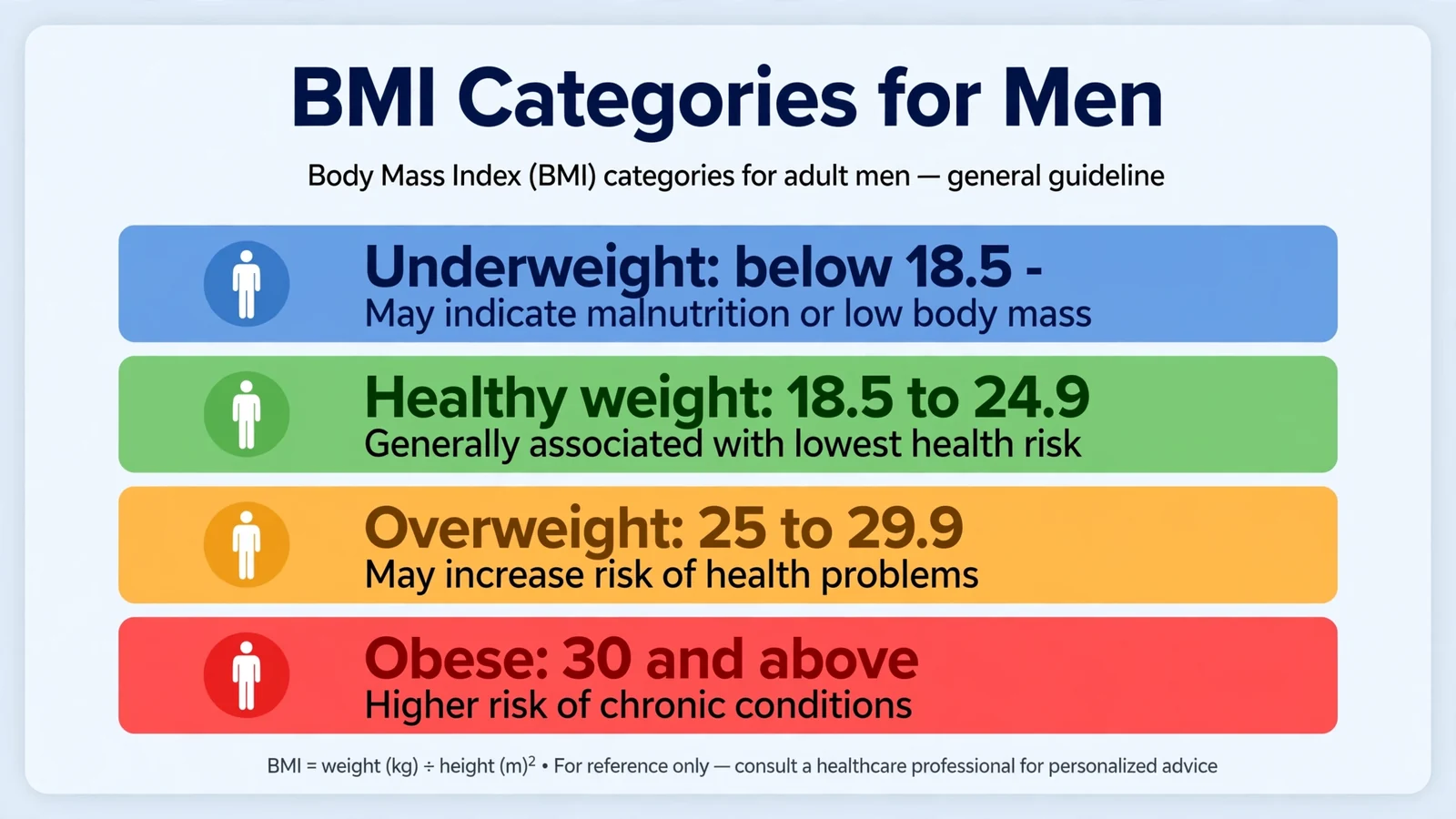
- Below 18.5: underweight
- 18.5 to 24.9: healthy weight
- 25 to 29.9: overweight
- 30 and above: obese
Why Do Men Need Their Own BMI Reference?
Men and women store body fat differently, and that difference matters for health risk. Men tend to accumulate more fat around the abdomen as visceral fat, the deep fat that wraps around the liver, intestines, and other organs. Visceral fat is closely linked to heart disease, type 2 diabetes, and metabolic syndrome, so a growing waistline is often a more urgent warning sign for men than the number on the scale alone.
Muscle mass is the other major factor. The average man carries significantly more lean muscle than the average woman, partly driven by higher testosterone levels. Because muscle is denser than fat, a man who trains regularly can weigh much more than a sedentary man of the same height without carrying excess fat. This is exactly why a BMI calculator for men should be read with context: the number is a starting point, not a final verdict.
How Male Body Composition Changes the Reading
Three patterns set men apart on the BMI scale. First, greater bone density and a larger frame add weight that has nothing to do with fat. Second, muscle built through training can push BMI into the overweight zone even when body fat is low. Third, age-related muscle loss means BMI can look healthy in older men who have quietly lost strength while gaining fat. Knowing these patterns helps you interpret your result honestly instead of taking it at face value.
How Do I Use a BMI Calculator for Men?
Using the tool takes less than a minute. Follow these steps for the most accurate result:
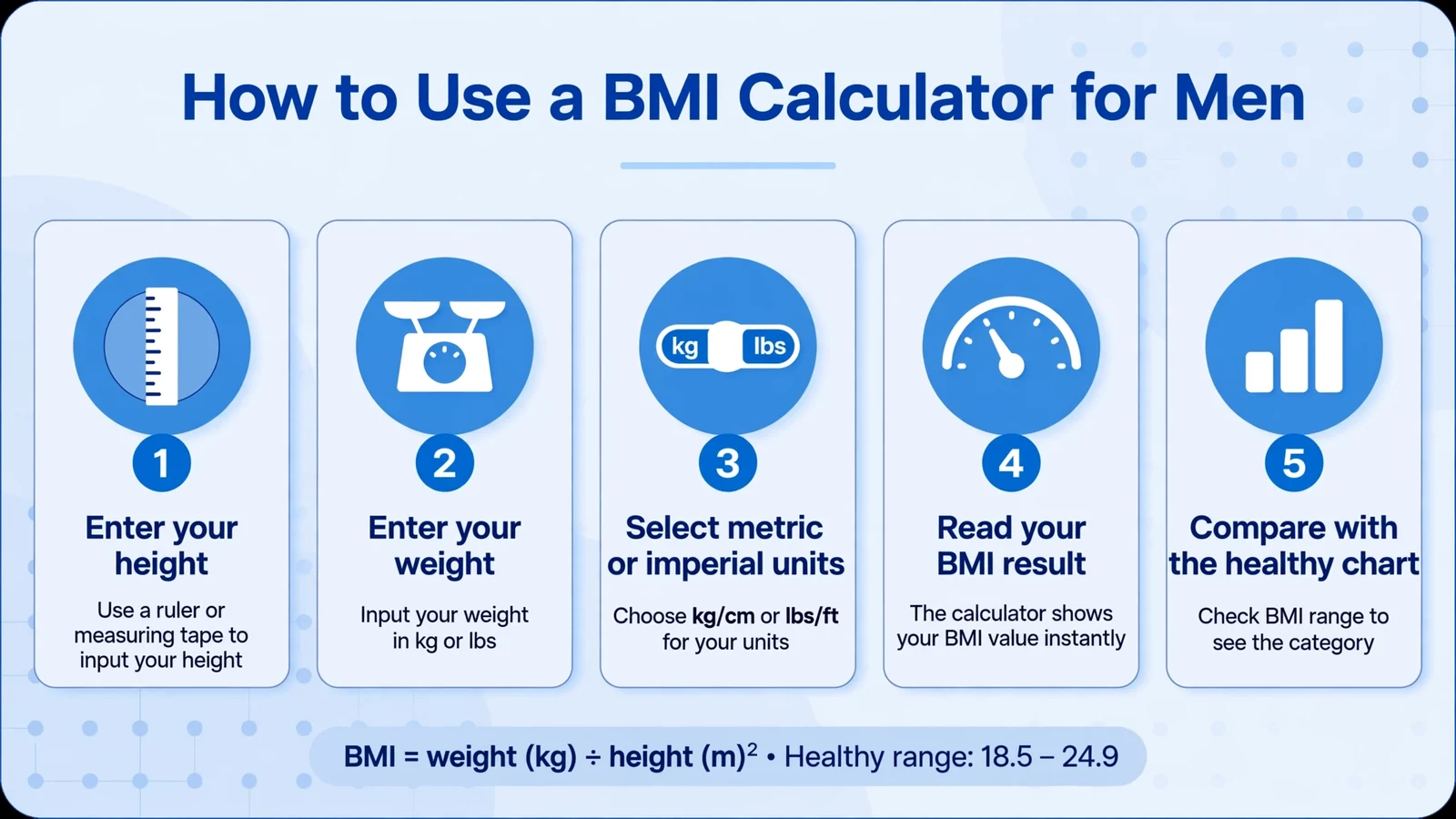
- Enter your height. Use feet and inches or centimeters, whichever you know best. Stand straight against a wall without shoes for the most accurate measurement.
- Enter your weight. Weigh yourself in the morning, before eating and after using the bathroom, for the most consistent reading.
- Select your units. Make sure the calculator is set to metric or imperial to match the numbers you entered.
- Read your result. The calculator shows your BMI number and the category it falls into.
- Compare it with the chart. See where you land on the standard scale and note how far you are from the healthy range of 18.5 to 24.9.
Try it right now with the free BMI calculator and keep your number handy while you read the rest of this guide.
What Do Your BMI Results Mean?
The number your BMI calculator for men gives you places you in one of four categories. Each one carries a different health message, and the table below lays them out side by side.
| BMI Range | Category | What It Means for Men |
|---|---|---|
| Below 18.5 | Underweight | You may not be getting enough nutrients to support muscle and energy needs. Focus on calorie-dense whole foods and check in with a doctor. |
| 18.5 to 24.9 | Healthy weight | Your weight sits in the range linked to the lowest health risks. Maintain it with balanced eating, strength training, and regular activity. |
| 25 to 29.9 | Overweight | Health risks start to climb, especially fat around the waist. Small, steady changes to diet and exercise can bring you back into range. |
| 30 and above | Obese | The risk of heart disease, diabetes, and joint problems is significantly higher. A structured plan with professional guidance is the safest route. |
The healthy range of 18.5 to 24.9 comes from the World Health Organization’s guidance on overweight and obesity. Remember that these cutoffs were designed for populations rather than individuals, so treat them as a compass instead of a final grade.
What Are the Limitations of BMI for Muscular Men?
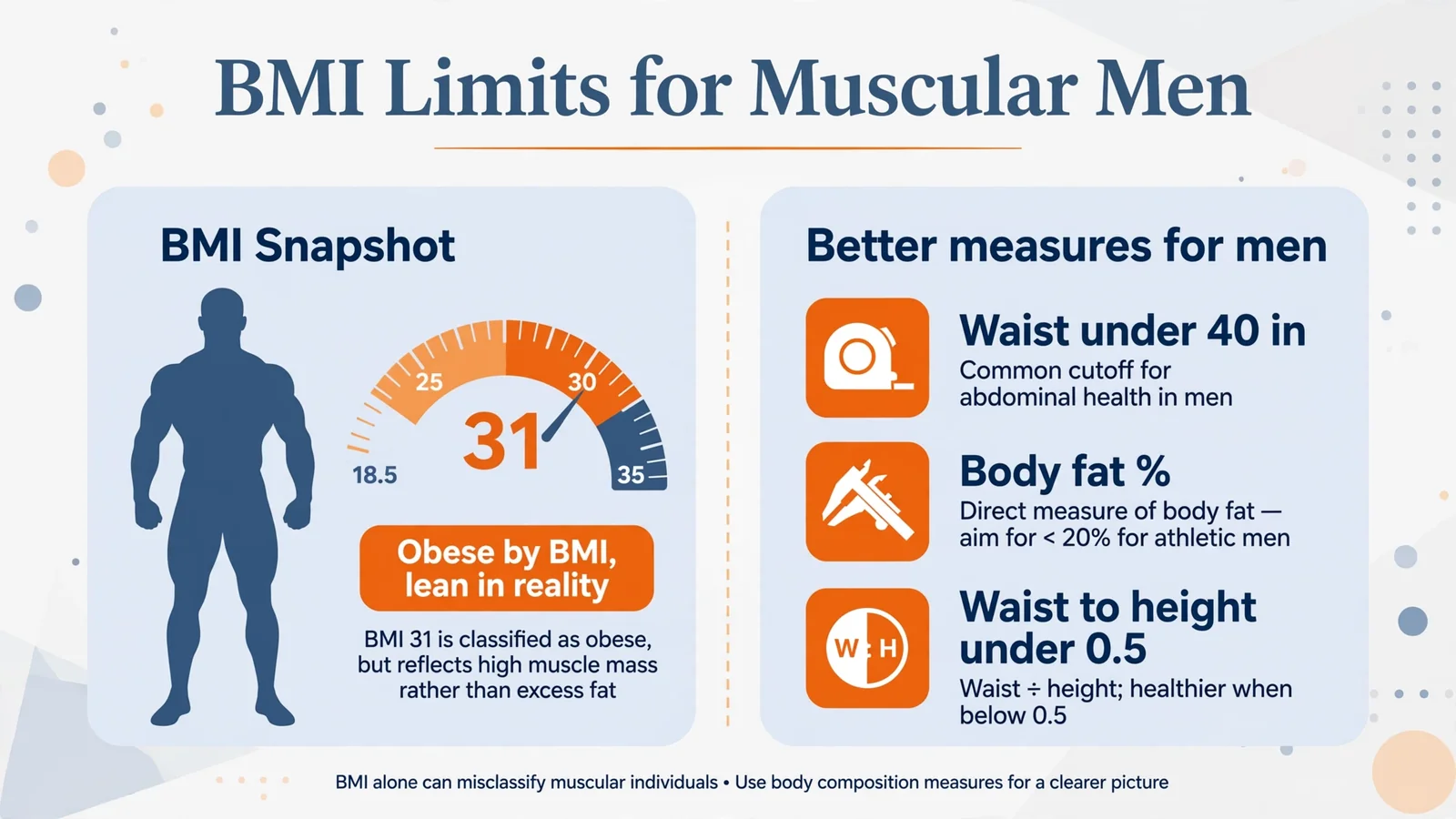
This is the question nearly every man who trains asks, and it is a fair one. BMI cannot tell the difference between a pound of muscle and a pound of fat. A lean bodybuilder with 10 percent body fat can easily land in the obese category, which is clearly misleading.
The blind spot cuts both ways. A man who never exercises can record a healthy BMI while carrying a high percentage of body fat and very little muscle, a condition sometimes called normal-weight obesity. Aging makes this more common, since muscle naturally declines after 40 while fat tends to increase.
The CDC describes BMI as a screening measure rather than a diagnostic tool, which means it flags possible issues but cannot confirm them. If you lift weights, play sports, or have a large frame, treat your BMI as one data point and back it up with measurements that capture body composition directly.
What Are the Best Alternatives to BMI for Men?
When your BMI result does not match what you see in the mirror, these alternatives give you a clearer picture:
- Waist circumference. Wrap a tape measure around your waist just above the hip bones. For men, a reading above 40 inches (102 cm) signals higher health risk regardless of BMI.
- Waist-to-height ratio. Divide your waist by your height using the same units. Keeping the result below 0.5 is a widely used target for men.
- Body fat percentage. This is the most direct measure of what BMI only estimates. Athletic men usually fall between 6 and 13 percent, fit men between 14 and 17 percent, and the general average range is 18 to 24 percent.
- Strength and fit benchmarks. If you train, how your clothes fit and how your lifts progress often tell you more than any single number on a chart.
What Should You Do After Calculating Your BMI?
Once you have your BMI calculator for men result, your next step depends on the category. If you landed in the healthy range, the goal is maintenance. Keep eating balanced meals, keep training, and recheck your BMI every few months to catch any drift early.
If you scored above the healthy range, start by learning how many calories your body actually needs each day. The free calorie calculator estimates your daily needs from your size and activity level, and the Harris-Benedict formula guide explains how your basal metabolic rate is worked out. Combine that knowledge with a modest calorie deficit, regular strength training, and better sleep, and most men see steady progress within a matter of weeks.
If you scored below 18.5, the priority is eating enough. Add calorie-dense whole foods such as nuts, olive oil, eggs, and dairy to your meals, and use strength training so that the weight you gain becomes muscle rather than fat.
Frequently Asked Questions
What is a healthy BMI for a man?
A healthy BMI for an adult man is 18.5 to 24.9, the same range the World Health Organization recommends for all adults. If you are very muscular, you may sit above this range while still being lean, so pair your result with a waist measurement or a body fat check.
How accurate is a BMI calculator for men?
It is accurate as a screening tool for the general population and correctly flags most cases of excess body fat. It becomes less reliable for athletes, bodybuilders, older men with muscle loss, and anyone whose weight comes mostly from muscle rather than fat.
Does BMI work for muscular men?
Not on its own. Because muscle weighs more than fat, muscular men often score in the overweight or obese range despite having low body fat. If you train regularly, use waist circumference or body fat percentage alongside your BMI for a fair assessment.
How do I calculate BMI manually?
Divide your weight in kilograms by your height in meters squared. For example, a man who weighs 85 kg and stands 1.82 m tall has a BMI of 85 divided by (1.82 times 1.82), which comes to about 25.7. In imperial units, divide your weight in pounds by your height in inches squared, then multiply by 703.
What BMI is considered obese for men?
A BMI of 30 or higher is classified as obese for adult men, following the same standard cutoffs used worldwide. Obesity is further divided into classes at 30 to 34.9, 35 to 39.9, and 40 or above, with health risks rising at each level.
Should I use BMI or body fat percentage?
Use both when you can. BMI is free, instant, and useful for tracking trends over time, while body fat percentage tells you what your weight is actually made of. For men who train, body fat percentage is the more meaningful number, and BMI works best as a quick regular check.
How often should I check my BMI?
Once a month is enough for most men. Weight shifts daily with water, food, and glycogen, so checking too often only creates noise. Weigh yourself under the same conditions each time and watch the trend across several months rather than any single reading.
Conclusion
A BMI calculator for men is the fastest way to get an honest snapshot of where your weight stands and what to do about it. It takes under a minute, costs nothing, and gives you a number you can track, discuss with your doctor, and improve through small consistent changes. Calculate your BMI now, note which category you fall into, and take the first step toward the healthy range today.