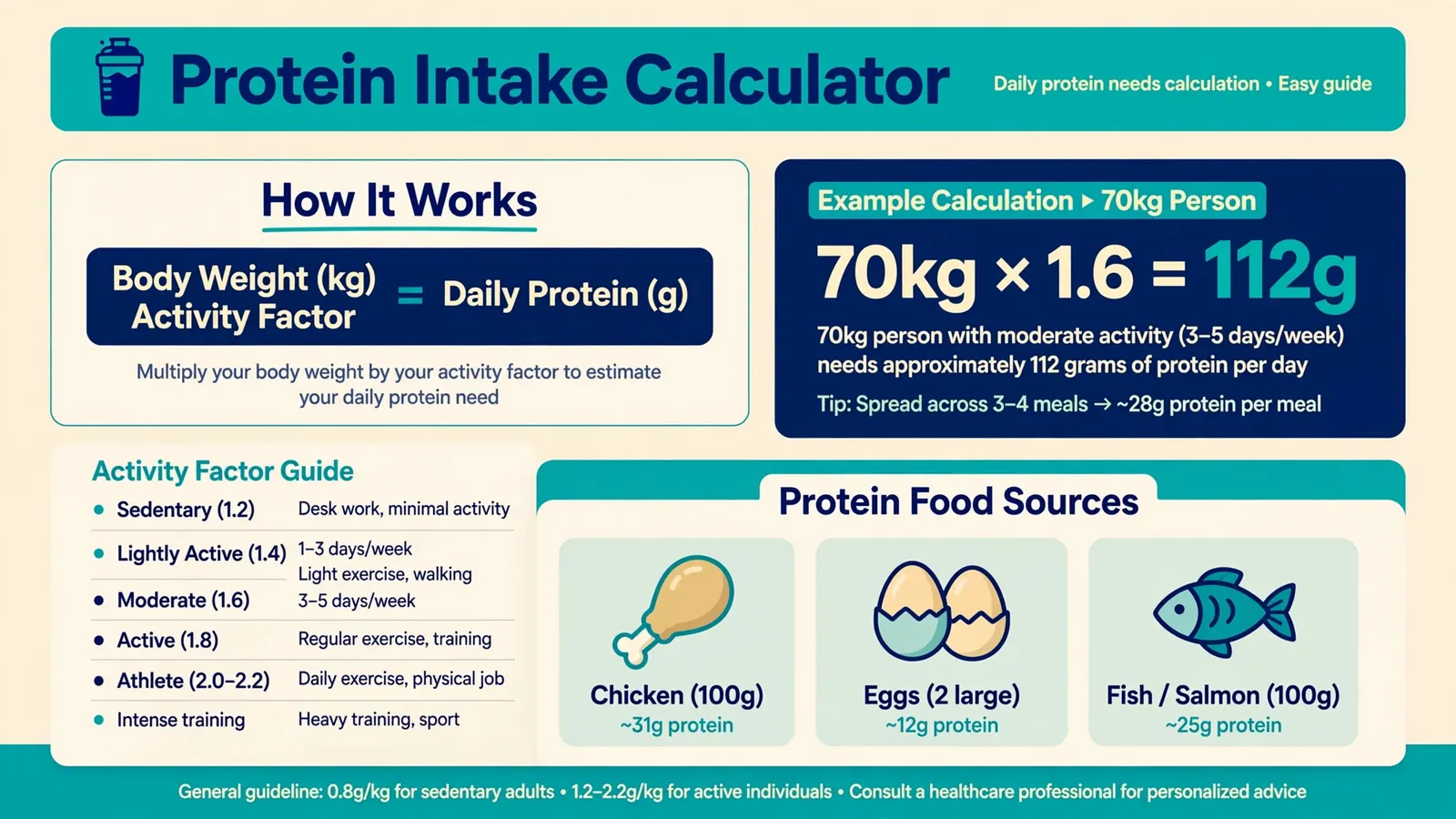
A protein intake calculator estimates your daily protein needs from your body weight, activity level, and goal. Most adults need 1.2 to 2.0 grams per kilogram per day, so a 70 kg person would target roughly 84 to 140 grams.
Protein advice is everywhere and often contradictory. Some sources say 50 grams is enough, others push 200. The truth depends on your body and what you are trying to do. This guide explains how a protein intake calculator works and how to find your personal number.
What Is a Protein Intake Calculator?
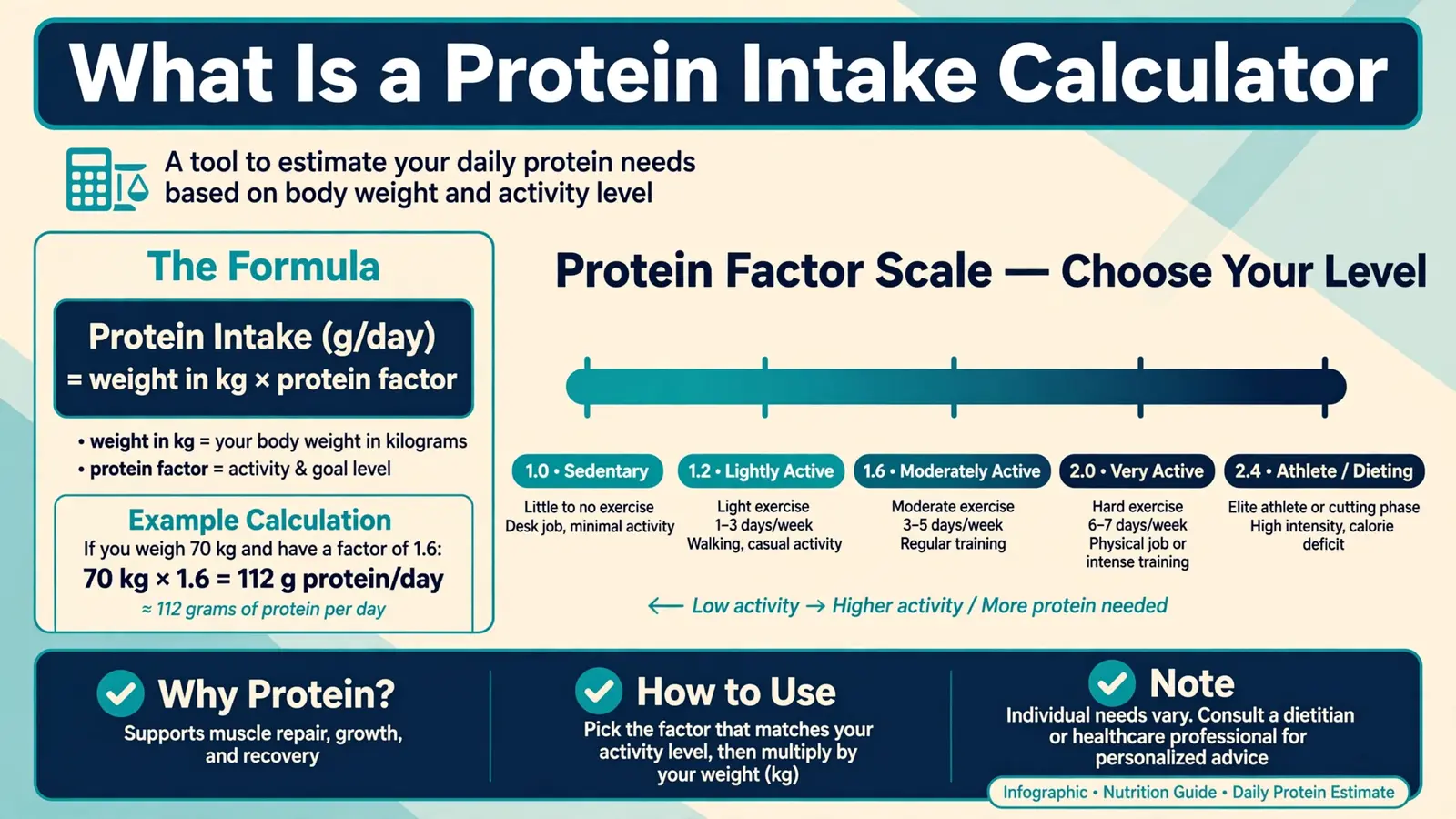
A protein intake calculator is a tool that estimates how many grams of protein you should eat each day. It multiplies your body weight by a factor that reflects your activity level and goal, producing a daily gram target.
The basic formula is simple: body weight in kilograms multiplied by a protein factor. A sedentary adult might use 1.0, while a strength athlete dieting hard might use 2.2. The calculator picks the right factor for your situation.
For example, an 80 kg recreational lifter using a factor of 1.8 would target 144 grams of protein per day.
How Much Protein Do I Need Per Day?
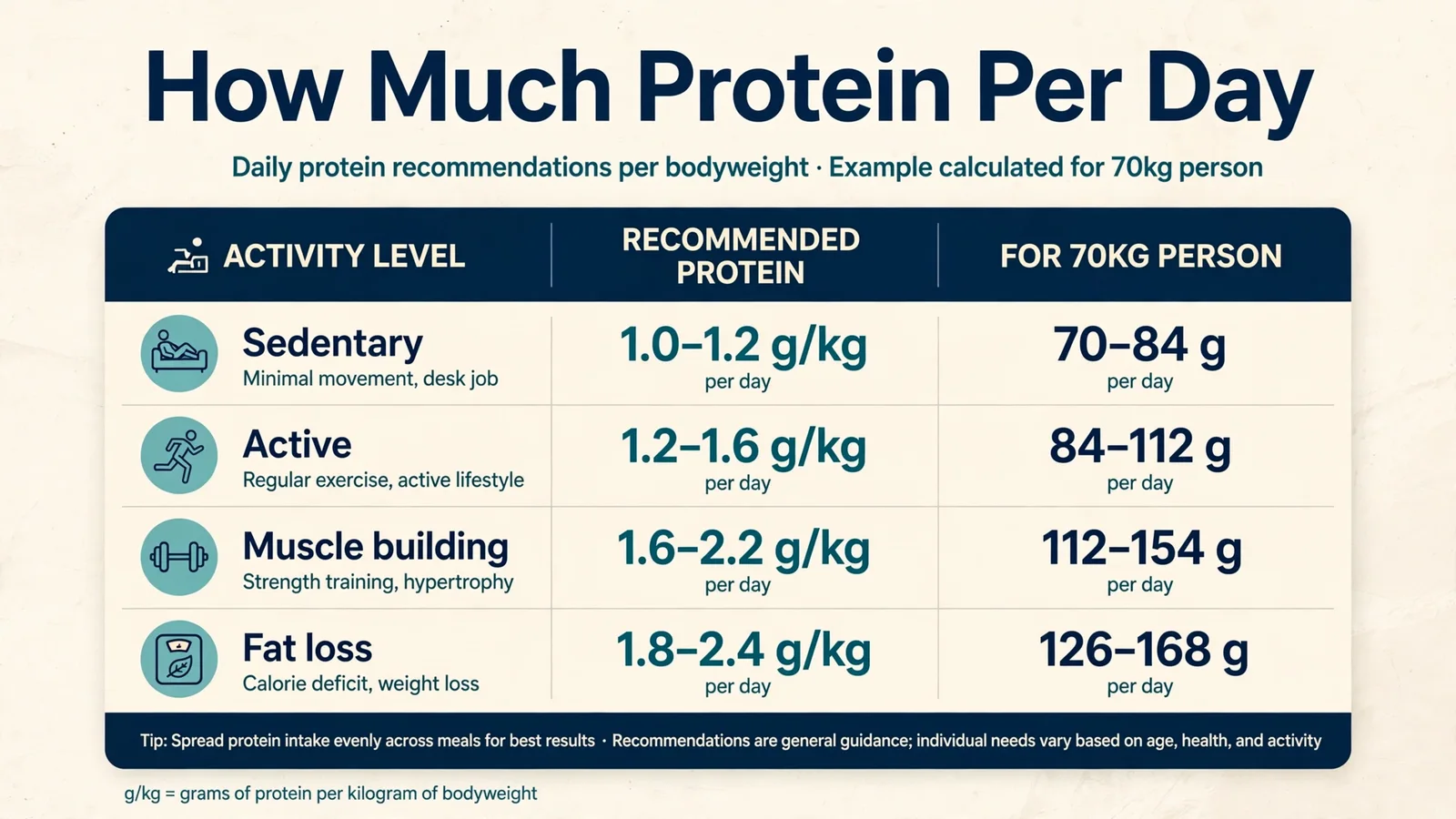
Your ideal intake depends on who you are and what you do.
| Who you are | Grams per kg | Example (70 kg) |
|---|---|---|
| Sedentary adult | 1.0 – 1.2 | 70 – 84 g |
| Active adult | 1.2 – 1.6 | 84 – 112 g |
| Building muscle | 1.6 – 2.2 | 112 – 154 g |
| Losing fat | 1.8 – 2.4 | 126 – 168 g |
| Endurance athlete | 1.4 – 1.8 | 98 – 126 g |
| Over 60, staying strong | 1.2 – 1.5 | 84 – 105 g |
Why do ranges exist instead of one number?
Because protein needs are individual. Muscle mass, training intensity, calorie intake, and age all shift the target. The ranges come from sports nutrition research, including position stands from the International Society of Sports Nutrition, and they cover most healthy adults.
What about the RDA of 0.8 grams per kilogram?
The RDA is the minimum to avoid deficiency in sedentary adults, not the optimal amount for health or performance. If you exercise, diet, or are over 50, you almost certainly benefit from more than the RDA.
How Does a Protein Intake Calculator Work?
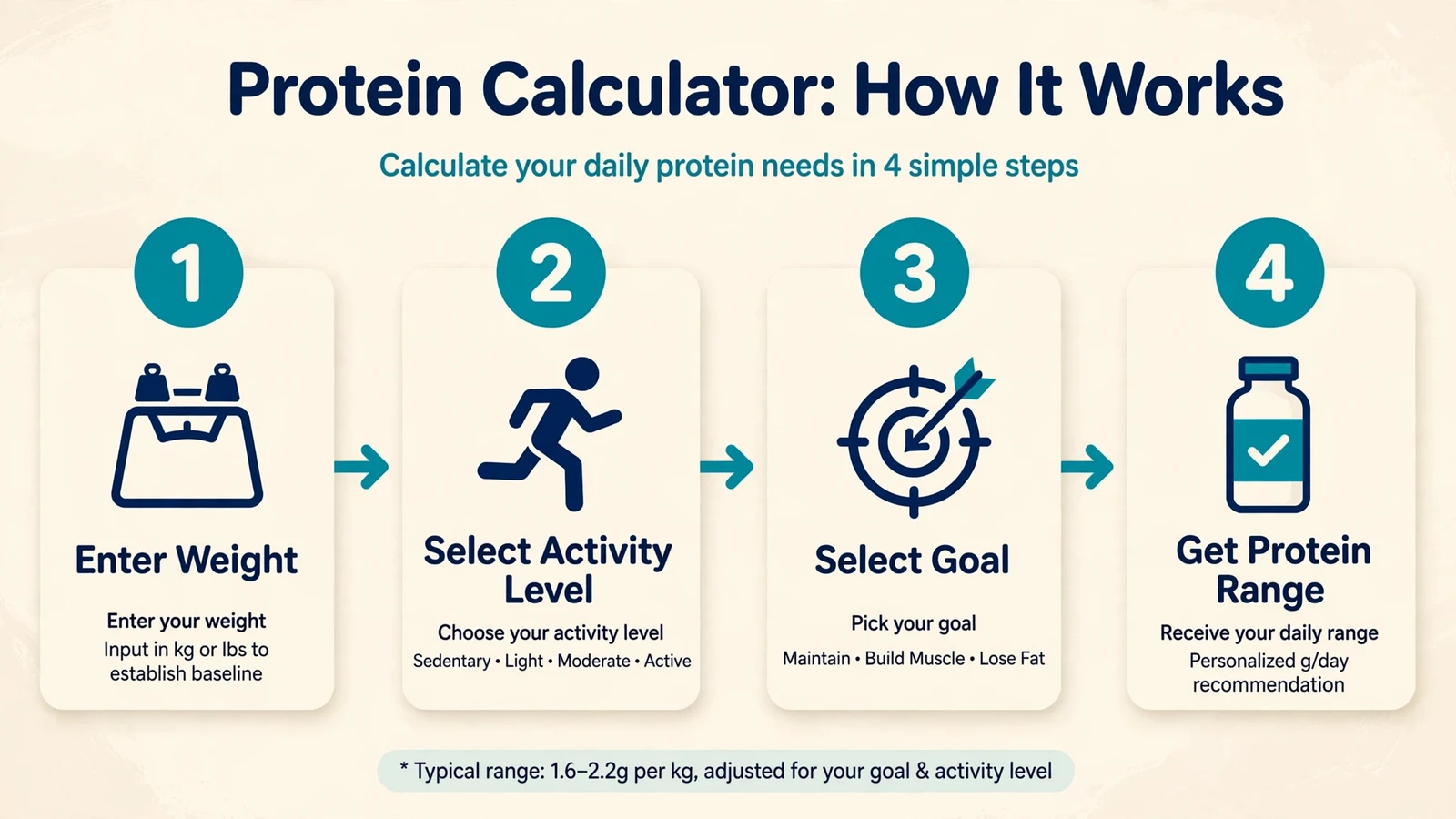
Step 1: Enter your weight
Use your current body weight in kilograms. If you are significantly overweight, some calculators use lean body mass or target weight instead, because fat tissue needs less protein than muscle.
Step 2: Select your activity level
Choose the description that matches your training: sedentary, lightly active, moderately active, very active, or athlete. More training generally means a higher factor.
Step 3: Select your goal
Fat loss, muscle gain, and maintenance each use slightly different factors. Dieting raises protein needs because your body is more likely to break down muscle in a deficit. You can find your calorie target first, then set protein within it.
Step 4: Get your range
The calculator multiplies your weight by the factor and shows a daily gram range. Aim for the middle to start, then adjust based on hunger, recovery, and progress.
What Are the Best Protein Sources?
Not all protein is equal. Complete proteins contain all nine essential amino acids.
Animal sources (complete):
- Chicken breast: 31 g per 100 g
- Greek yogurt: 10 g per 100 g
- Eggs: 6 g each
- Salmon: 25 g per 100 g
- Lean beef: 26 g per 100 g
Plant sources (combine for completeness):
- Lentils: 9 g per 100 g cooked
- Tofu: 8 g per 100 g
- Quinoa: 4 g per 100 g cooked
- Chickpeas: 9 g per 100 g cooked
Does protein timing matter?
Somewhat. Spreading protein across 3 to 5 meals, with 25 to 40 grams each, supports muscle protein synthesis better than eating it all at dinner. A post-workout meal with protein helps, but total daily intake matters far more than exact timing.
Can You Eat Too Much Protein?
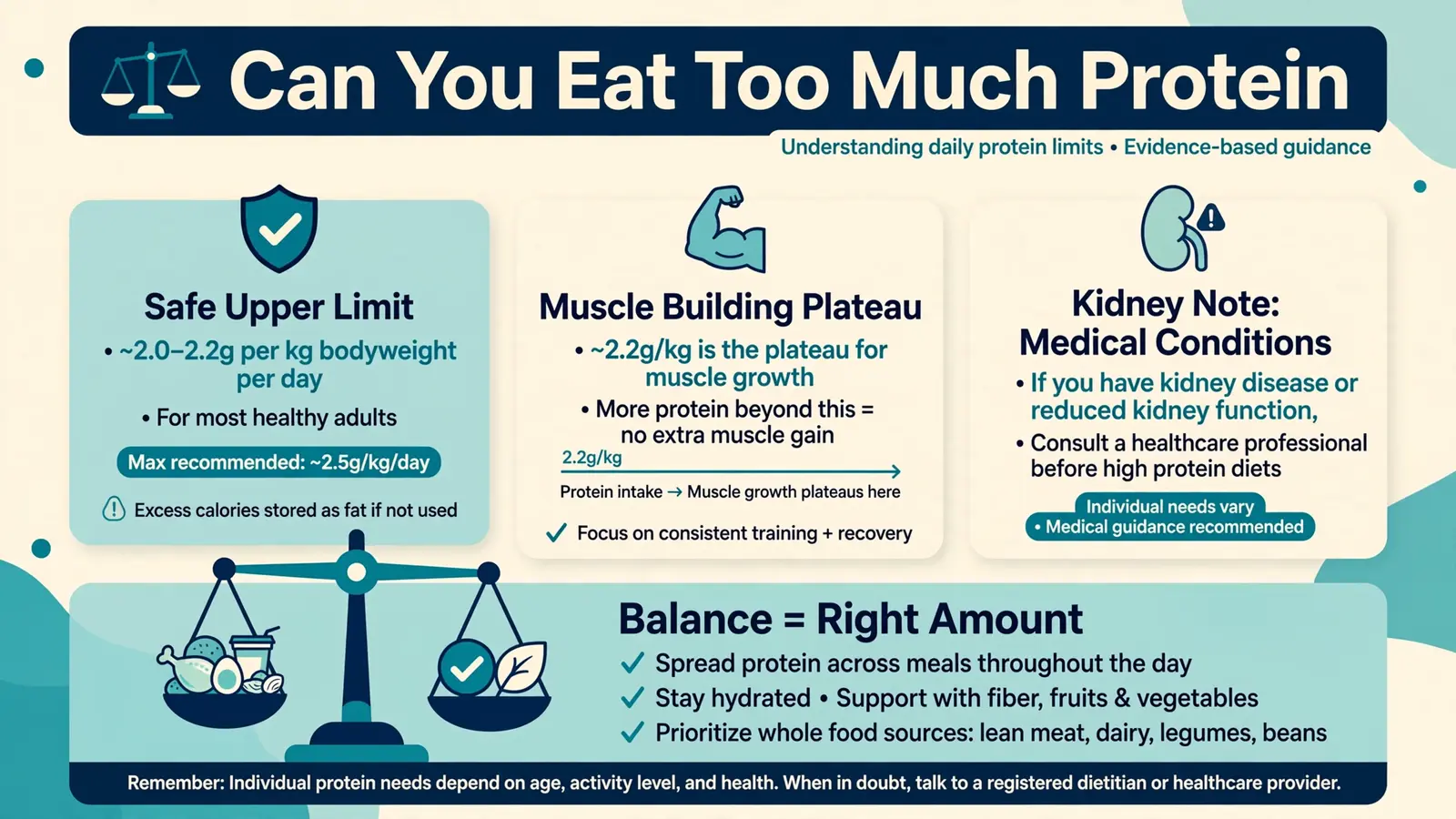
For healthy people, very high intakes are generally safe in the short term, but more is not always better.
Research shows muscle building plateaus around 1.6 to 2.2 grams per kilogram. Eating 3 grams per kilogram does not build extra muscle, it just displaces carbs and fat that could help training and hormones.
People with kidney disease should follow their doctor’s guidance, since impaired kidneys handle protein waste less efficiently. If you have a medical condition, check with a professional before sharply increasing intake. The BMI calculator can help you understand your starting point alongside your nutrition plan.
Do protein powders count?
Yes. Whey, casein, soy, and pea protein powders are convenient ways to hit your target, especially on busy days. They are not magic, just concentrated protein. Whole foods should form the base of your diet, with powders filling gaps. A typical scoop provides 20 to 30 grams, which can make the difference between hitting and missing your number.
What about protein and weight loss plateaus?
When fat loss stalls, people often cut carbs or fat further. Sometimes the smarter move is raising protein instead. Higher protein protects muscle as calories drop and increases satiety, which makes the deficit easier to sustain. Before slashing calories again, check whether you are actually hitting your protein target consistently.
Frequently Asked Questions
How do I use a protein intake calculator?
Enter your weight, pick your activity level and goal, and the calculator multiplies your weight by an evidence-based factor. It returns a daily gram range. Start in the middle and adjust after two weeks based on recovery and hunger.
How much protein do I need to build muscle?
Aim for 1.6 to 2.2 grams per kilogram of body weight per day. A 75 kg lifter would target 120 to 165 grams. Spread it across 4 to 5 meals and pair it with progressive resistance training.
How much protein do I need to lose weight?
Go higher when dieting: 1.8 to 2.4 grams per kilogram. Protein preserves muscle in a deficit and keeps you fuller. A 70 kg dieter would target 126 to 168 grams daily.
Is 100 grams of protein a day enough?
It depends on your weight. For a 60 kg sedentary adult, 100 grams is plenty. For a 90 kg athlete, it is likely too little. Divide 100 by your weight in kilograms: if the result is below 1.2 and you are active, eat more.
What happens if I do not eat enough protein?
You may lose muscle, recover slowly, feel hungrier, and notice hair or nail changes over time. Athletes who under-eat protein often plateau in strength despite training hard.
Should older adults eat more protein?
Yes. Adults over 60 benefit from 1.2 to 1.5 grams per kilogram to fight age-related muscle loss. Pair it with resistance exercise twice a week for the best effect.
Can I get enough protein on a vegetarian diet?
Absolutely, with planning. Combine legumes, tofu, tempeh, quinoa, and dairy or eggs if you eat them. You may need slightly more total protein since plant sources digest a bit less efficiently.
Conclusion
A protein intake calculator gives you a personalized starting point by matching your body weight to an evidence-based factor for your activity and goal. Most active adults thrive between 1.2 and 2.0 grams per kilogram per day.
Start in the middle of your range, spread protein across your meals, and adjust after a couple of weeks. Small, consistent changes beat perfect calculations you cannot follow. For authoritative guidance, see the NIH protein fact sheet and the Harvard Nutrition Source on protein.