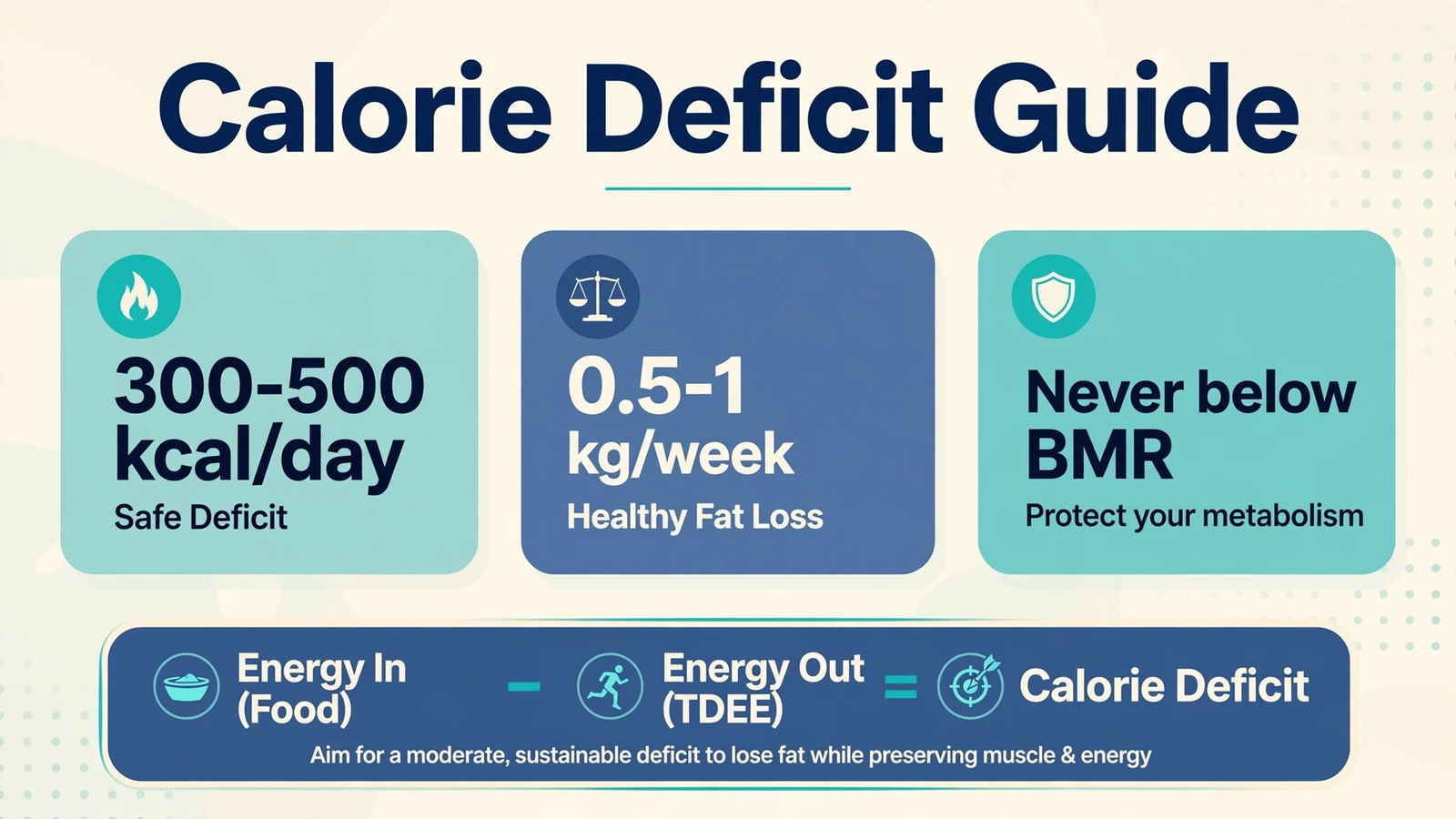
A calorie deficit is simply eating fewer calories than your body burns. For most people, a safe calorie deficit is 300 to 500 calories below maintenance per day. That pace usually means 0.5 to 1 pound of fat loss per week, without wrecking your energy or metabolism.
Search for how much to eat for weight loss and you will find a wall of conflicting numbers. Some coaches swear by tiny 250-calorie trims. Others push 1,000-calorie cuts for speed. The honest answer sits in the middle. It depends on your starting point, your goal, and how long the plan must last. Below: what a calorie deficit is, why the 3,500-calorie rule is only half true, and how to pick a deficit you can live with.
What is a calorie deficit?
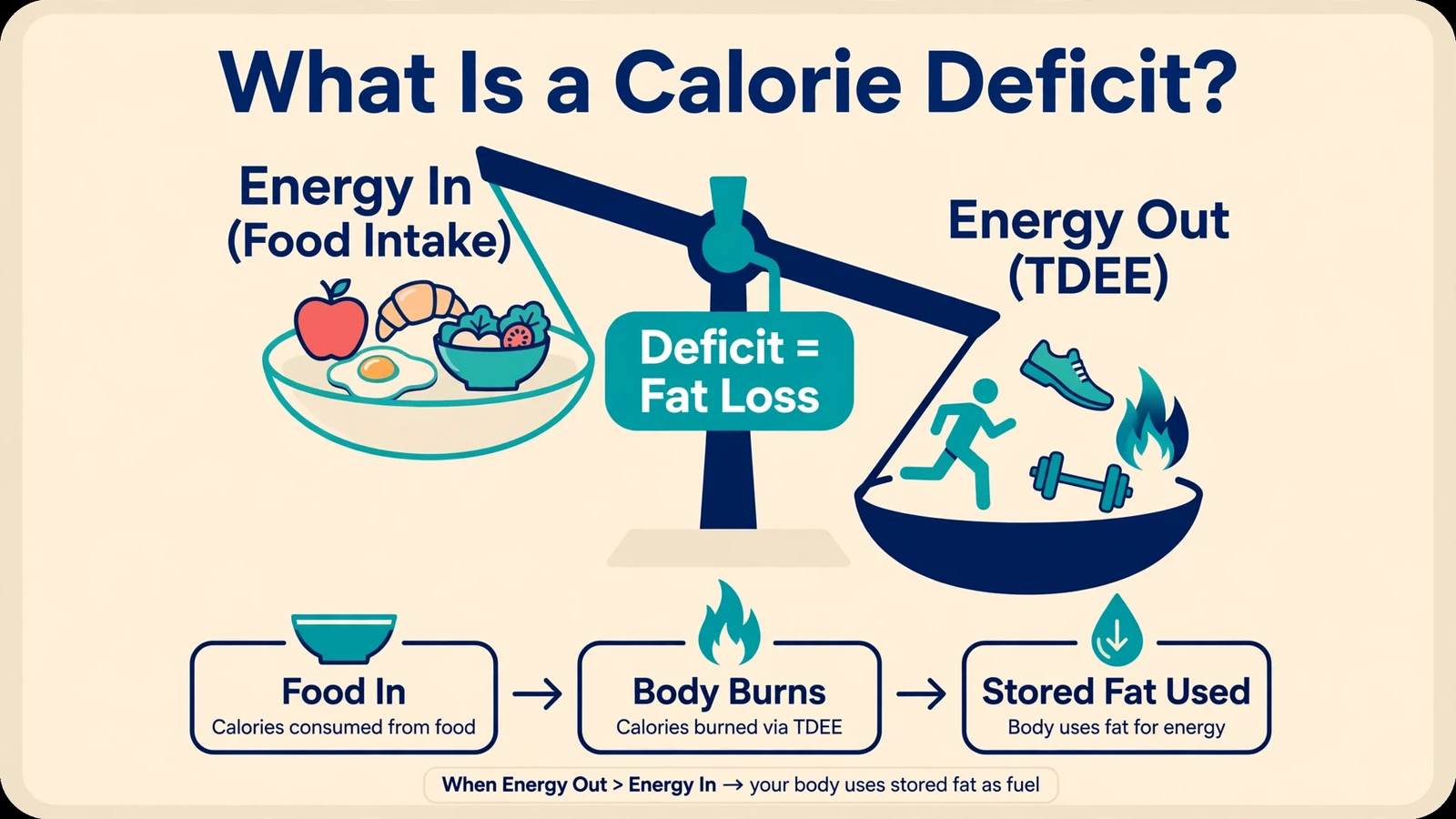
A calorie deficit happens when you burn more energy than you eat. Your body covers the gap by drawing on stored fuel, mostly body fat. That is the mechanism behind all fat loss.
The other side is energy balance: calories in (food and drink) versus calories out (resting metabolism, daily movement, exercise, and digestion). Your total daily energy expenditure (TDEE) is the number to beat: eat below it and you are in a deficit.
You can build the gap two ways: eat a little less, move a little more, or both. Most people do best with a mix. Skipping one 300-calorie sugary drink plus a 30-minute brisk walk creates a 500-calorie daily gap, with no dramatic changes. To pin down your own starting number, try our calorie calculator to estimate your maintenance level first.
How much calorie deficit is safe per day?
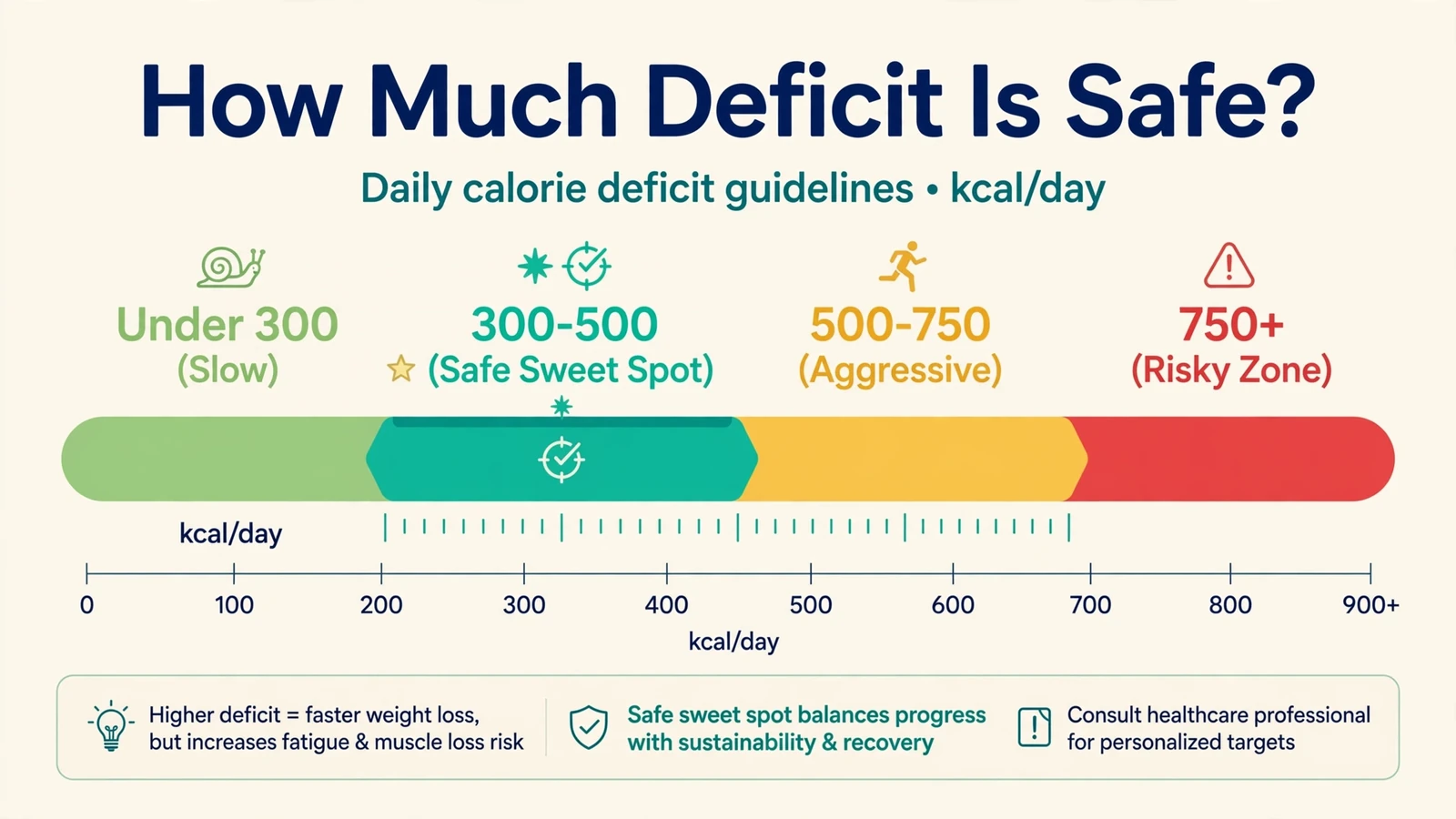
A calorie deficit of 300 to 500 per day is the range most experts recommend for healthy, sustainable fat loss. Dietitian-reviewed guidance from Healthline backs this range: it keeps intake high enough to cover your nutrients while still moving the scale.
Why not go bigger? Larger gaps burn fat faster at first, but bring low energy, intense hunger, and muscle loss. Clinical guidance commonly sets a floor of about 1,200 calories per day for women and 1,500 for men without medical supervision. Below those floors, getting enough vitamins and minerals from food becomes nearly impossible.
Pace matters too. The CDC notes that gradual losers, around 1 to 2 pounds a week, keep weight off more often than fast losers. A 500-calorie daily gap roughly equals one pound per week, so the 300 to 500 range is the sweet spot: fast enough to motivate, slow enough to last.
Is the 3,500-calorie rule actually true?
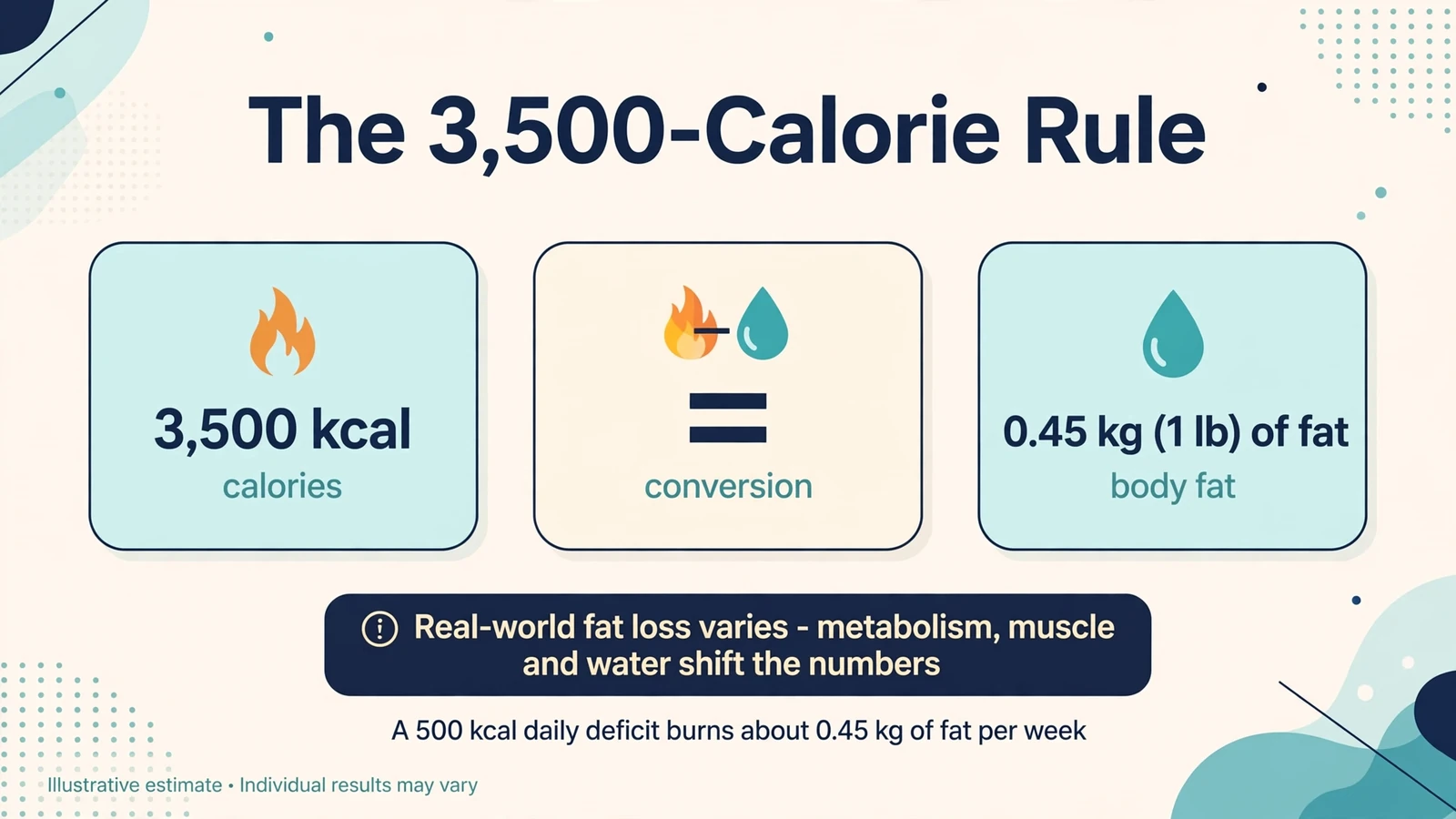
You have heard that one pound of fat equals 3,500 calories, so a 500-calorie daily cut should mean exactly one pound lost per week. The rule traces back to a 1958 paper noting that a pound of body fat holds roughly 3,500 calories of stored energy. It is a useful planning estimate. It is not a prediction.
Real bodies do not follow tidy math. Mayo Clinic notes that a pound lost is rarely pure fat. It is a mix of fat, water, and lean tissue. More importantly, the equation shifts as you shrink. A smaller body needs fewer calories to exist. So the same intake that created a 500-calorie deficit at the start creates a smaller gap months later. This is metabolic adaptation: your body burns less doing the same things, partly from having less body to maintain.
The NIH’s Body Weight Planner, built on Kevin Hall’s research, suggests a 500-calorie daily cut yields roughly half the simple rule’s prediction in year one. Treat 3,500 as a starting estimate, not a contract: track your weekly average for three to four weeks, then adjust.
How should I adjust my deficit for my goal?
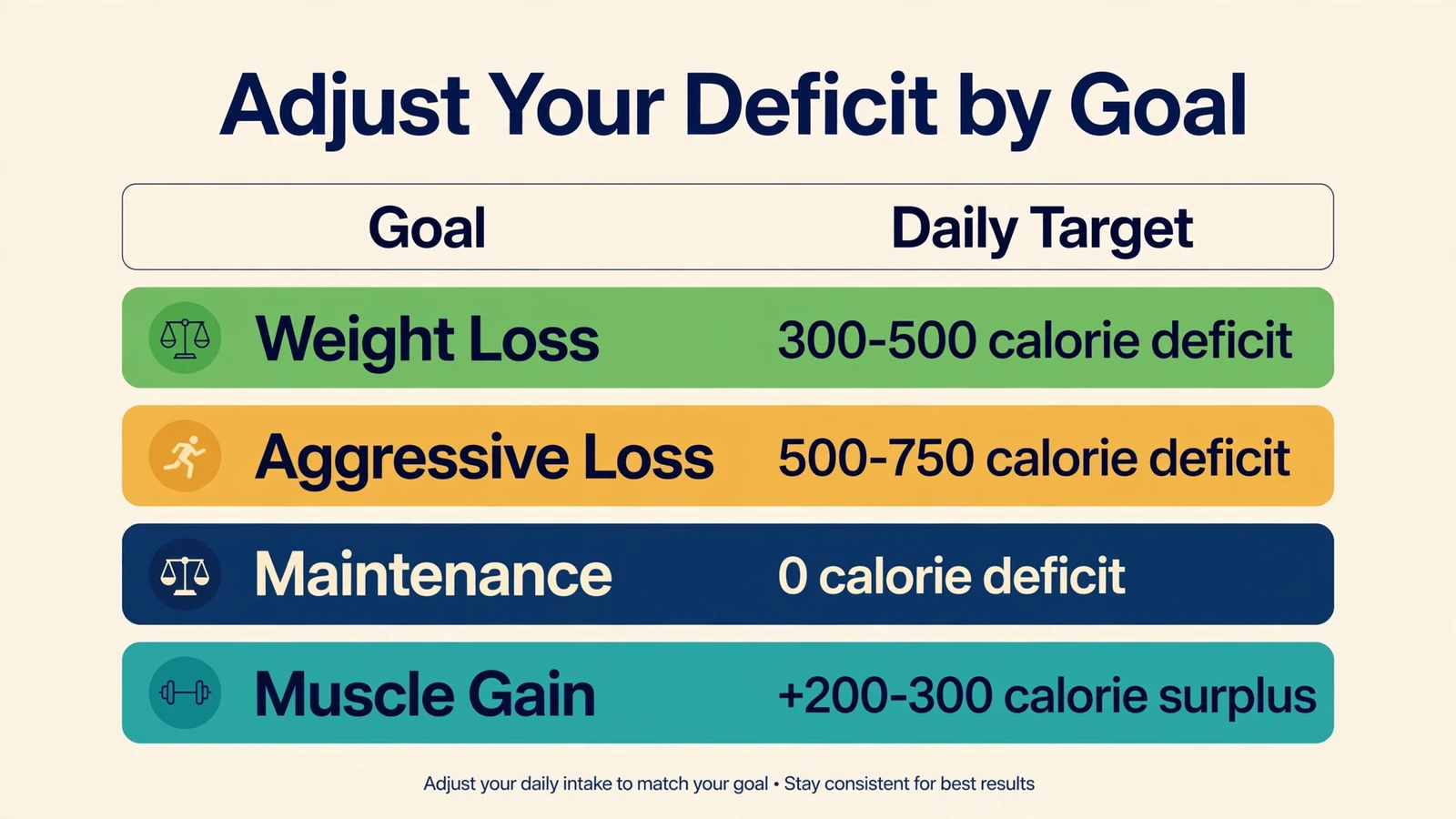
Your ideal deficit depends on how much you have to lose, how fast you want to go, and how much hunger you can tolerate. Smaller gaps are easier to live with; larger ones move faster but carry more risk. Here is a practical breakdown:
| Daily deficit | Expected fat loss per week | Best for |
|---|---|---|
| 250 kcal | ~0.25 kg (0.5 lb) | Slow, comfortable loss; protecting training performance |
| 300-500 kcal | ~0.25-0.5 kg (0.5-1 lb) | Most people; the standard safe range |
| 500-600 kcal | ~0.5-0.7 kg (1-1.5 lb) | More weight to lose; still sustainable |
| 750-1,000 kcal | ~0.7-1 kg (1.5-2 lb) | Short phases with guidance; not for lean individuals |
A few guardrails apply at every level. Stay above the 1,200/1,500 daily floors. Recalculate maintenance every 5 to 10 pounds lost, since TDEE drops as you get lighter. For modest goals, like the last few kilograms, stay gentle: lean people lose more muscle at aggressive deficits.
If you want day-to-day structure, our beginner deficit meal plan pairs portion sizes with these deficit levels.
How do protein and resistance training protect muscle in a deficit?
Most dieters miss this: a calorie deficit does not only pull from fat. Without the right signals, your body burns some muscle too. Muscle keeps your metabolism higher and makes keeping weight off easier later.
Protein is your first defense. Aim for 1.6 to 2.2 grams per kilogram of body weight per day. A 2020 review in Sports Medicine found this range supports losing fat while keeping muscle when paired with training. Protein also has the highest thermic effect of food: 20 to 30 percent of its calories go toward digesting it, versus 5 to 10 percent for carbs and 0 to 3 percent for fat. A 2004 review in Nutrition and Metabolism found high-protein eating can raise daily burn by 80 to 100 calories through this effect alone. It also fills you up more than other macros, which makes the deficit easier to hold.
The second signal is resistance training. Lift weights, use bands, or do bodyweight work two to four times per week across all major muscle groups. This tells your body the muscle is still needed. In a calorie deficit without training, a meaningful share of each pound lost can be lean tissue. With training, the vast majority is fat.
How do diet breaks help you avoid plateaus?
Sooner or later, most dieters hit a wall: the scale stops though the diet has not changed. Plateaus usually come from three things: your smaller body needs fewer calories, daily movement quietly dropped, or food tracking drifted optimistic.
A diet break is a planned pause, not a failure. You eat at maintenance calories for one to two weeks, then resume the deficit. Breaks cut diet fatigue, restore energy, and settle hunger hormones before the next push. This is not a cheat week: you eat sensibly, just at maintenance.
Use one well with these steps:
- Plan it ahead of time, for example after 8 to 12 weeks in a deficit, not because you are fed up.
- Eat at your current maintenance, not above it. Recalculate, since you have lost weight.
- Keep training and tracking. This makes returning to the deficit painless.
- If the scale jumps 1 to 2 pounds in the first days, stay calm: that is glycogen and water refilling your muscles, not fat.
Beyond breaks, recheck the basics: weigh food for a week to catch portion drift, add 2,000 to 3,000 daily steps, or trim the deficit by 100 to 150 calories if hunger allows. Keep low-calorie snacks on hand so a stalled week never turns into a snack attack.
Frequently Asked Questions
Can a calorie deficit be too small to work?
Yes, but rarely. A 200 to 250 calorie daily gap still burns fat, just slowly, at about half a pound per week. If your maintenance estimate is slightly off, though, a tiny gap can vanish into tracking error. Judge your trend over three to four weeks.
How fast will I see results in a calorie deficit?
Most people see the scale move within one to two weeks, partly from water and glycogen shifts. True fat-loss trends show after three to four weeks of steady tracking. If your weekly average has not budged after a month, your deficit is smaller than you think.
Can I exercise my way into a calorie deficit without dieting?
Technically yes, but it is hard: 300 to 500 extra calories of daily activity is a lot of exercise, and appetite often rises to match. Modest food cuts plus activity work better.
Will a calorie deficit slow my metabolism permanently?
No. Metabolic adaptation is real, but mostly reversible. Once you return to maintenance and rebuild lost muscle, your burn recovers. The permanent-damage stories come from extreme, prolonged restriction, not sensible deficits.
Is it safe to be in a calorie deficit while pregnant or breastfeeding?
Generally, no. Pregnancy and breastfeeding raise energy needs, and restriction can affect mother and baby. Talk to your doctor or a registered dietitian instead of cutting calories alone.
Do I need to count calories forever?
Not at all. Many people count for a few months to learn portions and calorie costs, then switch to habits: protein at every meal, vegetables filling half the plate, regular activity. Tracking is a teaching tool, not a life sentence.
What if I feel dizzy or exhausted in a deficit?
Treat that as a warning sign, not a badge of honor: raise calories by 150 to 200 per day, and check sleep and hydration. If symptoms persist, see a healthcare professional before continuing.
Conclusion
A calorie deficit is the engine of every fat-loss plan, and 300 to 500 calories per day is the safest setting for most people. Adjust based on what your weekly trend shows, not what a formula promised.
Your next step is simple: find your maintenance number with our free calorie calculator, subtract 300 to 500, and run that for three weeks while tracking your weight trend. For deeper reading, the CDC’s guide to losing weight covers healthy rates and habits, and Mayo Clinic’s overview of calories and weight loss explains why the numbers are only part of the story.
1 thought on “Calorie Deficit Guide | Find Your Safe Daily Deficit Without Harming Your Health”