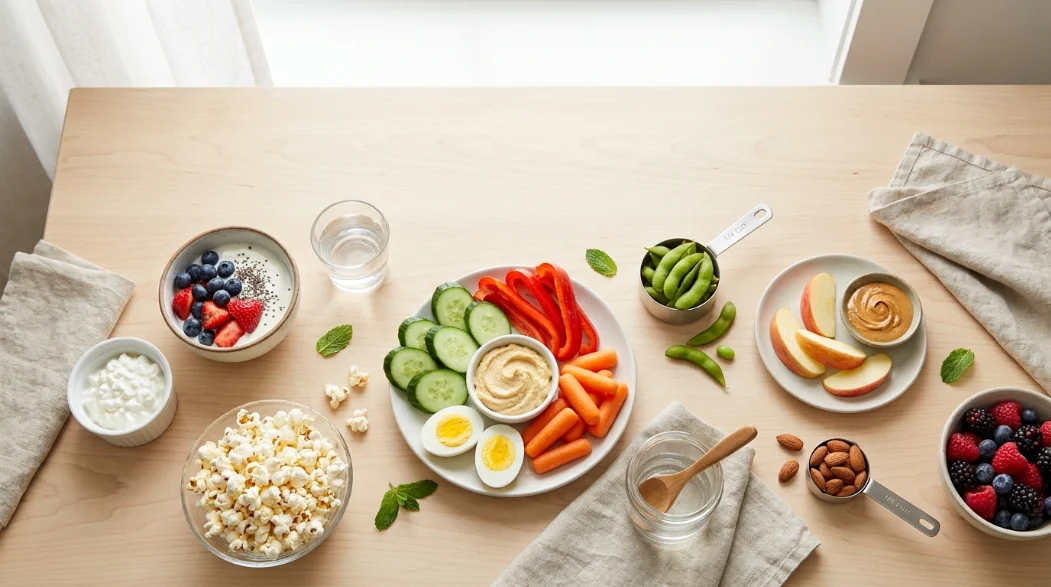
Losing weight doesn’t mean you have to ignore hunger all day. In fact, the right snack can make a calorie-controlled eating pattern much easier to follow. The trick is choosing foods that give you enough volume, protein, fiber, or satisfaction without quietly adding hundreds of extra calories.
That distinction matters. A snack can be low in calories and still leave you hungry 20 minutes later. Another option may contain slightly more calories but keep you satisfied for much longer. For weight management, that trade-off can make a big difference. See our zero-calorie foods guide.
The current Dietary Guidelines for Americans 2025–2030 emphasize whole, nutrient-dense foods such as protein foods, dairy, vegetables, fruits, healthy fats, and whole grains. They also encourage reducing highly processed foods high in added sugars, sodium, refined carbohydrates, and unhealthy fats.
For weight loss, the broader goal is still a sustained reduction in energy intake that fits your individual needs. Snacks are simply one piece of that puzzle. A well-chosen snack can help you manage hunger, but frequent grazing on calorie-dense foods can work against your goal.
The best low calorie snack isn’t necessarily the smallest snack. It’s the one that gives you useful nutrition and enough satisfaction for the calories it costs.
What Makes a Good Low Calorie Snack for Weight Loss?
A useful weight-loss snack should do more than look small on a nutrition label.
Think about what happens after you eat it. Do you feel satisfied? Can you comfortably wait until your next meal? Does the snack give you protein, fiber, fruit, vegetables, or another useful nutrient? Does it fit your overall calorie intake?
Those questions are more valuable than simply asking whether a food contains fewer than 100 calories.
Keep the calorie load reasonable
Calories still matter because losing body weight generally requires an energy deficit over time. The CDC explains that combining lower calorie intake with physical activity creates the calorie deficit that leads to weight loss.
However, there isn’t one perfect snack calorie limit for everybody.
Someone with a higher daily energy requirement may comfortably include a 200-calorie snack. Another person may prefer a 100-calorie snack. Your overall eating pattern matters more than an arbitrary number.
Prioritize protein
Protein can make snacks more satisfying. A systematic review involving people with higher-weight or obesity found that higher protein intake may increase fullness or satiety, although the researchers also noted limitations in the evidence.
Good protein-rich snack choices include:
- Greek yogurt
- Cottage cheese
- Eggs
- Edamame
- Tuna
- Plain low-fat yogurt
- Lean poultry
- Beans and chickpeas
You don’t need a huge serving. Even a modest protein source can make a fruit, vegetable, or grain-based snack more substantial.
Add fiber when it fits
Fiber-rich foods can add bulk and may support fullness. Research suggests that fiber can influence appetite and subsequent food intake, although the effect varies by fiber type and food source.
Good snack sources include:
- Berries
- Apples
- Pears
- Carrots
- Cucumber
- Celery
- Chickpeas
- Edamame
- Popcorn
- Whole grains
- Chia seeds
Whole foods usually give you more than isolated fiber. They can also contribute water, vitamins, minerals, and other compounds.
Think about nutrient density
A 100-calorie snack made mostly from added sugar may fill less nutritional space than a 100-calorie serving of fruit or yogurt.
Nutrient-dense foods give you useful nutrients for their calorie content. The current Dietary Guidelines emphasize this type of eating pattern.
Don’t forget portion size
Some nutritious foods become surprisingly calorie-heavy when portions expand.
Nuts, nut butter, seeds, cheese, granola, dried fruit, and hummus can all fit into a weight-loss diet. They simply deserve more attention to serving size because calories add up quickly.
Best Low Calorie Snacks for Weight Loss
The list below focuses on foods that are practical, nutritious, and easy to portion.
Calorie values are approximate because brands, preparation methods, serving sizes, and recipes can change the numbers.
| Snack | Typical portion | Approx. calories | Why it works |
|---|---|---|---|
| Nonfat Greek yogurt | 170 g | 90–110 | High protein |
| Strawberries | 1 cup | ~50 | High volume |
| Blueberries | 1 cup | ~80–85 | Fruit + fiber |
| Apple | 1 medium | ~95 | Portable + fiber |
| Orange | 1 medium | ~60 | Hydrating + filling |
| Watermelon | 1 cup | ~45 | High water content |
| Cucumber | 1 cup sliced | ~15–20 | Very low calorie |
| Carrots | 1 cup | ~50 | Crunch + fiber |
| Celery | 1 cup | ~15 | High volume |
| Bell pepper | 1 cup | ~40 | Crunch + vitamin C |
| Hard-boiled egg | 1 large | ~75–80 | Protein + fat |
| Air-popped popcorn | 3 cups | ~90–95 | Large volume |
| Cottage cheese | 1/2 cup | ~90–110 | Protein-rich |
| Edamame | 1/2 cup | ~90–100 | Protein + fiber |
| Hummus | 2 tbsp | ~60–80 | Protein + flavor |
| Rice cake | 1 plain | ~35 | Light crunchy option |
| Chia seeds | 1 tbsp | ~60 | Fiber + healthy fats |
| Almonds | 1 oz | ~160–165 | Healthy fats + protein |
| Pistachios | 1 oz | ~155–160 | Protein + crunch |
| Peanut butter | 1 tbsp | ~90–100 | Satisfying fat + protein |
A snack doesn’t need to be complicated. Greek yogurt with berries can take less than a minute. A sliced apple with a measured tablespoon of peanut butter takes almost no preparation.
That simplicity matters because complicated plans tend to collapse when you’re hungry and busy.
High Protein Low Calorie Snacks for Weight Loss
Protein-rich snacks can be especially useful when you regularly feel hungry between meals.
A review of controlled studies found that higher protein intake may increase fullness in people with higher-weight or obesity. The evidence isn’t perfect, but it supports the practical use of protein-rich foods when building satisfying meals and snacks.
Greek yogurt with berries
Plain nonfat Greek yogurt gives you a substantial protein source without requiring a large portion.
Add strawberries or blueberries for sweetness and volume. Cinnamon can add flavor without contributing many calories.
For a more filling bowl, use:
- 3/4 to 1 cup plain Greek yogurt
- 1/2 cup berries
- Cinnamon
- A small amount of chia seeds if desired
Watch flavored yogurt, though. Some varieties contain substantially more added sugar than plain yogurt.
Cottage cheese with fruit
Cottage cheese works well for people who want a creamy snack that feels more substantial.
Try cottage cheese with:
- Strawberries
- Blueberries
- Pineapple
- Peaches
- Cucumber and black pepper
The combination of protein and produce creates a more balanced snack than eating fruit alone.
Hard-boiled eggs
A large hard-boiled egg contains roughly 78 calories and provides protein along with several micronutrients.
Pair one egg with vegetables when you need more volume:
Egg + cucumber + cherry tomatoes = a simple, low calorie snack plate.
Edamame
Edamame provides both protein and fiber, making it particularly useful when you want something more satisfying than a simple piece of fruit.
Steam a portion, season it lightly, and keep extra portions ready in the refrigerator.
Tuna with cucumber or whole-grain crackers
Water-packed tuna can deliver substantial protein for relatively few calories.
Serve a measured portion with cucumber slices or a small portion of whole-grain crackers. Keep mayonnaise portions controlled because sauces can change the calorie count quickly.
Low-fat yogurt
Plain low-fat yogurt can work when Greek yogurt isn’t available.
Look for options with useful protein and limited added sugar. Pairing yogurt with fruit gives the snack more texture and volume.
Low Calorie High Fiber Snacks
Fiber deserves attention because it can make food more substantial without adding as many calories as calorie-dense ingredients.
Research on dietary fiber and appetite shows potential benefits for satiety, although different fiber types don’t affect hunger equally. A 2026 systematic review found that cereal fibers, particularly from oats and rye, showed favorable effects on appetite measures while effects on actual energy intake were more limited.
Berries
Strawberries, raspberries, blackberries, and blueberries provide fiber along with water and micronutrients.
Raspberries and blackberries are especially useful when you’re looking for more fiber from a relatively low-calorie food.
Apples
An apple provides a convenient combination of water, fiber, and carbohydrate.
Keep the peel when practical because much of the fruit’s fiber is found in or near the skin.
Vegetables with hummus
Vegetables provide volume while hummus adds flavor and some protein.
Try:
- Carrots
- Cucumber
- Celery
- Bell peppers
- Cherry tomatoes
Two tablespoons of hummus can turn raw vegetables into something that feels much more like a proper snack.
Air-popped popcorn
Three cups of air-popped popcorn provide a large bowl for fewer than 100 calories before toppings.
That makes popcorn one of the most useful low calorie crunchy snacks.
The catch? Butter, oil, caramel, cheese sauces, and generous seasoning can change the calorie count quickly.
Roasted chickpeas
Roasted chickpeas are crunchy, portable, and more substantial than many snack foods.
Because roasting removes water, though, they’re much more calorie-dense than cooked chickpeas by volume. Portion them before eating instead of grabbing handful after handful.
Low Calorie Snacks Under 100 Calories
The phrase low calorie snacks under 100 calories covers plenty of useful options.
Here are practical examples using standard portions:
| Snack | Approx. calories |
|---|---|
| 1 medium orange | ~60 |
| 1 cup strawberries | ~50 |
| 1 cup watermelon | ~45 |
| 1 cup cucumber | ~15 |
| 1 cup celery | ~15 |
| 1 cup bell pepper | ~40 |
| 1 large hard-boiled egg | ~78 |
| 3 cups air-popped popcorn | ~95 |
| 1 plain rice cake | ~35 |
| 1 tbsp chia seeds | ~60 |
| 1/2 cup edamame | ~95 |
| 1 tbsp peanut butter | ~95 |
The important point is that under 100 calories doesn’t automatically mean better.
One tablespoon of peanut butter may be around 95 calories, but it can feel more satisfying than a similarly calorie-sized sugary snack. On the other hand, peanut butter has less food volume than a bowl of strawberries.
Choose according to the problem you’re trying to solve.
Very hungry? Prioritize protein and volume.
Want something sweet? Fruit or Greek yogurt may work better.
Want crunch? Popcorn or vegetables can provide more physical volume.
Low Calorie Snacks Under 200 Calories
A 150- to 200-calorie snack gives you more room to combine ingredients.
That can make it easier to build a balanced snack containing protein plus fruit, vegetables, or whole grains.
| Snack | Approx. calories | Main strength |
|---|---|---|
| Greek yogurt + berries | 140–170 | Protein + fruit |
| Apple + 1 tbsp peanut butter | 185–200 | Fiber + satisfying fat |
| Cottage cheese + strawberries | 140–170 | Protein + fruit |
| Edamame + cucumber | 110–130 | Protein + volume |
| Popcorn + light string cheese | 150–180 | Crunch + protein |
| Carrots + hummus | 110–150 | Volume + fiber |
| Small banana + Greek yogurt | 160–200 | Carbohydrate + protein |
| Roasted chickpeas | 120–160 | Fiber + crunch |
| Rice cake + cottage cheese | 120–160 | Crunch + protein |
These snacks can be particularly useful when the gap between meals is long.
A 60-calorie fruit serving might be enough at one point in the day. At another time, it may leave you searching the kitchen 30 minutes later. A larger protein-and-fiber combination may work better.
Low Calorie Snacks That Keep You Full for Hours
No snack can guarantee hours of fullness. Appetite depends on the person, the amount eaten, the previous meal, activity, sleep, stress, and the snack’s composition.
Still, certain characteristics make longer-lasting fullness more likely.
Choose protein first when hunger is the main problem
Greek yogurt, cottage cheese, eggs, tuna, edamame, and other protein foods are strong choices.
Protein can influence satiety through several physiological mechanisms, including digestive and hormonal responses. However, your overall diet matters more than one isolated snack.
Add high-volume foods
Foods with lots of water and relatively few calories can make a snack physically larger.
Examples include:
- Cucumber
- Melons
- Berries
- Carrots
- Celery
- Tomatoes
- Bell peppers
- Popcorn
A large bowl of vegetables occupies much more space than a small handful of calorie-dense snack foods.
Combine protein and fiber
This is one of the most useful snack combinations.
Examples:
- Greek yogurt + berries
- Cottage cheese + apple
- Edamame + vegetables
- Hummus + carrots
- Egg + fruit
- Roasted chickpeas + cucumber
You aren’t searching for a magical “fat-burning” snack. You’re creating a snack that makes it easier to manage hunger within your overall calorie budget.
Low Calorie Sweet Snacks for Weight Loss
Sweet cravings don’t disappear simply because you’re trying to lose weight.
Instead of fighting every craving, build a snack that satisfies it without turning into an oversized dessert.
Greek yogurt and berries
Plain Greek yogurt gives a creamy texture while berries add natural sweetness.
Add cinnamon or a small amount of vanilla extract for extra flavor.
Frozen berries
Frozen fruit slows down the pace of eating and feels more dessert-like.
Strawberries, blueberries, and raspberries work particularly well.
Apple slices with cinnamon
Slice an apple thinly and sprinkle it with cinnamon.
For a more satisfying option, add a measured tablespoon of peanut butter.
Cottage cheese with fruit
The combination may sound unusual at first, but it works surprisingly well.
Peaches, pineapple, berries, and sliced banana all pair naturally with cottage cheese.
Small oatmeal snack
A modest portion of plain oatmeal can satisfy a warm, sweet craving.
Use cinnamon, berries, or sliced fruit instead of relying on large amounts of sugar.
Low Calorie Salty and Savory Snacks
Salt cravings often call for something crunchy or strongly flavored.
The solution doesn’t have to be a bag of chips.
Air-popped popcorn
Popcorn gives you crunch and substantial volume for relatively few calories.
Season it with:
- Black pepper
- Paprika
- Garlic powder
- Chili powder
- Nutritional yeast
Be careful with oil because just a few tablespoons can add a large number of calories.
Roasted chickpeas
Roasted chickpeas satisfy the desire for crunch while adding fiber and plant protein.
Pre-portion them into containers so the entire batch doesn’t mysteriously disappear during one television episode.
Cucumber with seasoning
Sliced cucumber can become surprisingly satisfying with lemon juice, chili powder, black pepper, or a small amount of seasoning.
Edamame
Steamed edamame works particularly well for savory cravings.
A little salt and chili can turn it into a snack that feels much more substantial than crackers.
Low Calorie Crunchy Snacks
Texture matters.
Sometimes you’re not physically starving. You simply want something crunchy. In that situation, choosing foods with strong texture can help you feel more satisfied.
Try:
- Air-popped popcorn
- Carrot sticks
- Cucumber slices
- Bell pepper strips
- Celery
- Roasted chickpeas
- Rice cakes
- Whole-grain crackers in measured portions
- Apple slices
- Roasted edamame
A useful trick is to slow down with crunchy foods. Chewing more deliberately can make a small snack feel less rushed.
Low Calorie Evening Snacks and Late Night Cravings
Evening hunger can be tricky because it sometimes comes from genuine hunger and sometimes comes from habit.
A common pattern looks like this:
Small breakfast → light lunch → rushed dinner → intense evening hunger → uncontrolled snacking.
The problem isn’t necessarily the evening snack. The earlier meals may not have provided enough food or satiety.
What to eat at night for weight loss
Good options include:
- Greek yogurt with berries
- Cottage cheese with fruit
- A hard-boiled egg with vegetables
- Air-popped popcorn
- Cucumber and hummus
- A small bowl of berries
- Edamame
- A measured portion of whole-grain crackers with cottage cheese
A late-night snack doesn’t automatically cancel your progress.
What matters is how it fits into your total intake and eating pattern. The practical concern is that evening eating can become an easy place for unplanned calories to accumulate.
Check whether you’re actually hungry
Before reaching for food, pause for a moment.
Ask:
- When did I last eat?
- Did my last meal contain protein?
- Did I eat enough?
- Am I physically hungry?
- Am I bored, stressed, or simply following a habit?
You don’t have to label every craving as emotional eating. Just notice the pattern.
Low Calorie Snacks for Work and Busy Days
The best snack for work is usually the one you actually brought.
That sounds obvious. Yet convenience often wins when hunger hits at 3:30 p.m.
Good work snacks
Keep a mix of shelf-stable and refrigerated foods available:
- Apples
- Oranges
- Single-serving Greek yogurt
- Cottage cheese
- Hard-boiled eggs
- Popcorn
- Edamame
- Roasted chickpeas
- Measured nuts
- Rice cakes
- Whole-grain crackers
- Tuna packets
- Baby carrots
Make snacks portable
A portable snack should survive your commute without turning into a mess.
Good choices include:
- Whole fruit
- Portion-controlled nuts
- Roasted chickpeas
- Popcorn
- Rice cakes
- Individual tuna packets
- Shelf-stable protein options
For foods that require refrigeration, use an insulated lunch bag with appropriate cooling.
Easy Low Calorie Snacks You Can Make in Minutes
Weight-loss snacks don’t need elaborate recipes.
Greek yogurt bowl
Combine:
- Plain Greek yogurt
- Fresh berries
- Cinnamon
- Optional chia seeds
Apple and peanut butter
Slice one apple and pair it with one measured tablespoon of peanut butter.
The measuring part matters. A casual spoonful can contain considerably more than a tablespoon.
Vegetable snack plate
Add:
- Cucumber
- Carrots
- Bell peppers
- Cherry tomatoes
- Two tablespoons of hummus
Cottage cheese fruit bowl
Combine cottage cheese with strawberries, blueberries, or pineapple.
Quick popcorn
Use air-popped popcorn and season it with spices instead of heavy butter.
Egg and vegetables
Pair one hard-boiled egg with sliced cucumber and tomatoes.
It’s simple, portable, and protein-focused.
Low Calorie Snacks for Meal Prep
Meal prep works because it removes decision-making from the hungriest part of your day.
Prepare several snack components in advance:
Prep fruit
Wash berries. Slice larger fruits. Portion them into containers.
Prepare eggs
Keep a few hard-boiled eggs refrigerated and ready to use.
Portion crunchy foods
Measure popcorn, nuts, crackers, and roasted chickpeas into individual containers.
Don’t leave the entire bag beside you.
Chop vegetables
Prepare carrots, celery, cucumber, tomatoes, and bell peppers.
Pair them with hummus when you’re ready to eat.
Build grab-and-go combinations
Make small snack boxes with:
Protein + produce + optional whole grain
For example:
Egg + carrots + rice cake
or
Greek yogurt + berries
or
Cottage cheese + apple slices
This strategy turns healthy snacking into a routine rather than a daily negotiation.
How to Build a Filling Low Calorie Snack
A simple formula can make snack decisions easier.
Start with protein
Choose one:
- Greek yogurt
- Cottage cheese
- Egg
- Edamame
- Tuna
- Low-fat yogurt
- Lean meat
Add produce or fiber
Choose one:
- Berries
- Apple
- Orange
- Carrots
- Cucumber
- Bell pepper
- Chickpeas
- Whole grains
Add a little healthy fat when useful
Healthy fats can improve flavor and satisfaction. However, they’re calorie-dense.
Choose controlled portions of:
- Almonds
- Pistachios
- Chia seeds
- Peanut butter
- Other nuts and seeds
Add flavor
Use herbs, spices, cinnamon, lemon, vinegar, or a small amount of dip.
Flavor matters because a snack you enjoy is easier to repeat than a bland snack you force yourself to eat.
How Low Calorie Snacks Fit Into a Calorie Deficit
A calorie deficit occurs when your body uses more energy than you consume over time.
The CDC notes that reducing calorie intake contributes to the deficit needed for weight loss, while physical activity increases energy expenditure and helps support weight maintenance.
That doesn’t mean every snack should contain as few calories as possible.
Imagine two choices:
- Option A: 70-calorie sugary snack that leaves you hungry.
- Option B: 160-calorie Greek yogurt, fruit, and a small amount of chia that keeps you satisfied.
- Option B uses more calories. Yet it may fit the day better if it prevents additional unplanned eating later.
That’s why satiety per calorie is a useful way to think about snacks.
Snacks can help when they solve a real problem
A well-planned snack can:
- Control hunger between meals
- Prevent extreme hunger later
- Add protein
- Add fruit or vegetables
- Make a calorie-controlled plan easier to maintain
- Support a consistent eating routine
Snacks can hurt when they become constant grazing
Watch for patterns such as:
- Eating directly from large packages
- Repeatedly snacking without hunger
- Adding high-calorie sauces
- Treating every craving as physical hunger
- Turning one snack into several mini meals
The issue isn’t the existence of snacks. It’s the total calorie intake and overall eating pattern.
Are Snacks Necessary for Weight Loss?
No universal rule says you must eat snacks to lose weight.
Some people prefer three larger meals. Others feel more comfortable with one or two smaller snacks.
Both patterns can work.
The better question is:
Does snacking help you manage hunger while staying aligned with your overall calorie and nutrition needs?
If yes, planned snacks can be useful.
If snacks simply add calories because you’re bored, stressed, or eating out of habit, removing them may make your routine easier.
The current weight-management guidance emphasizes a healthy eating pattern that you can maintain rather than a rigid meal schedule.
Healthy Snack Swaps That Can Save Calories
Small substitutions can make a meaningful difference across weeks.
| Higher-calorie choice | Lower-calorie alternative |
|---|---|
| Large bag of chips | Air-popped popcorn |
| Candy | Berries or whole fruit |
| Sugary yogurt | Plain Greek yogurt + fruit |
| Large cookie serving | Apple + measured nut butter |
| Fried snack foods | Roasted chickpeas |
| Heavy dip | Vegetables + measured hummus |
| Large nut handful | Measured 1-oz portion |
| Sweetened cereal snack | Plain oatmeal + fruit |
| Ice cream every night | Greek yogurt + frozen berries |
This doesn’t mean the foods in the first column are forbidden.
A sustainable weight-loss diet can include treats. The purpose of a swap is simply to create another option when you want fewer calories, more volume, or better satiety.
Common Mistakes When Choosing Low Calorie Snacks
Choosing calories instead of satisfaction
A snack with the fewest calories isn’t always the most useful snack.
If it leaves you hungry, you may simply eat another snack later.
Ignoring protein
Fruit is nutritious. Vegetables are nutritious. But if you’re consistently hungry between meals, adding a protein source can make the snack more substantial.
Ignoring fiber
Fiber can increase the physical size and staying power of many foods.
Choose whole fruits, vegetables, legumes, whole grains, and other fiber-rich foods regularly.
Underestimating nuts and nut butter
These foods can absolutely fit into a weight-loss diet.
They’re simply dense.
A “small handful” can vary dramatically from person to person. Measuring a portion occasionally can teach you what a serving actually looks like.
Forgetting about dips and toppings
Hummus, peanut butter, ranch dressing, oils, cheese, granola, and other toppings can turn a low-calorie base into a much larger snack.
The cucumber isn’t the problem.
The giant bowl of dip beside it might be.
Eating from the package
This makes portion awareness harder.
Put your intended serving into a bowl or container before you start eating.
Calling every craving hunger
Cravings and physical hunger aren’t identical.
You can experience both, but recognizing the difference helps you choose your response.
How to Control Snack Portions Without Feeling Restricted
Portion control doesn’t have to feel like punishment.
Instead, make the environment do some of the work.
Portion snacks ahead of time
Use small containers for:
- Nuts
- Popcorn
- Crackers
- Roasted chickpeas
- Seeds
Use bowls and plates
Eating from a bowl gives you a visible endpoint.
Eating directly from the package creates a moving target.
Pair dense foods with high-volume foods
- Instead of eating peanut butter alone, add it to an apple.
- Instead of eating hummus with a pile of crackers, use cucumber, carrots, and bell peppers too.
- Instead of eating nuts as a large snack, add a measured serving to Greek yogurt or fruit.
Check serving sizes
Food labels provide serving information that helps you understand how many calories you are actually consuming.
This becomes especially important with packaged snacks because a package doesn’t necessarily equal one serving.
Low Calorie Snacks for Women & Men
There is no biological rule that makes one snack a “women’s snack” and another a “men’s snack.”
The same Greek yogurt, apple, egg, popcorn, vegetables, or cottage cheese can work for either.
What can differ is overall energy need.
Age, body size, sex, activity level, and other individual factors influence how much energy a person needs. That means snack portions should fit the individual’s broader calorie intake rather than a generic gender-based menu.
A person with a high activity level may need larger meals and snacks. Someone with a lower energy requirement may prefer smaller portions.
The food doesn’t need a gender label. The portion needs context.
Low Calorie Snacks Before and After Exercise
Snacking around exercise depends heavily on the activity and timing.
Before a workout
If you need food before exercise, easily digested carbohydrates may be useful.
Examples include:
- Banana
- Orange
- Berries
- Applesauce
- Small oatmeal portion
- Rice cake with a little peanut butter
Avoid eating a large, heavy snack immediately before intense exercise.
After a workout
After exercise, a snack containing protein and carbohydrate can make sense, especially when the next full meal is still several hours away.
Examples:
- Greek yogurt + fruit
- Cottage cheese + berries
- Egg + fruit
- Edamame + rice cake
- Yogurt + banana
There’s no single perfect post-workout snack. The ideal choice depends on your training session, daily eating pattern, and how soon you’ll have your next meal.
7-Day Low Calorie Snack Plan
The following is an example rather than a fixed prescription. Portions should be adjusted to your energy needs and hunger.
| Day | Main Snack | Optional Evening Snack | Approx. Focus |
|---|---|---|---|
| Monday | Greek yogurt + berries | Air-popped popcorn | Protein + volume |
| Tuesday | Apple + 1 tbsp peanut butter | Cottage cheese + strawberries | Fiber + protein |
| Wednesday | Egg + cucumber + tomatoes | Greek yogurt | Protein + produce |
| Thursday | Edamame | Watermelon + cottage cheese | Protein + volume |
| Friday | Popcorn + light cheese | Berries + yogurt | Crunch + protein |
| Saturday | Roasted chickpeas + vegetables | Cottage cheese + fruit | Fiber + protein |
| Sunday | Apple + Greek yogurt | Cucumber + hummus | Balanced snack |
You don’t have to eat both snacks every day.
The point is to show how different combinations can fit into a calorie-controlled eating pattern without relying on highly processed snack foods.
What Are the Best Low Calorie Snacks for Weight Loss?
The most useful options depend on what you need from the snack.
- For high protein, choose Greek yogurt, cottage cheese, eggs, edamame, or tuna.
- For high volume, choose cucumber, berries, watermelon, carrots, celery, tomatoes, peppers, and air-popped popcorn.
- For fiber, choose berries, apples, chickpeas, vegetables, chia seeds, and whole grains.
- For sweet cravings, try fruit, Greek yogurt with berries, cottage cheese with fruit, or cinnamon oatmeal.
- For salty cravings, try popcorn, roasted chickpeas, edamame, or seasoned vegetables.
- For portability, choose whole fruit, portioned nuts, popcorn, roasted chickpeas, rice cakes, or shelf-stable protein options.
The best choice is the one that fits the calories you have available while actually solving your hunger or craving.
Frequently Asked Questions
Good options include Greek yogurt, berries, cottage cheese, eggs, edamame, vegetables with hummus, air-popped popcorn, fruit, and roasted chickpeas. The best option depends on your hunger, calorie needs, and nutritional goals.
Protein-rich foods and high-volume foods are useful choices. Greek yogurt, cottage cheese, eggs, edamame, vegetables, berries, and air-popped popcorn can provide substantial food volume for relatively few calories.
Examples include strawberries, watermelon, cucumber, celery, bell peppers, an orange, one hard-boiled egg, three cups of air-popped popcorn, or one plain rice cake. Exact calories vary by serving size and preparation.
Try Greek yogurt with berries, an apple with a measured tablespoon of peanut butter, cottage cheese with fruit, edamame, roasted chickpeas, or popcorn paired with a small protein source.
Neither. Snacks can help control hunger, but they can also add unnecessary calories. Their value depends on how they fit into your overall eating pattern.
Greek yogurt with berries, cottage cheese with fruit, vegetables with hummus, popcorn, edamame, or a hard-boiled egg can work well when you are genuinely hungry.
Greek yogurt, low-fat cottage cheese, eggs, edamame, tuna, and low-fat yogurt are strong choices.
Berries, apples, vegetables, popcorn, chickpeas, chia seeds, and whole-grain foods can contribute useful fiber.
Fruit, frozen berries, Greek yogurt with fruit, cottage cheese with berries, and small oatmeal portions can satisfy a sweet preference without relying on large desserts.
Air-popped popcorn, roasted chickpeas, edamame, seasoned vegetables, and portioned whole-grain crackers provide savory and crunchy alternatives.
Yes. Snacks can fit into a calorie deficit as long as your total energy intake remains appropriate for your goal. The snack itself doesn’t determine whether the entire day is in a deficit.
There is no universal number. Some people need none. Others prefer one or two. Choose a pattern that manages hunger without adding unnecessary calories.
Yes. Nuts provide protein, healthy fats, fiber, and micronutrients. Their calorie density simply makes portion control important.
Yes. Whole fruits provide water, fiber, vitamins, and minerals. They can also satisfy sweet cravings without the calorie density of many desserts.
No. Weight loss doesn’t require snacks. It requires an eating pattern that supports an appropriate calorie deficit. Snacks are simply one tool that can make that pattern easier to maintain.
Final Thoughts on Low Calorie Snacks for Weight Loss
The smartest approach to snacking isn’t to chase the smallest possible calorie number.
Instead, look for foods that give you nutrition, volume, flavor, and enough satisfaction to make your overall eating pattern easier to maintain.
Start with protein when hunger is strong. Add fiber-rich fruits or vegetables when you want more volume. Use healthy fats in measured portions. Choose whole foods often, and pay attention to calorie-dense additions such as oils, nuts, sauces, spreads, and sugary toppings.
Most importantly, remember that snacks don’t work in isolation.
A 100-calorie snack won’t create weight loss by itself. Likewise, a 180-calorie snack won’t automatically ruin a calorie-controlled diet. Your overall energy intake, food quality, activity level, eating habits, and consistency matter far more.
The current federal dietary guidance emphasizes whole, nutrient-dense foods across the major food groups, while CDC guidance highlights sustainable eating, physical activity, sleep, and other lifestyle factors as part of healthy weight management.
So build snacks around foods you enjoy and can realistically prepare.
Greek yogurt and berries.
Apples and measured peanut butter.
Popcorn and a protein source.
Vegetables and hummus.
Eggs and fruit.
Simple combinations often work best because you can repeat them without feeling like you’re following a complicated diet.
And that’s the real goal: not finding one magical snack, but creating a collection of low calorie snacks for weight loss that keeps hunger manageable while fitting comfortably into your everyday life.
2 thoughts on “Low Calorie Snacks for Weight Loss | 40+ Smart Snack Ideas to Crush Hunger Without the Extra Calories in 2026”