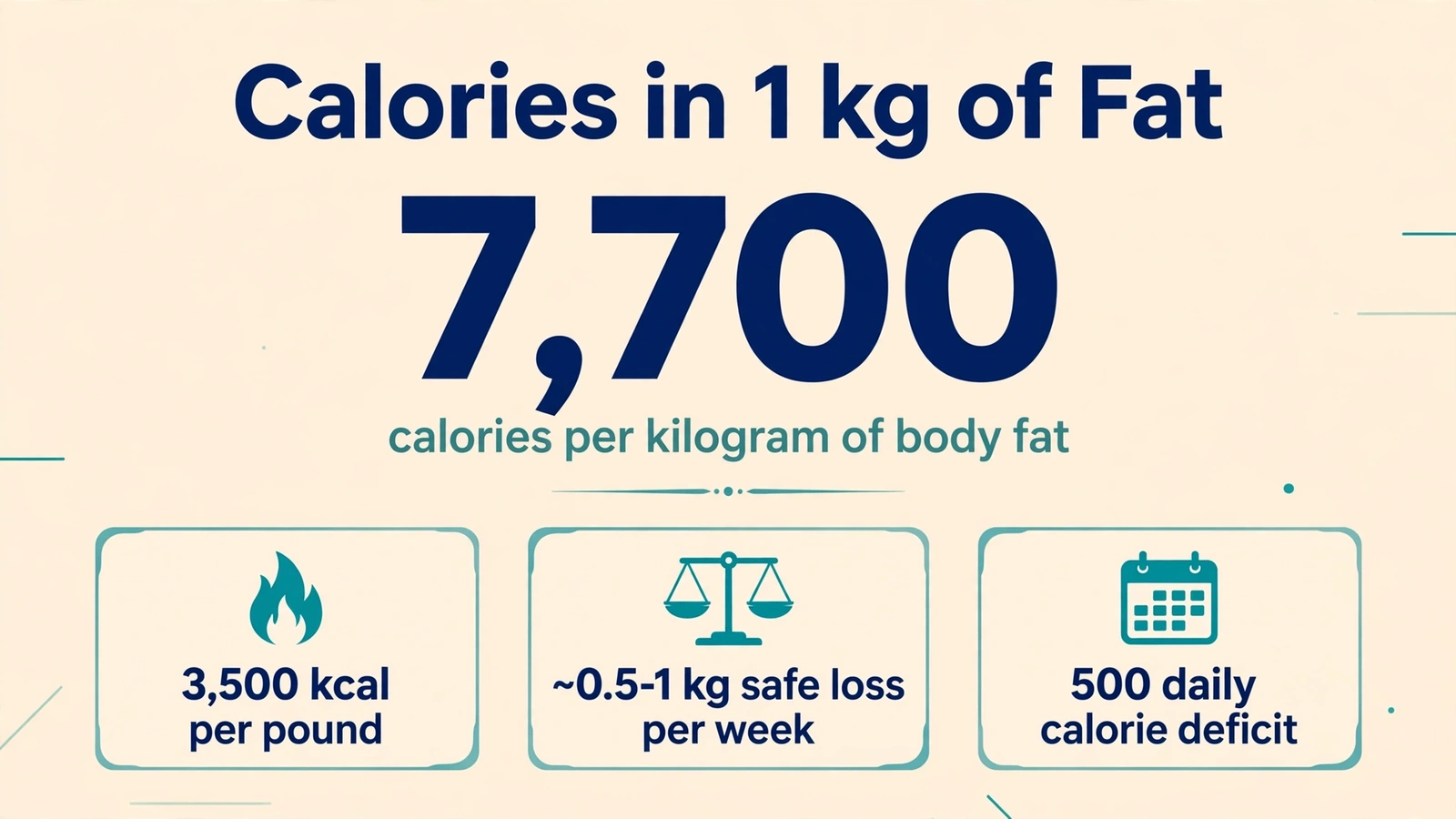
One kilogram of human body fat holds about 7,700 calories. That is the short answer to the calories in 1 kg fat question, and it is the number dietitians and researchers use when they plan weight loss. The longer answer is more interesting: the fat inside your body holds less energy than pure fat, and your bathroom scale can mislead you.
If you want to lose a kilogram of fat, you need to burn roughly 7,700 more calories than you eat. Spread over a couple of weeks, that is a realistic target; crammed into a crash diet, it is a recipe for rebound weight gain.
How Many Calories Are in 1 kg of Body Fat?
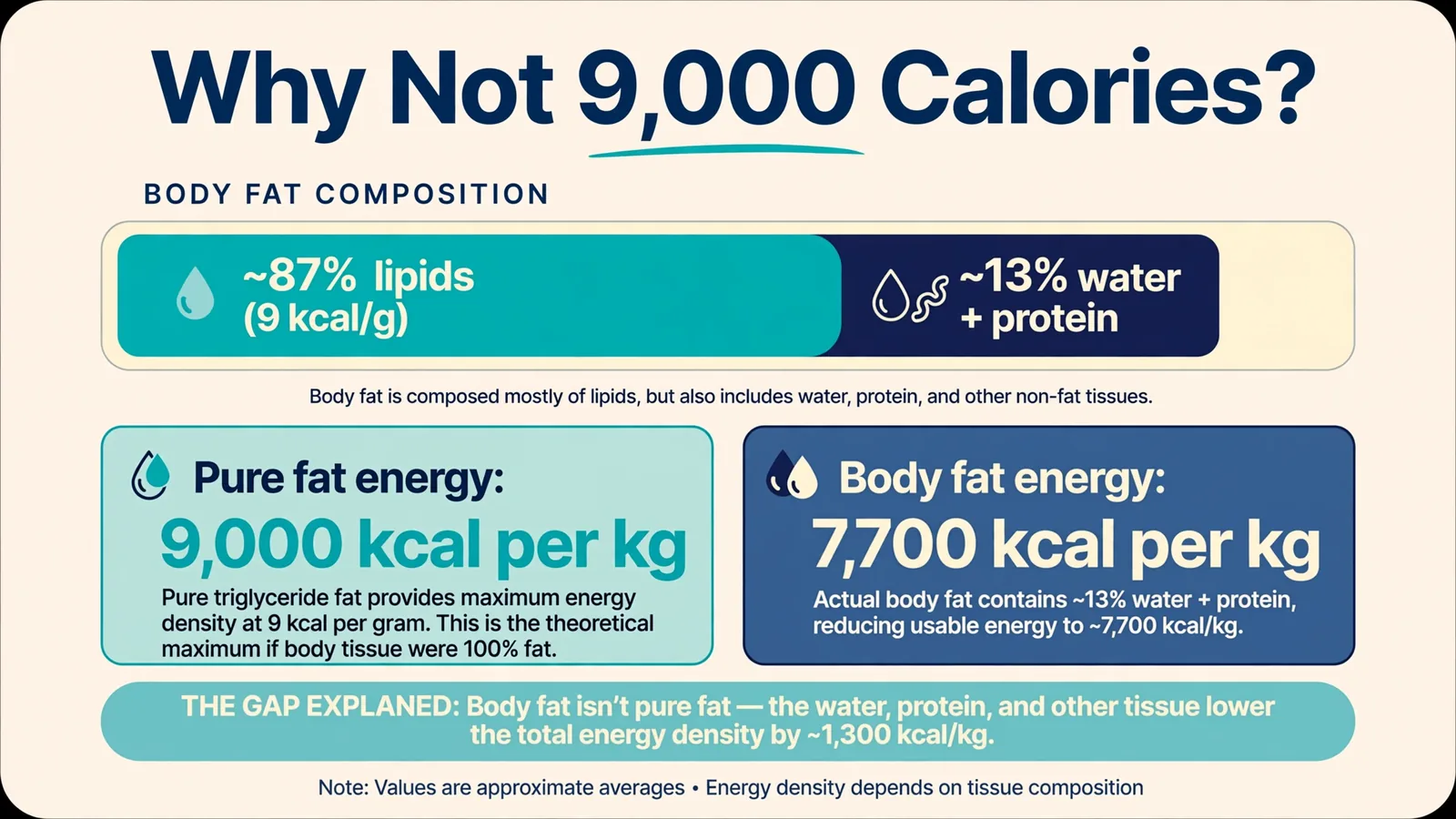
The widely used answer is 7,700 kcal. Dietary fat holds about 9 calories per gram, so a full kilogram of pure fat would total roughly 9,000 calories. But the fat stored in your body is not pure. It lives inside adipose tissue, which also holds water, protein, and enzymes. When you account for that mix, the practical value of the calories in 1 kg fat lands at about 7,700.
Researchers call this the Wishnofsky constant: it assumes lost weight is roughly 79 percent fat and 21 percent lean tissue. Reviews of weight-loss trials put the real range at about 7,000 to 9,100 calories per kilogram, so 7,700 is a solid working average.
Why Is 1 kg of Body Fat 7,700 Calories and Not 9,000?
Because body fat is not the same thing as the fat in the nutritional sense. When a nutrition label says a gram of fat has 9 calories, it is talking about pure dietary fat, the kind you would find in a bottle of olive oil. Human adipose tissue is only about 87 percent lipid. The remaining 13 percent is water, connective tissue, and cellular machinery.
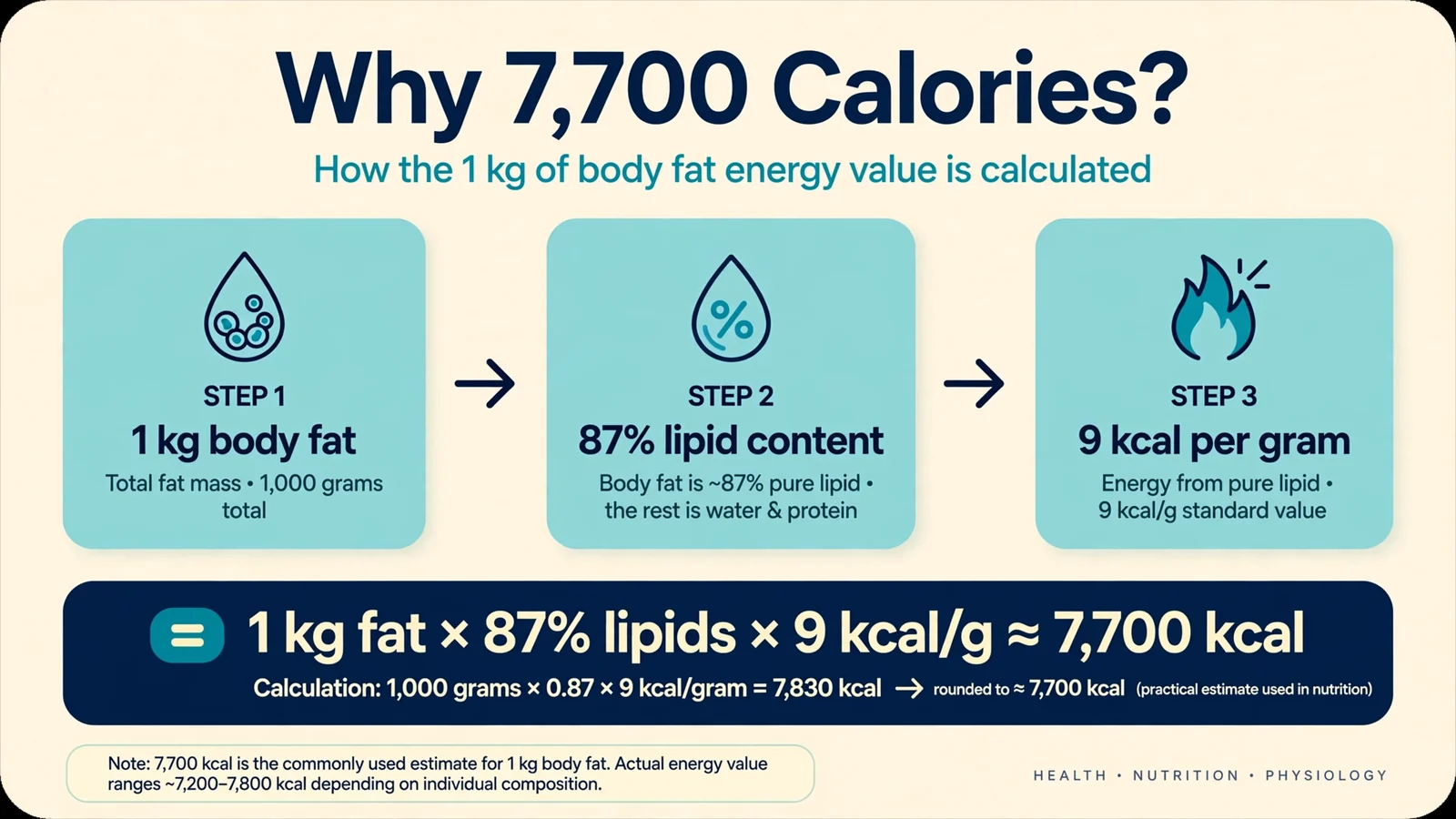
So the math for the calories in 1 kg fat goes like this. One thousand grams of adipose tissue hold about 870 grams of lipid. Multiply by 9 calories per gram and you get 7,830, which researchers round to 7,700. The gap is just water and support tissue, the non-caloric baggage carried alongside stored energy. Both 7,700 and 9,000 are correct in their own context. For weight loss planning, use the calories in 1 kg fat figure of 7,700.
How Does the 3,500 Calorie Rule Work?
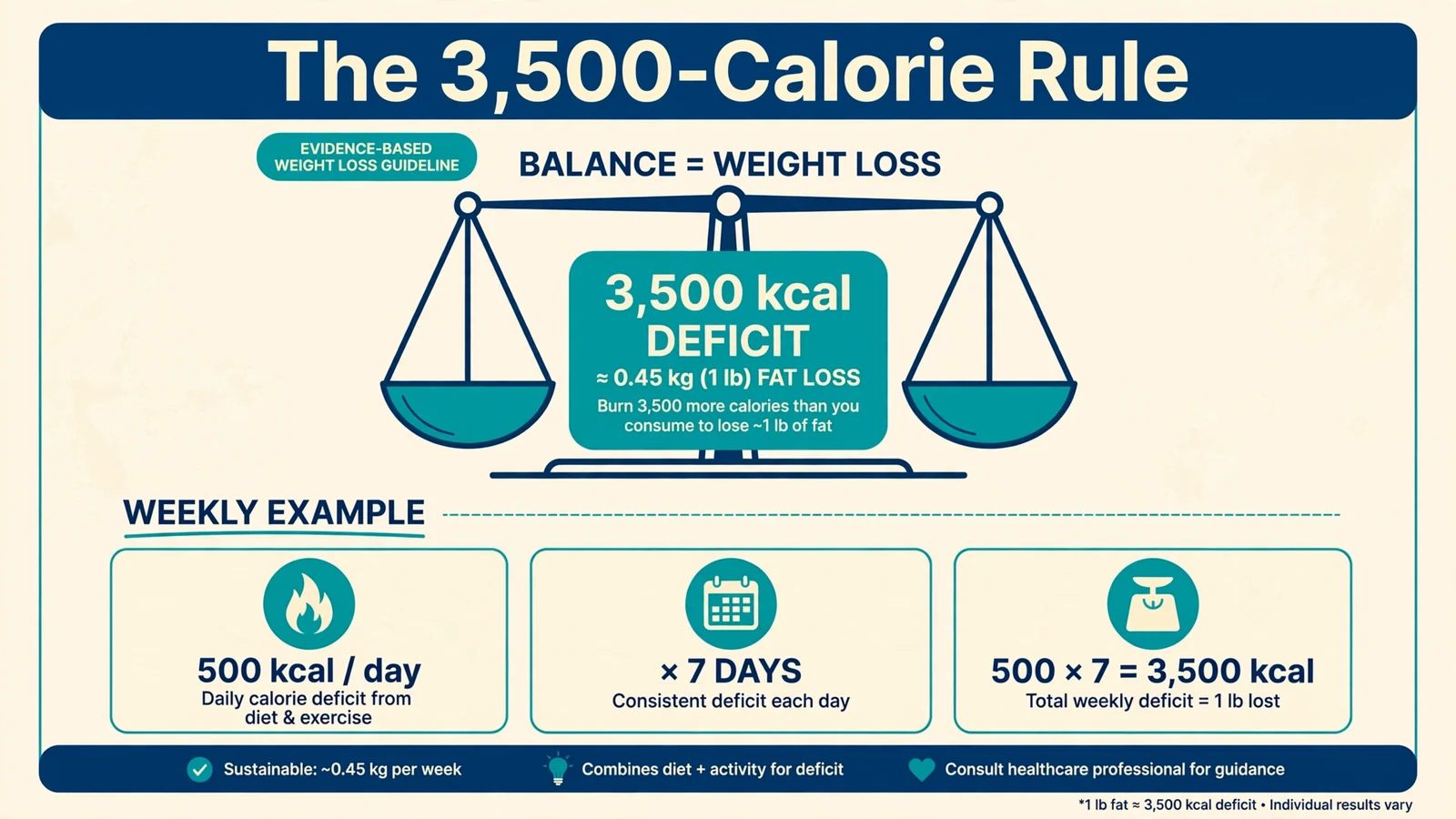
The imperial version says one pound of fat equals 3,500 calories. The logic is identical: a pound is about 454 grams, and at roughly 7.7 calories per gram of adipose tissue, that works out to around 3,500.
This is why so many diet plans use a daily deficit of 500 calories. Five hundred a day times seven days equals 3,500 calories a week, or roughly one pound of fat. Double it and you are looking at about 1 kg every week, which is the top of what experts consider healthy.
It is a handy shortcut with limits: it assumes a steady mix of fat and lean tissue loss, and it ignores metabolic adaptation. Treat the calories in 1 kg fat rule as a planning compass, not a GPS.
How Do You Burn 7,700 Calories to Lose 1 kg?
There are only two levers: eat fewer calories, or spend more of them. Pulling both works best.
A weekly plan that builds that deficit:
- Cut 400 calories a day from your meals. That is a smaller dinner portion, a skipped sugary drink, or a lighter breakfast. Weekly total: 2,800.
- Walk briskly for 30 minutes a day, five days a week. For a 70 kg person, that burns around 150 calories per session. Weekly total: 750.
- Do two 30 minute bodyweight sessions per week. Think squats, push-ups, and lunges. Roughly 250 calories each. Weekly total: 500.
- Add three more days of light activity, like an evening stroll or housework that gets your heart rate up. Weekly total: about 500.
That is 4,550 calories per week, so the calories in 1 kg fat take about 12 days to burn.
Use a calorie calculator to find your personal daily target. Subtract 500 to 750 from your maintenance number for a steady, sustainable deficit.
How Long Does It Take to Lose 1 kg of Fat?
The table below shows how many days it takes to accumulate the calories in 1 kg fat at different daily rates.
| Daily calorie deficit | Days to lose 1 kg of fat | Roughly |
|---|---|---|
| 300 kcal | 26 days | Just under 4 weeks |
| 500 kcal | 15 days | Just over 2 weeks |
| 750 kcal | 10 days | A week and a half |
| 1,000 kcal | 8 days | Just over a week |
A 500 calorie daily deficit is the sweet spot most experts recommend, working out to about 0.5 kg per week. Push toward 1,000 and the fat comes off faster, but hunger, fatigue, and the risk of losing muscle climb steeply.
One more thing to know: as you lose weight, your body burns fewer calories at rest. A deficit that burned the calories in 1 kg fat in 10 days at 90 kg might take 12 days at 80 kg. That is normal physics, not a reason to panic at a plateau.
Why Does the Scale Move Faster Than Your Fat Loss?
In the first week of a diet, you can lose 2 or 3 kilograms while burning far less than 15,000 calories of fat. That is water weight.
Your body stores about 500 grams of glycogen in your muscles and liver. Every gram of glycogen is stored with roughly 3 to 4 grams of water. Eat less, and your body spends its glycogen first, with the attached water leaving along with it. That drops 1 to 2 kg in days, with almost none of the calories in 1 kg fat actually burned.
The reverse happens too: eat a salty restaurant meal, and you wake up a kilo heavier. It is water, not new fat. Track your weekly average, not your daily number: real fat loss is quiet and steady, and it follows the 7,700 rule.
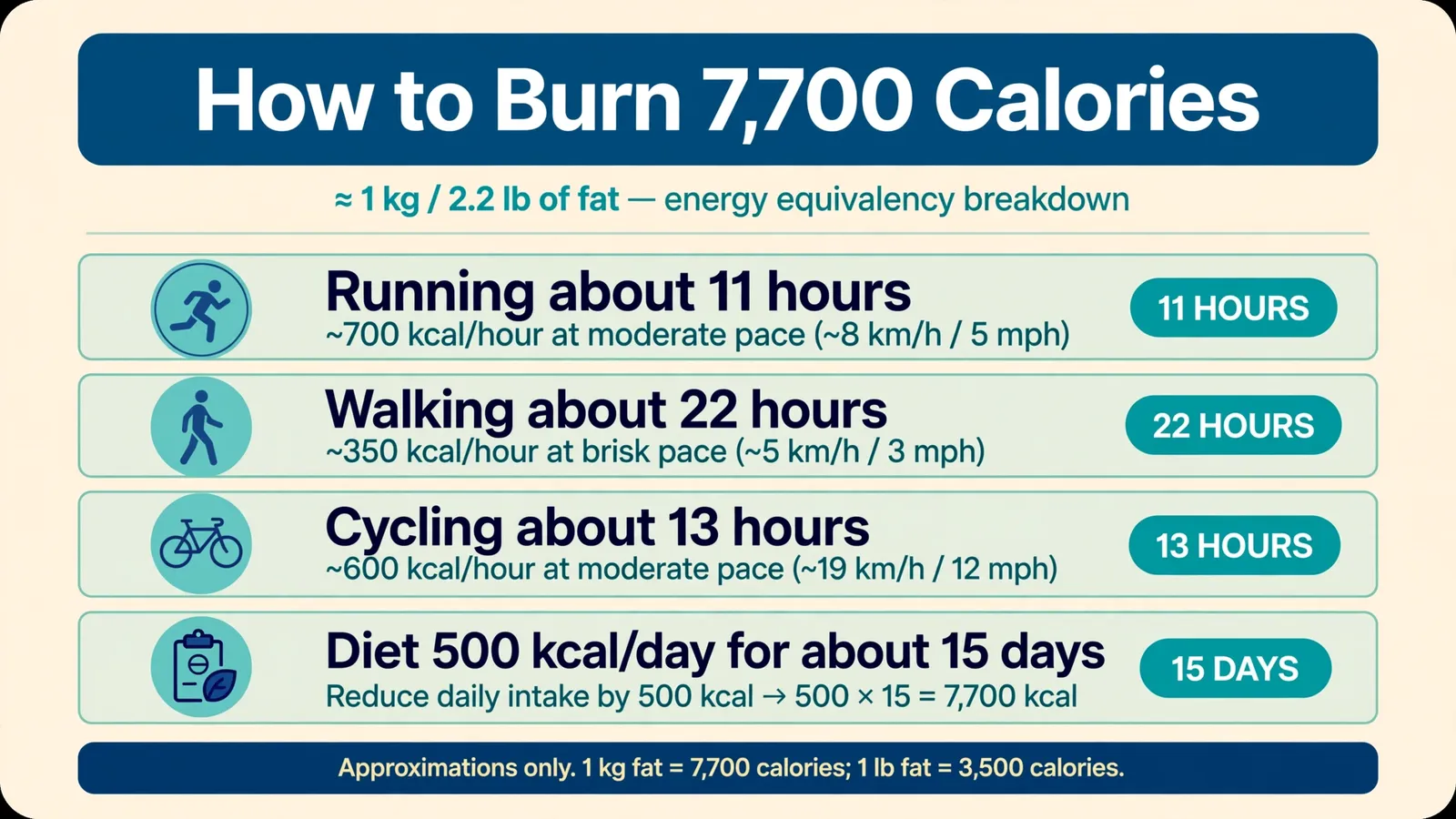
How Can Diet and Exercise Work Together to Burn Fat Faster?
Neither diet nor exercise is enough on its own, but together they are powerful. Diet handles the bulk of the math, because skipping 500 calories is far easier than burning them off. An hour of running burns roughly 600 to 800 calories, while skipping a large soda and fries saves the same amount in seconds.
Exercise earns its place too. It burns extra calories, widening your deficit without deeper food cuts. Resistance training protects muscle, so more of the loss comes from fat. And moving more raises daily energy needs, making the plan easier to sustain.
Try these combinations:
- Cook lighter dinners and take an evening walk. Your biggest calorie saving pairs with your most enjoyable burn.
- Keep low-calorie snacks around so a craving costs 100 calories instead of 400.
- Prefer home workouts? You can burn 500 calories at home with bodyweight circuits and jump rope, no gym required.
Frequently Asked Questions
The standard figure is 7,700 calories per kilogram of body fat. That reflects human adipose tissue, which is about 87 percent lipid; pure fat would hold about 9,000 calories per kilogram.
Yes, losing 0.5 to 1 kg per week is considered safe and sustainable for most people. The CDC favors a steady, gradual approach, and a daily deficit of 500 to 1,000 calories gets you there.
You need a total deficit of about 7,700 calories, which is roughly 550 calories per day for two weeks. Start from your maintenance calories, subtract that number, and stay above 1,200 calories a day for women or 1,500 for men without medical supervision.
Diet matters more for the raw math, because eating less creates a deficit faster than any workout. Exercise matters just as much for protecting muscle and making the plan sustainable over months.
Your first week mostly flushes out glycogen and the water stored with it, which can account for 1 to 2 kg on its own. After that, real fat loss takes over at the steady pace the calories in 1 kg fat rule predicts.
Yes, you can reach a 7,700 calorie deficit purely by eating less. But people who add even moderate activity keep more muscle and regain less weight afterward.
No, it is a useful average. Research shows the actual energy value of a kilogram of lost weight can range from about 7,000 to 9,100 calories depending on your body composition.
Conclusion
About 7,700 calories in 1 kg fat. Now you know where that number comes from, why it is not 9,000, and how long it takes to burn it off at different deficits. The math rewards patience: a steady 500 calorie daily deficit beats any crash diet, every time.
Your next step: work out your daily maintenance calories, subtract 500, and track what you eat for one week. If you want evidence-based guidance on setting that up, the CDC’s tips for balancing food and activity and Healthline’s review of the Mayo Clinic Diet are both solid places to start.
1 thought on “Calories in 1 Kg Fat | The Science Behind 7,700 Calories and Real Fat Loss”