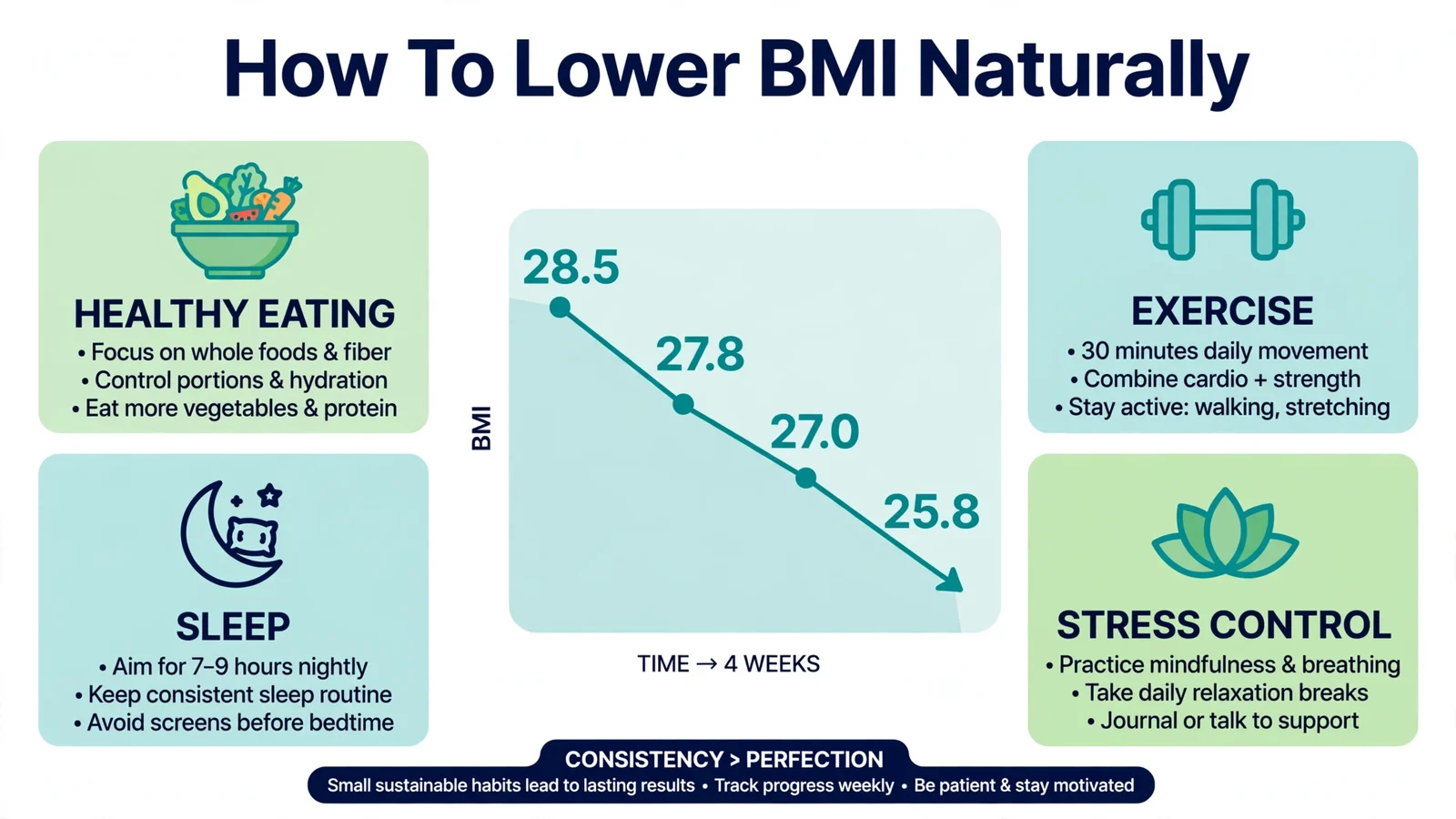
To lower your BMI naturally, create a modest calorie deficit through whole foods and regular movement, aiming to lose 0.5 to 1 kg per week. There’s no trick to it: BMI falls when your weight falls relative to your height, and sustainable habits beat extreme diets every time. Here’s a practical plan that actually works.
What Does It Mean to Lower BMI Naturally?
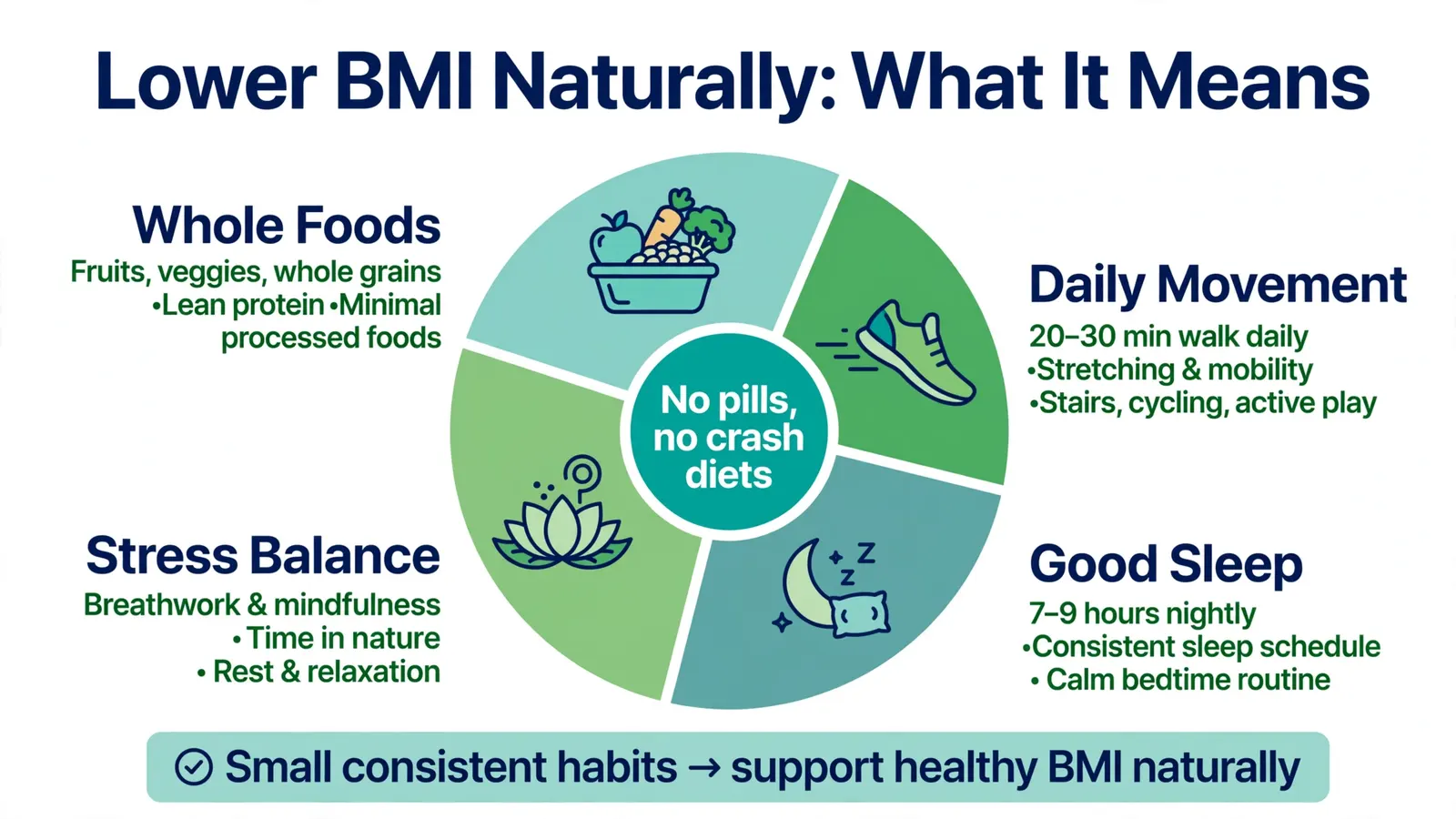
“Natural” here just means without drugs, surgery, or extreme interventions. You’re lowering BMI the old fashioned way: eating a bit less than you burn, moving more, sleeping enough, and managing stress. No pills, no crash diets, no 1,000 calorie meal plans.
It’s worth being clear about the math. Your height doesn’t change, so lowering BMI means lowering weight. To drop from a BMI of 28 to 25, for example, a 5’6″ person needs to lose roughly 19 pounds (about 8.6 kg). That’s very achievable over a few months at a healthy pace.
The “healthy pace” part matters. Guidelines from major health organizations converge on 0.5 to 1 kg (1 to 2 pounds) per week. Faster than that and you start losing muscle along with fat, feeling miserable, and setting yourself up for rebound weight gain.
How Should I Eat to Lower My BMI?
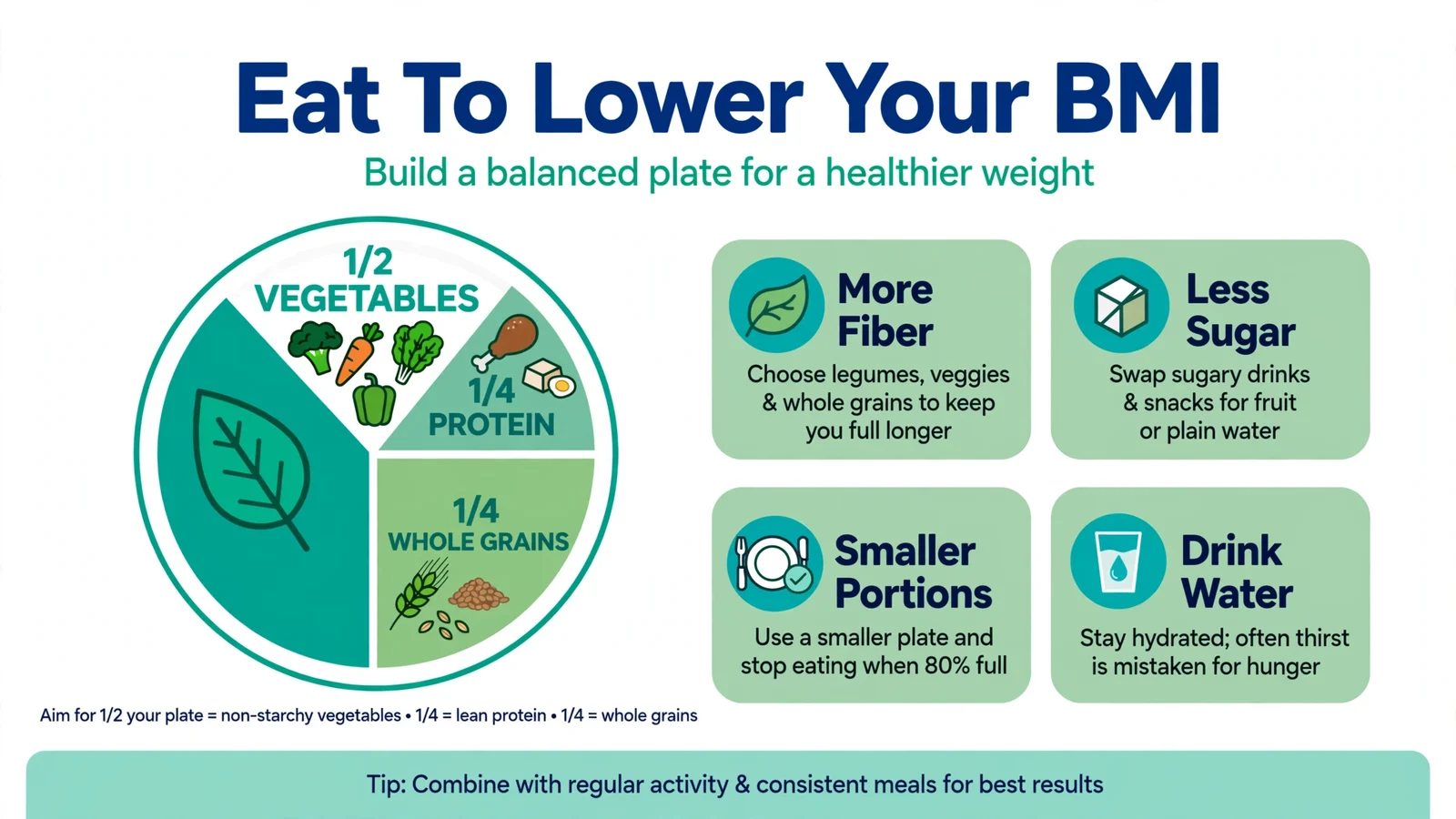
Food does most of the work in BMI reduction. Exercise helps, but you can’t outrun a bad diet, as the saying goes, and the research backs it up: dietary changes drive the majority of weight loss.
Eat in a moderate deficit. Figure out roughly how many calories you burn daily (your TDEE), then eat 300 to 500 fewer. Our calorie calculator can estimate your numbers in under a minute. A 500 calorie daily deficit theoretically yields about half a kilo per week, which is right in the sweet spot.
Prioritize protein. Aim for roughly 1.2 to 1.6 grams of protein per kilogram of body weight daily while losing weight. Protein preserves muscle, keeps you fuller than carbs or fat, and has a higher thermic effect (your body burns more calories digesting it). Eggs, Greek yogurt, chicken, fish, lentils, and tofu are all solid choices.
Fill half your plate with vegetables. They’re low in calories, high in fiber and volume, which means you feel full on fewer calories. This one change does more for most people than any exotic superfood.
Cut liquid calories first. Sugary drinks, fancy coffees, alcohol, and even “healthy” smoothies can add hundreds of calories without satisfying hunger. Switching to water, black coffee, or unsweetened tea is the easiest deficit you’ll ever create.
Cook more, eat out less. Restaurant meals average significantly more calories than home cooked equivalents, often without you realizing it. You don’t have to become a chef. Simple meals, batch cooking on weekends, and keeping healthy staples on hand go a long way.
Don’t ban food groups. Cutting out entire categories (carbs, fat, whatever’s trendy) tends to backfire through cravings and binges. A flexible approach you can maintain for a year beats a perfect plan you abandon in three weeks.
What Exercise Lowers BMI Most Effectively?
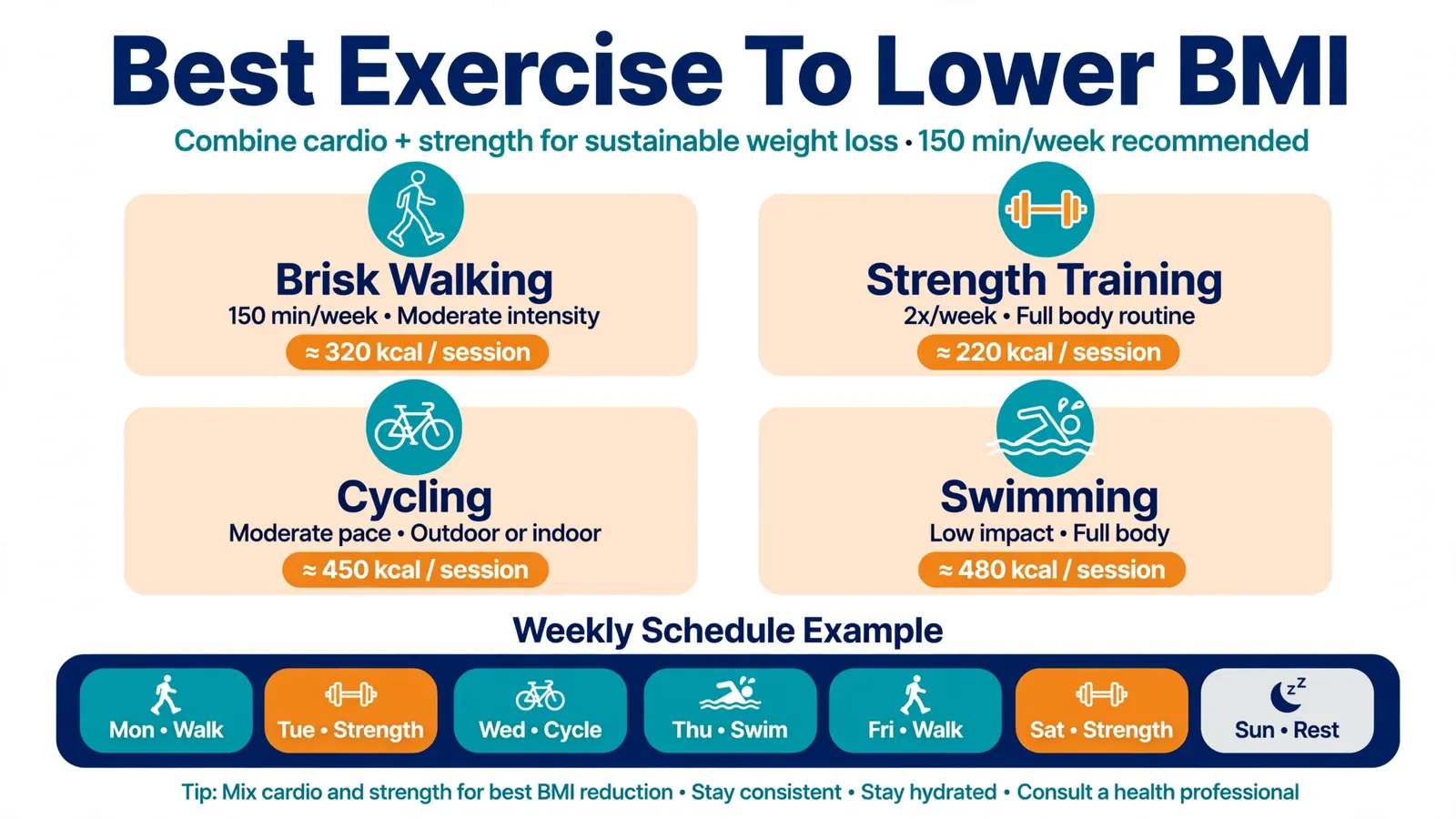
The best exercise for lowering BMI is the one you’ll actually keep doing. That said, some approaches give you more return on your time.
Walking. Seriously underrated. A brisk 30 to 45 minute daily walk burns 150 to 250 calories, improves insulin sensitivity, reduces stress, and requires zero equipment or gym membership. For BMI reduction, consistency with walking beats sporadic intense workouts.
Strength training. This is the highest leverage exercise you’re probably not doing. Muscle is metabolically active tissue, and preserving it during weight loss keeps your metabolism from dropping. Two to three full body sessions per week with dumbbells, resistance bands, or bodyweight exercises is enough to make a real difference.
Cardio you enjoy. Running, cycling, swimming, dancing, hiking: pick whatever doesn’t feel like punishment. Aim for 150 minutes of moderate activity per week, the standard guideline, and build up gradually if you’re starting from zero.
NEAT (non exercise activity). The calories you burn living your life: fidgeting, standing, taking stairs, walking to the shop. Increasing daily movement outside workouts can add hundreds of calories to your expenditure without feeling like exercise at all.
One caution: don’t “eat back” all your exercise calories. Fitness trackers routinely overestimate burn by 20 to 40 percent. Treat exercise as a bonus, not a license to eat more.
How Do Sleep and Stress Affect BMI?
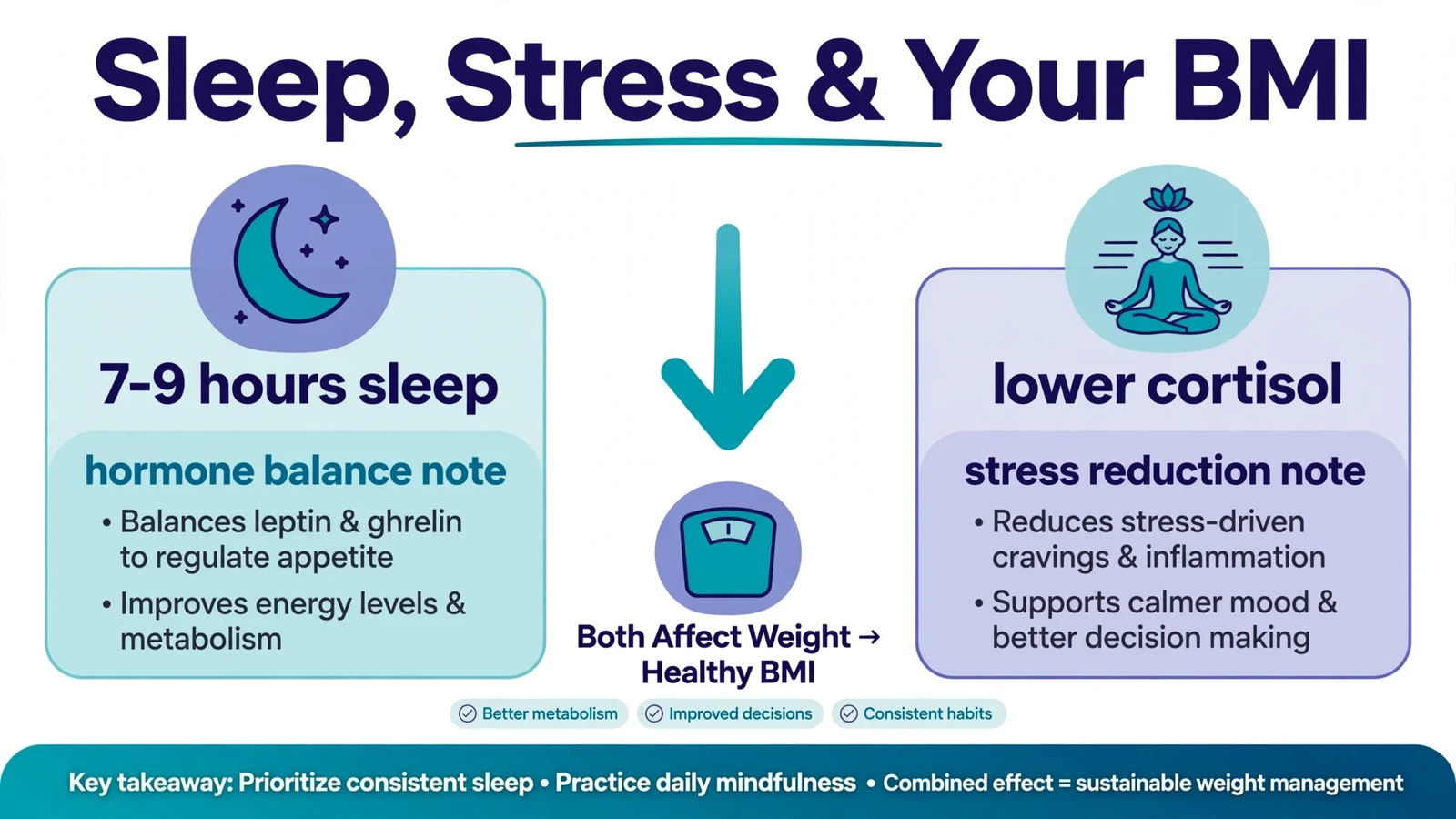
More than most people realize. They’re the silent saboteurs of BMI reduction.
Sleep. Sleeping under 6 hours a night disrupts ghrelin and leptin, the hormones that regulate hunger and fullness. The result: you feel hungrier, crave high calorie foods, and have less willpower to resist them. Studies consistently link short sleep to higher BMI. Aim for 7 to 9 hours. Keep a consistent bedtime, dim screens an hour before bed, and keep your room cool and dark.
Stress. Chronic stress elevates cortisol, which promotes fat storage around the abdomen and drives cravings for sugary, fatty comfort foods. You can’t eliminate stress, but you can manage the response: daily walks, brief meditation, journaling, or even just regular breaks from work screens all help.
Alcohol. Worth its own mention. Alcohol is 7 calories per gram (almost as calorie dense as fat), lowers inhibitions around food, and disrupts sleep quality. Cutting back or pausing alcohol during a weight loss phase accelerates progress noticeably for many people.
Fixing sleep alone has helped many people break through weight loss plateaus without changing anything else. Don’t neglect it.
How Long Does It Take to Lower BMI Naturally?
It depends on where you’re starting and how consistent you are, but here’s a realistic frame.
At 0.5 kg per week, dropping one BMI point takes roughly 5 to 7 weeks for an average height adult. Going from a BMI of 29 to 24 (overweight to mid healthy range) is about 5 points, so roughly 6 to 8 months of steady effort.
That sounds slow, and it is. That’s the point. The weight you lose slowly is the weight you keep off. Rapid loss overwhelmingly comes back: research on weight regain shows the majority of people who lose weight quickly regain it within a few years, while slow, habit based losers maintain far better.
Track your trend, not daily fluctuations. Weigh yourself 2 to 3 times a week under consistent conditions (morning, after bathroom, before eating), and watch the 4 week average. Water, glycogen, hormones, and digestion can swing daily weight by a kilo or more in either direction. The trend is the truth.
And recalculate your BMI monthly. Watching the number tick down from 28.4 to 27.9 to 27.3 is genuinely motivating, and it confirms your plan is working before the mirror catches up.
Frequently Asked Questions
How can I lower my BMI in a week?
You can’t meaningfully lower BMI in a week through fat loss; a kilo or two of fluctuation is mostly water. Anyone promising dramatic weekly BMI drops is selling something. Aim for 0.5 to 1 kg per week and think in months, not days.
What foods lower BMI fastest?
No food directly lowers BMI; only a sustained calorie deficit does. But high protein foods, vegetables, legumes, and whole grains make the deficit easier by keeping you full on fewer calories. The “fastest” diet is the one you can stick with.
Does drinking water help lower BMI?
Indirectly, yes. Drinking water before meals can reduce calorie intake slightly, and replacing sugary drinks with water cuts significant calories. Water itself has no fat burning magic, but hydration supports every system involved in weight management.
Can I lower BMI without exercise?
Yes. Weight loss is driven primarily by diet, and you can absolutely lower BMI through food changes alone. But adding movement preserves muscle, improves mood and sleep, and makes maintenance much easier. Diet gets you there; exercise helps you stay.
Why is my BMI not going down even though I’m dieting?
Common culprits: underestimating calories eaten, overestimating calories burned, water retention masking fat loss (especially with new exercise or hormonal cycles), or simply not enough time. Track honestly for 3 to 4 weeks before judging. If the trend is truly flat, tighten the deficit slightly.
Is it safe to lower BMI quickly?
Losing more than 1 kg per week regularly risks muscle loss, nutrient deficiencies, gallstones, and metabolic slowdown, plus it’s much harder to sustain. Very rapid weight loss should only happen under medical supervision. Slow and steady isn’t just a cliché here; it’s the evidence based recommendation.
Conclusion
Lowering your BMI naturally comes down to unglamorous fundamentals: eat a little less than you burn, prioritize protein and vegetables, walk daily, lift something heavy twice a week, sleep 7 to 9 hours, and keep stress in check. No single hack matters as much as doing the basics consistently for months.
Start today with one change, not ten. Calculate your numbers with our free BMI calculator to know exactly where you stand, then use our calorie calculator to set a sensible daily target. Small deficit, sustained over time, is the entire secret.
For authoritative guidance on healthy weight loss, the CDC’s healthy weight page covers the fundamentals, and the NHS weight loss plan offers a structured 12 week program that’s free and evidence based.