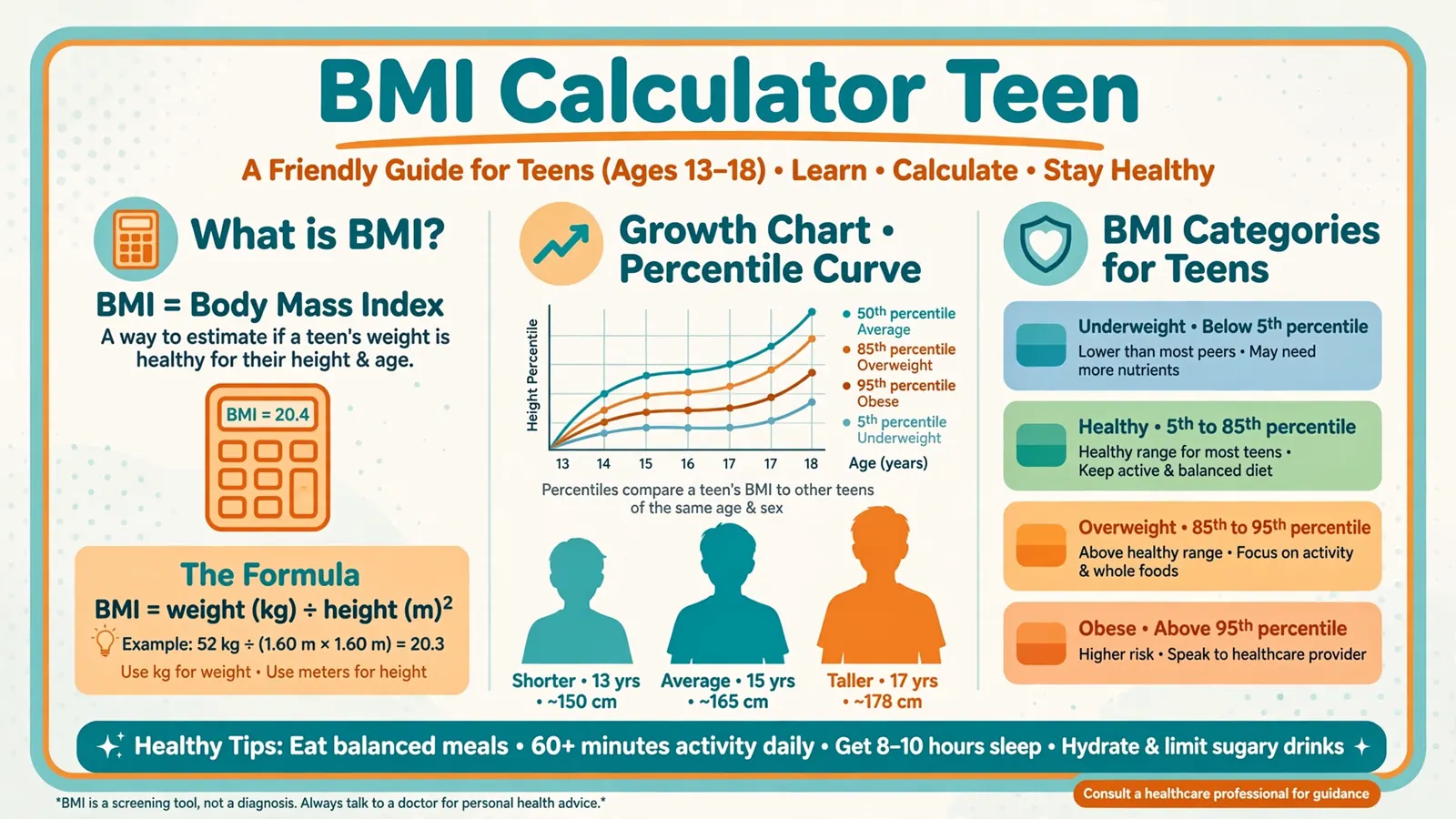
A BMI calculator teen tool checks whether a teenager’s weight is healthy using CDC BMI-for-age percentiles, not the fixed adult cutoffs. Enter the teen’s age, sex, height, and weight, and the calculator shows the BMI percentile, which places them in the underweight, healthy weight, overweight, or obesity category.
[Image: bmi-calculator-teen-featured.webp]
Teen bodies change fast. Growth spurts, puberty, and muscle development can all move the number on the scale without meaning anything is wrong. That is exactly why teenagers need their own system. This guide explains how a teen BMI calculator works, how to read the percentile result, and what to do with the information.
What Is a BMI Calculator Teen Tool?
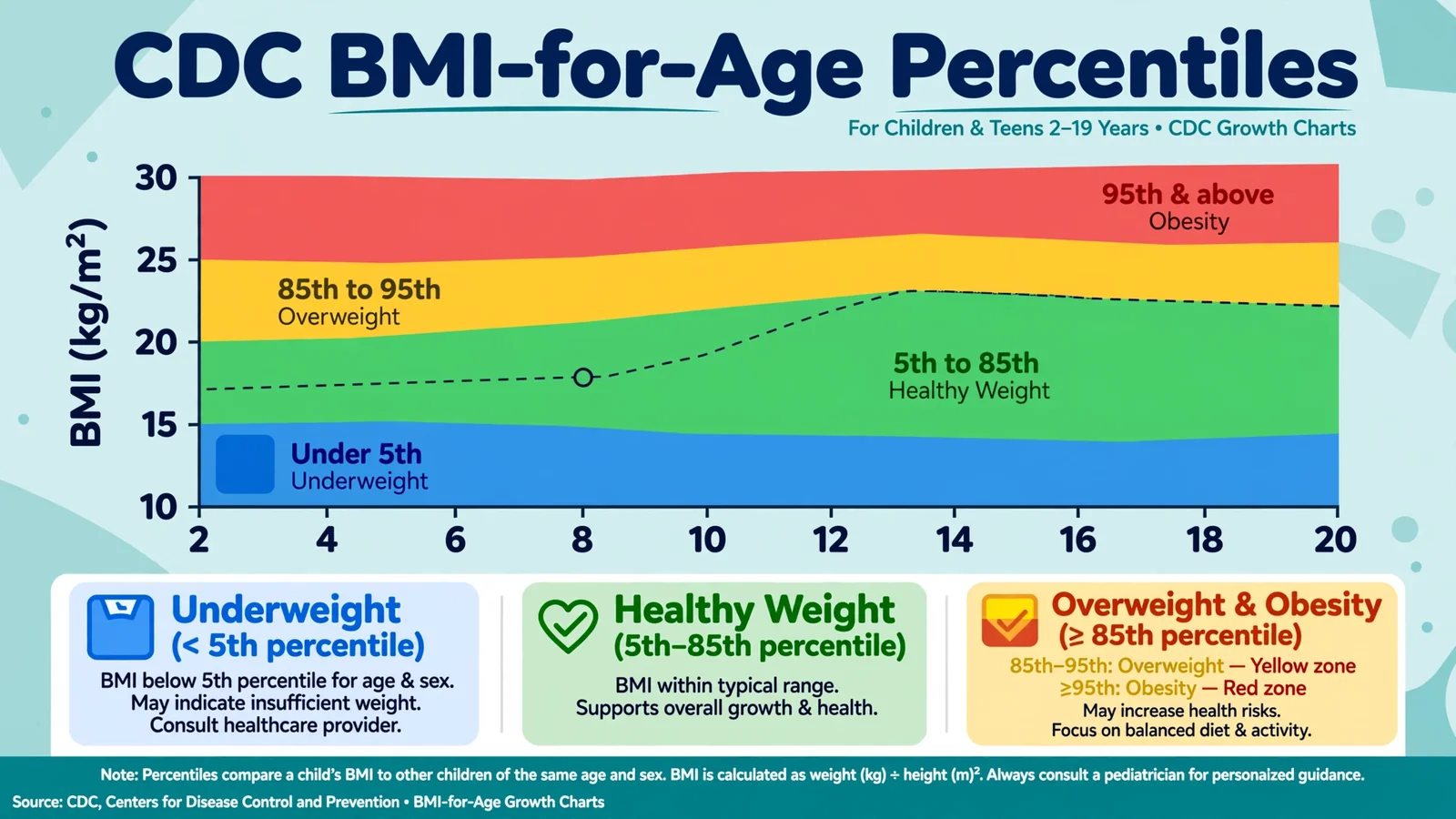
A BMI calculator teen tool is a version of the body mass index calculator designed for ages 2 through 19. It starts with the same math as the adult version, dividing weight in kilograms by height in meters squared, but then it takes one extra step: it compares the result to other children of the same age and sex using the CDC growth charts and reports a percentile.
That percentile is the number that matters. A BMI of 22 means something completely different for a 13-year-old boy than for a 19-year-old girl, because healthy body fat levels shift throughout childhood and adolescence. The calculator handles that adjustment automatically, which is why you should never judge a teen’s BMI against the adult cutoffs of 18.5, 25, and 30.
How Does a Teen BMI Calculator Work?
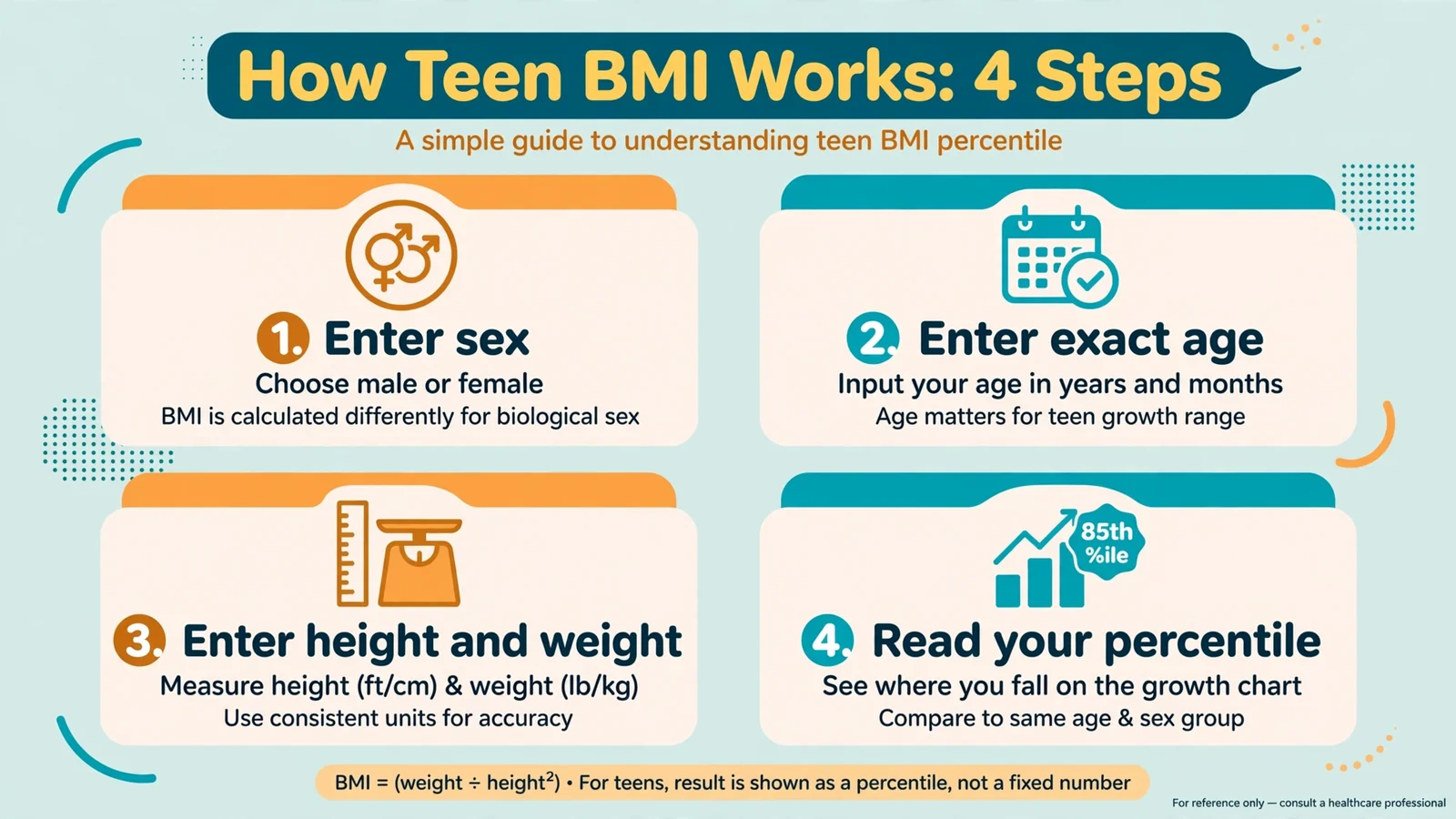
Using the tool is simple, but each input plays a specific role:
1. Enter the teen’s sex. Boys and girls follow different growth patterns, so the CDC maintains separate charts for each. 2. Enter the exact age. Percentiles are calculated by age in months, so being precise matters. A 14-year-old who just turned 14 sits at a different point on the chart than one about to turn 15. 3. Enter height and weight. Measure height without shoes, standing straight against a wall. Weigh in light clothing, ideally in the morning. 4. Read the percentile. The calculator returns the BMI-for-age percentile, which tells you what share of same-age, same-sex teens have a BMI at or below this one.
For example, a BMI at the 75th percentile means 75 percent of teens of the same age and sex have a lower BMI. It does not mean the teen is 75 percent overweight. That is the most common misunderstanding, so keep it in mind when you see the result.
[Image: bmi-calculator-teen-how-it-works.webp]
What Are the CDC BMI Categories for Teens?
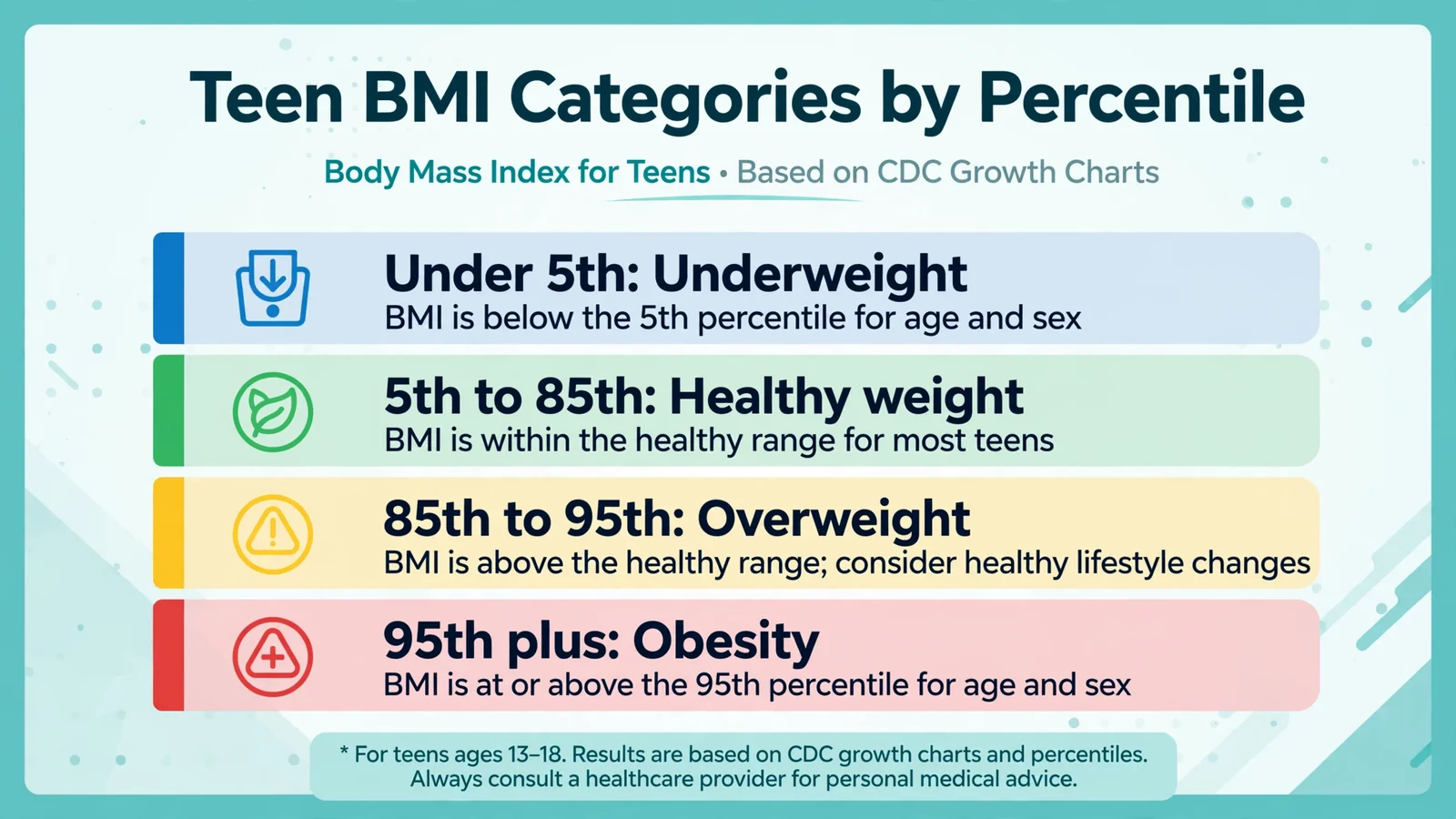
The CDC defines weight status for ages 2 through 19 with these percentile bands:
| Percentile Range | Weight Category |
|---|---|
| Below the 5th percentile | Underweight |
| 5th to below the 85th percentile | Healthy weight |
| 85th to below the 95th percentile | Overweight |
| 95th percentile or above | Obesity |
| 120% of the 95th percentile or BMI 35+ | Severe obesity |
Notice how wide the healthy range is: from the 5th all the way to just under the 85th percentile. That breadth reflects how much normal variation exists in growing bodies. A teen at the 80th percentile and a teen at the 20th percentile can both be perfectly healthy.
The adult system and the teen system meet around age 20, where the top of the growth chart lines up with the adult thresholds. Until then, percentiles are the only valid reading.
[Image: bmi-calculator-teen-categories.webp]
Why Can’t Teens Use Adult BMI Cutoffs?
Adult BMI cutoffs come from research on grown bodies, where the healthy range stays fixed at 18.5 to 24.9 regardless of age. Teen bodies break that assumption in two ways.
First, healthy body fat changes with growth. A 10-year-old naturally carries a different proportion of body fat than a 16-year-old, and boys and girls diverge sharply during puberty. A fixed cutoff cannot capture a moving target.
Second, timing varies enormously. Two 14-year-olds can be at completely different stages of puberty, with different muscle mass, bone density, and fat distribution. The percentile system accounts for this by comparing each teen only to peers of the same age and sex.
Using the adult cutoff of 25 as an overweight line for teens would mislabel many healthy adolescents and miss genuinely concerning cases in younger children. The CDC’s guide to plotting and interpreting BMI-for-age walks through exactly why the percentile approach exists and how clinicians apply it.
[Image: bmi-calculator-teen-percentiles.webp]
What Affects a Teen’s BMI Reading?
Several normal factors can push a teen’s percentile up or down without reflecting excess body fat:
- Growth spurts. Height often shoots up before weight catches up, or vice versa, creating temporary swings in BMI.
- Muscle development. Teens who play sports or lift weights carry more lean mass, which raises BMI without adding fat.
- Puberty timing. Early developers may look heavier for their age compared with later-developing peers, then even out.
- Frame size. Bone structure and natural build vary widely and shift the number independently of fat.
This is why pediatricians treat BMI as a screening tool and a conversation starter, not a diagnosis. A single high or low reading prompts a look at growth history, family patterns, diet, and activity before anyone draws conclusions. If you are tracking an adult’s numbers too, the free adult BMI calculator uses the standard fixed categories.
When Should You Talk to a Doctor?
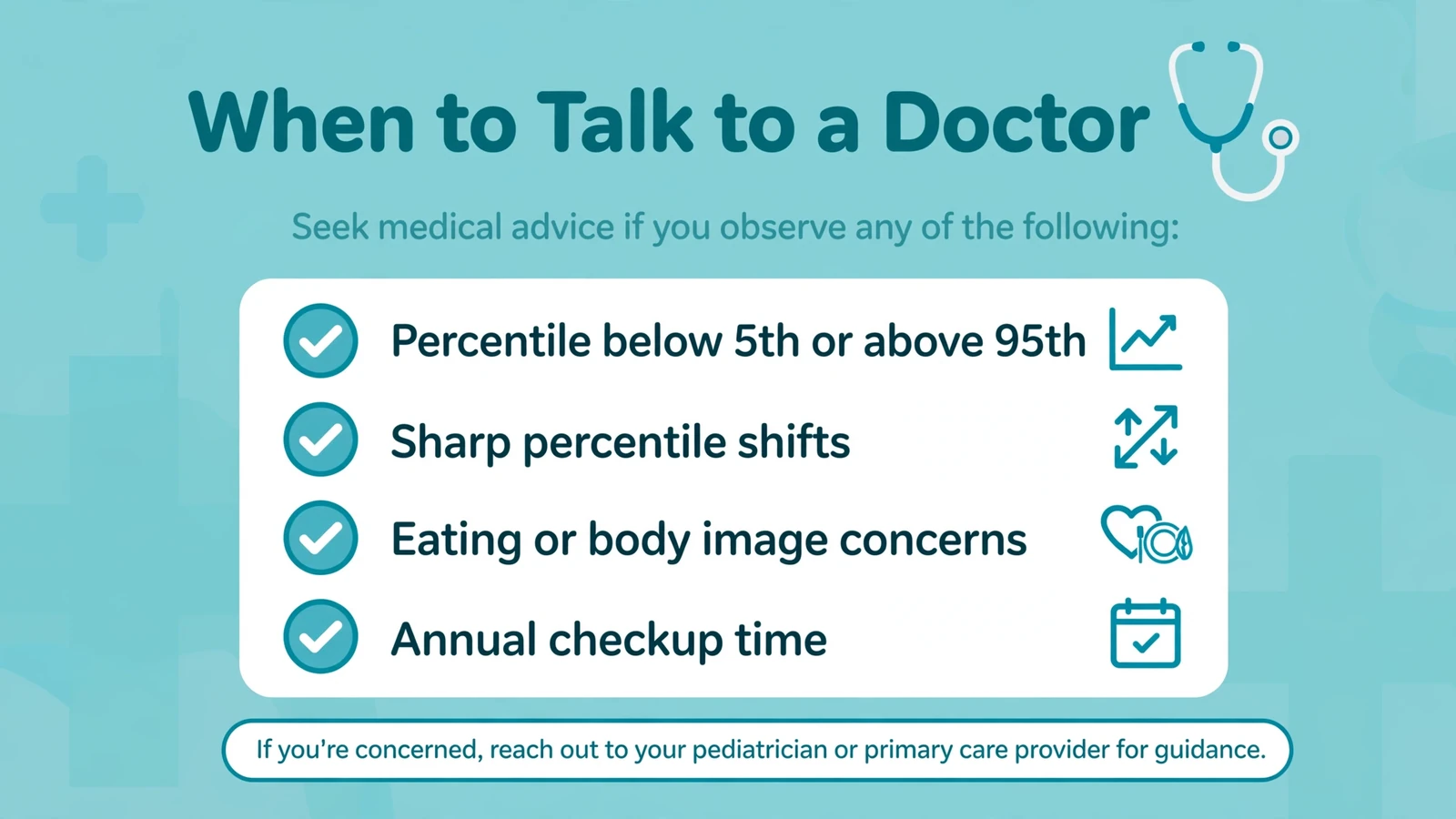
A teen BMI calculator is a home screening tool. Bring the result to a pediatrician or family doctor when:
- The percentile falls below the 5th or at or above the 95th.
- The percentile has shifted sharply across recent checkups.
- There are concerns about eating habits, rapid weight change, or body image.
- You want guidance on nutrition or activity tailored to a growing teen.
Doctors interpret the percentile alongside height and weight trends, pubertal stage, and family history. The CDC’s summary for providers recommends annual BMI assessment for all children and adolescents aged 2 and older, which makes the yearly checkup the natural moment for this conversation.
[Image: bmi-calculator-teen-doctor-visit.webp]
Frequently Asked Questions
What is a healthy BMI percentile for a teen?
The healthy weight range for teens is the 5th percentile up to (but not including) the 85th percentile for age and sex. Anywhere inside that wide band is considered a healthy weight by CDC standards.
How is teen BMI different from adult BMI?
The math is identical, but the interpretation differs. Adults are judged against fixed cutoffs (18.5, 25, 30), while teens are judged against BMI-for-age percentiles that compare them with same-age, same-sex peers. Adult cutoffs do not apply to anyone under 20.
Can a muscular teen have a high BMI percentile?
Yes. BMI cannot distinguish muscle from fat, so athletic teens who train regularly can land in the overweight or obese percentile bands while carrying little excess fat. A doctor can assess body composition and growth trends to put the number in context.
Does BMI percentile account for puberty?
Indirectly, yes. Because percentiles compare a teen with peers of the same age and sex, and most peers go through puberty on roughly similar timelines, the system adjusts for typical developmental changes. Teens who develop much earlier or later than average may still read unusually high or low.
How often should a teen’s BMI be checked?
Once a year at the annual checkup is the standard recommendation. More frequent home checks are fine for tracking trends, but avoid overreacting to small shifts, since normal growth causes the number to move.
What should parents do with an overweight result?
Treat it as a prompt for a conversation, not a verdict. Focus on family-wide habits like regular meals, active play, and limited sugary drinks rather than putting the teen on a diet. A pediatrician can help set realistic, health-focused goals.
Conclusion
A BMI calculator teen tool gives parents and teens a fast, science-backed way to check weight status using the CDC’s percentile system. Remember that the percentile compares a teen with same-age peers, that the healthy band is wide, and that growth spurts and muscle can move the number. Use the result as a starting point for healthy habits and honest conversations with your doctor. Check an adult BMI here when you need the grown-up version, and keep tracking trends rather than chasing any single number.