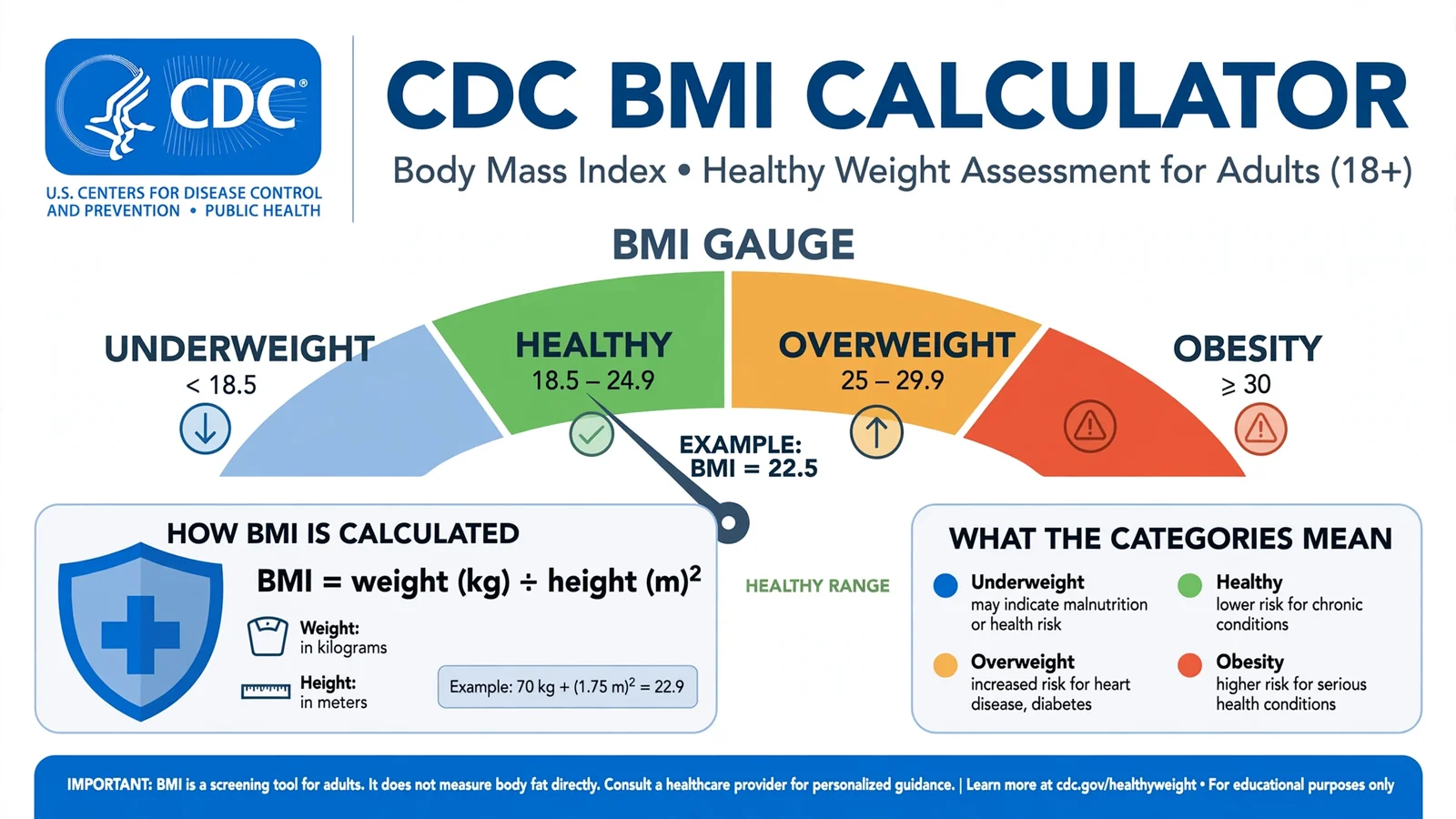
The CDC BMI calculator is the U.S. Centers for Disease Control and Prevention’s official tool for estimating body fat from height and weight. For adults it applies the standard BMI formula and sorts the result into four categories: underweight, healthy weight, overweight, and obesity, using cutoffs recognized worldwide.
[Image: cdc-bmi-calculator-featured.webp]
Millions of people use the CDC’s calculator and charts each year because they come from a trusted public health authority rather than a commercial site. Whether you are checking your own numbers or trying to understand what a doctor meant by your BMI, this guide explains how the CDC calculates BMI, what each category means, and where the tool’s limits lie.
What Is the CDC BMI Calculator?
The CDC BMI calculator is a free online tool published by the Centers for Disease Control and Prevention. You enter your height and weight, and it returns your body mass index along with the weight category that number falls into. The CDC offers two versions: an adult calculator for ages 20 and older, and a child and teen calculator for ages 2 through 19 that reports a BMI-for-age percentile instead of a fixed category.
The adult version is the one most people mean when they search for the CDC BMI calculator. It uses the same formula as every other BMI tool, but its authority comes from the source: the categories and guidance reflect CDC and World Health Organization consensus, and the results pages link to the CDC’s own educational material on healthy weight.
How Does the CDC Calculate BMI?
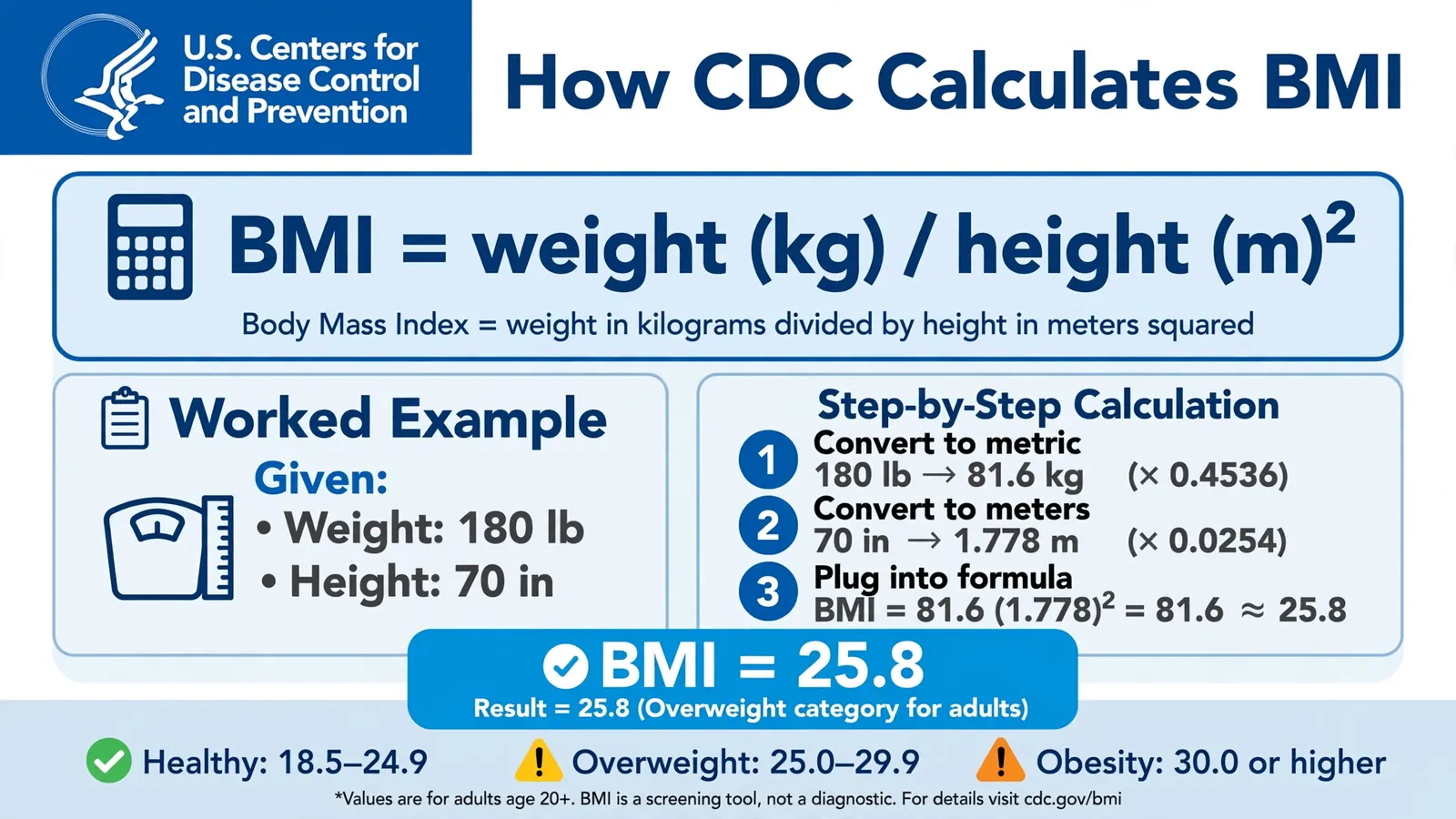
The calculation itself is simple and identical across all reputable calculators:
BMI = weight in kilograms divided by height in meters squared
In imperial units:
BMI = (weight in pounds divided by height in inches squared) multiplied by 703
For example, an adult who weighs 180 pounds and stands 70 inches tall has a BMI of 180 divided by 4,900, times 703, which equals about 25.8. The CDC’s calculator performs this math instantly and then maps the result to its category table.
Try the same inputs on the free BMI calculator to see the identical result. The formula never changes; what differs between tools is the guidance wrapped around it.
[Image: cdc-bmi-calculator-formula.webp]
What Are the CDC BMI Categories for Adults?
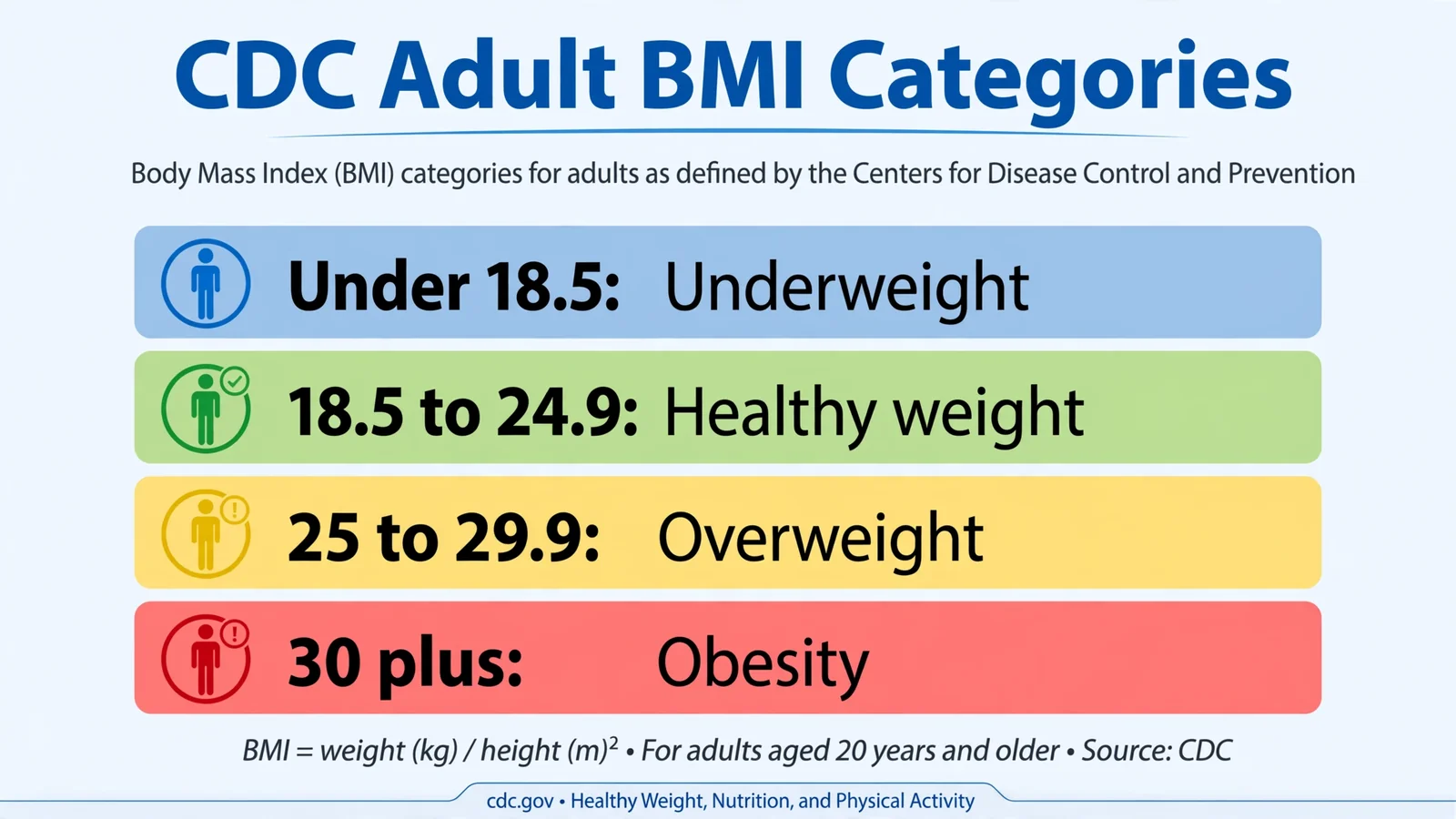
The CDC uses these standard adult categories, which apply to everyone aged 20 and older regardless of sex:
| BMI Range | Category |
|---|---|
| Below 18.5 | Underweight |
| 18.5 to 24.9 | Healthy weight |
| 25.0 to 29.9 | Overweight |
| 30.0 and above | Obesity |
Obesity is further divided into three classes that signal rising health risk:
| BMI Range | Obesity Class |
|---|---|
| 30.0 to 34.9 | Class 1 |
| 35.0 to 39.9 | Class 2 |
| 40.0 and above | Class 3 (severe obesity) |
These cutoffs come from large population studies linking BMI ranges to risks like heart disease, type 2 diabetes, and high blood pressure. The CDC’s official BMI categories page lays out the full table with additional context on what each range implies.
[Image: cdc-bmi-calculator-categories.webp]
How Is the CDC Calculator Different for Children and Teens?
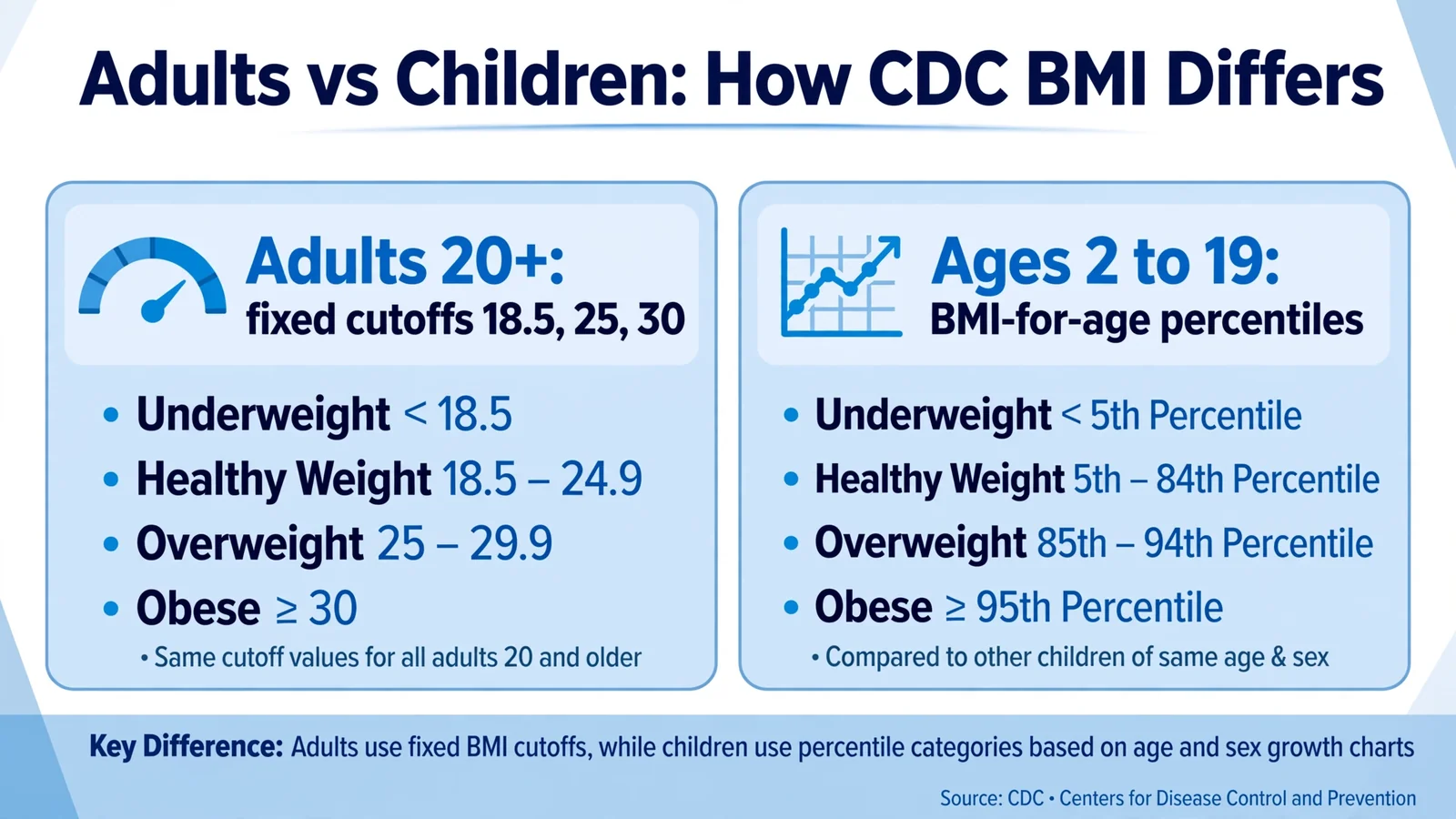
For ages 2 through 19, the CDC calculator works differently. Instead of fixed categories, it reports a BMI-for-age percentile based on the CDC growth charts, comparing the child with others of the same age and sex.
| Percentile | Category (ages 2-19) |
|---|---|
| Below 5th | Underweight |
| 5th to below 85th | Healthy weight |
| 85th to below 95th | Overweight |
| 95th and above | Obesity |
This matters because a fixed cutoff would misjudge growing bodies. A BMI of 23 might be perfectly healthy for a 16-year-old boy but concerning for a 9-year-old girl. The percentile handles that automatically. If you are checking a teenager, make sure you use the child and teen version of the tool, not the adult one.
[Image: cdc-bmi-calculator-adults-vs-children.webp]
How Accurate Is the CDC BMI Calculator?
The CDC BMI calculator is accurate at what it is designed to do: screen populations and flag individuals who may need a closer look. It correctly identifies most cases of excess body fat, and its categories correlate strongly with health risks across large groups.
It is less accurate as a personal diagnostic tool in specific situations:
- Athletes and muscular people. Muscle weighs more than fat, so trained individuals often score as overweight while being lean.
- Older adults. Age-related muscle loss can keep BMI in the healthy range while body fat rises.
- Certain ethnicities. Research suggests the standard cutoffs may underestimate risk in some Asian populations and overestimate it in others.
- Pregnancy. BMI is not a valid measure during pregnancy.
The CDC itself describes BMI as a screening measure rather than a diagnostic tool. A high result means it is worth a conversation with your doctor, not that you have a diagnosis.
What Should You Do After Getting Your CDC BMI Result?
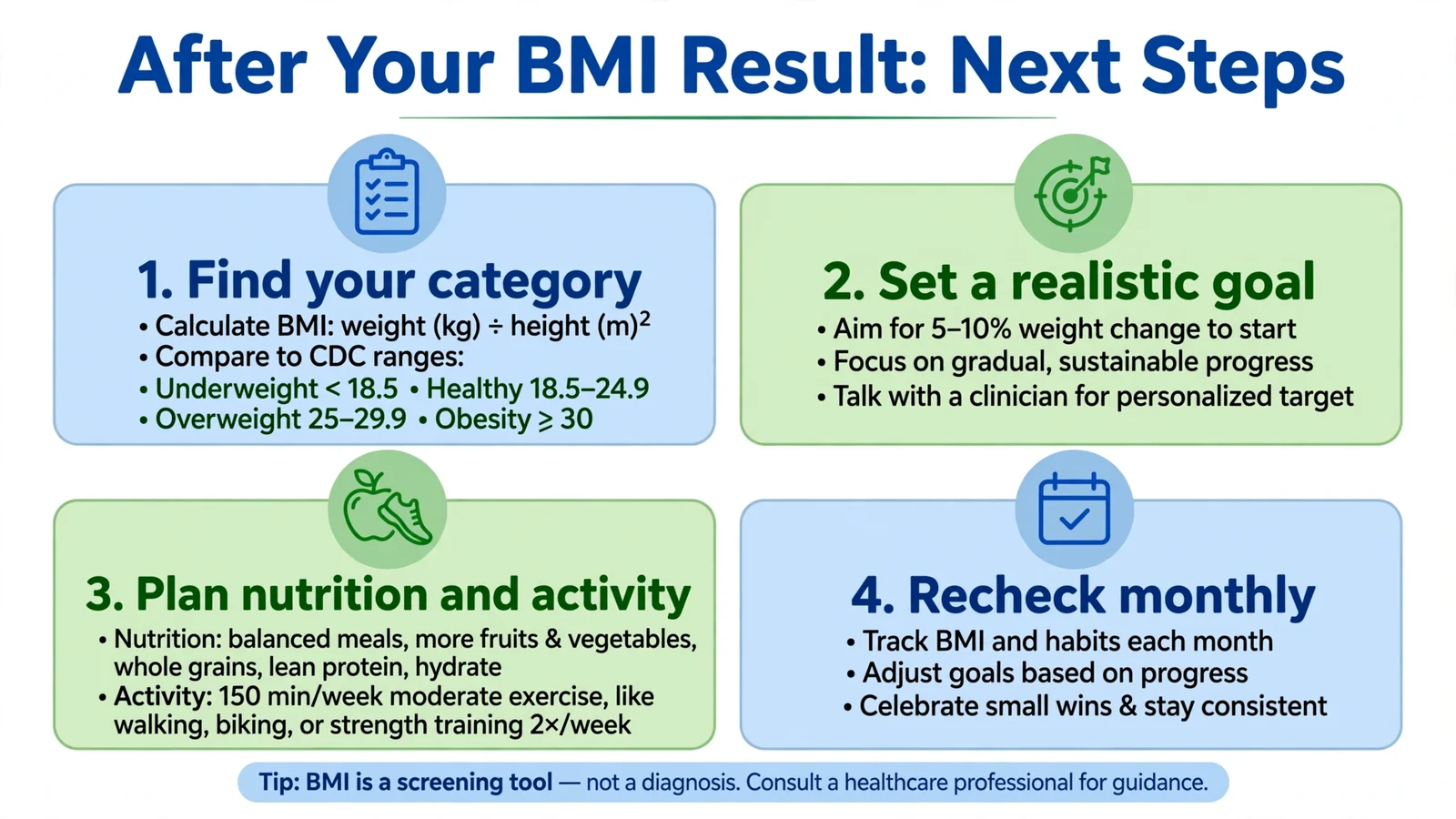
Your result is a starting point. Here is a sensible way to act on each outcome:
1. Healthy weight (18.5-24.9). Maintain your habits. Keep an eye on the trend over time rather than any single reading. 2. Overweight (25-29.9). Look at diet and activity. A modest daily calorie target from a calorie calculator and regular movement are usually enough to shift the trend. 3. Obesity (30+). Talk to a healthcare professional about a structured plan. The higher the class, the more important professional guidance becomes. 4. Underweight (below 18.5). Also worth a medical conversation, since low BMI can signal nutritional gaps or underlying conditions.
Recheck every few months under consistent conditions: morning, before eating, after using the bathroom. Trends across months tell you far more than any single number.
[Image: cdc-bmi-calculator-next-steps.webp]
Frequently Asked Questions
Is the CDC BMI calculator free?
Yes. The CDC’s adult and child BMI calculators are free public tools with no account or payment required. They run entirely in your browser and do not store your data.
What BMI does the CDC consider healthy?
For adults 20 and older, the CDC defines healthy weight as a BMI from 18.5 to 24.9. For children and teens, healthy weight means a BMI-for-age between the 5th and 85th percentiles.
Does the CDC BMI calculator work for athletes?
It calculates the number correctly, but the interpretation may mislead. Muscular athletes often land in the overweight range despite low body fat. The CDC notes BMI is a screening tool, so athletes should pair it with body fat or waist measurements.
Why does the CDC use different charts for kids?
Because children’s healthy body fat levels change as they grow and differ between boys and girls. Fixed adult cutoffs would misclassify many healthy children, so the CDC compares each child with same-age, same-sex peers using growth-chart percentiles.
What is a good BMI for a woman according to the CDC?
The same as for a man: 18.5 to 24.9 for adults. The CDC’s adult categories do not differ by sex, though the health implications of a given BMI can vary with body composition.
Can BMI be wrong?
BMI can mislead for individuals even when the math is right. It does not distinguish muscle from fat, account for bone density, or reflect where fat sits on the body. Treat it as one screening number alongside waist size, activity level, and your doctor’s assessment.
Conclusion
The CDC BMI calculator remains the most trusted starting point for checking your weight status, thanks to its official categories and clear guidance. Calculate your number, find your category in the table above, and treat the result as a prompt for healthy habits rather than a final judgment. Run your numbers through our free BMI calculator now and take the first step with data you can trust.