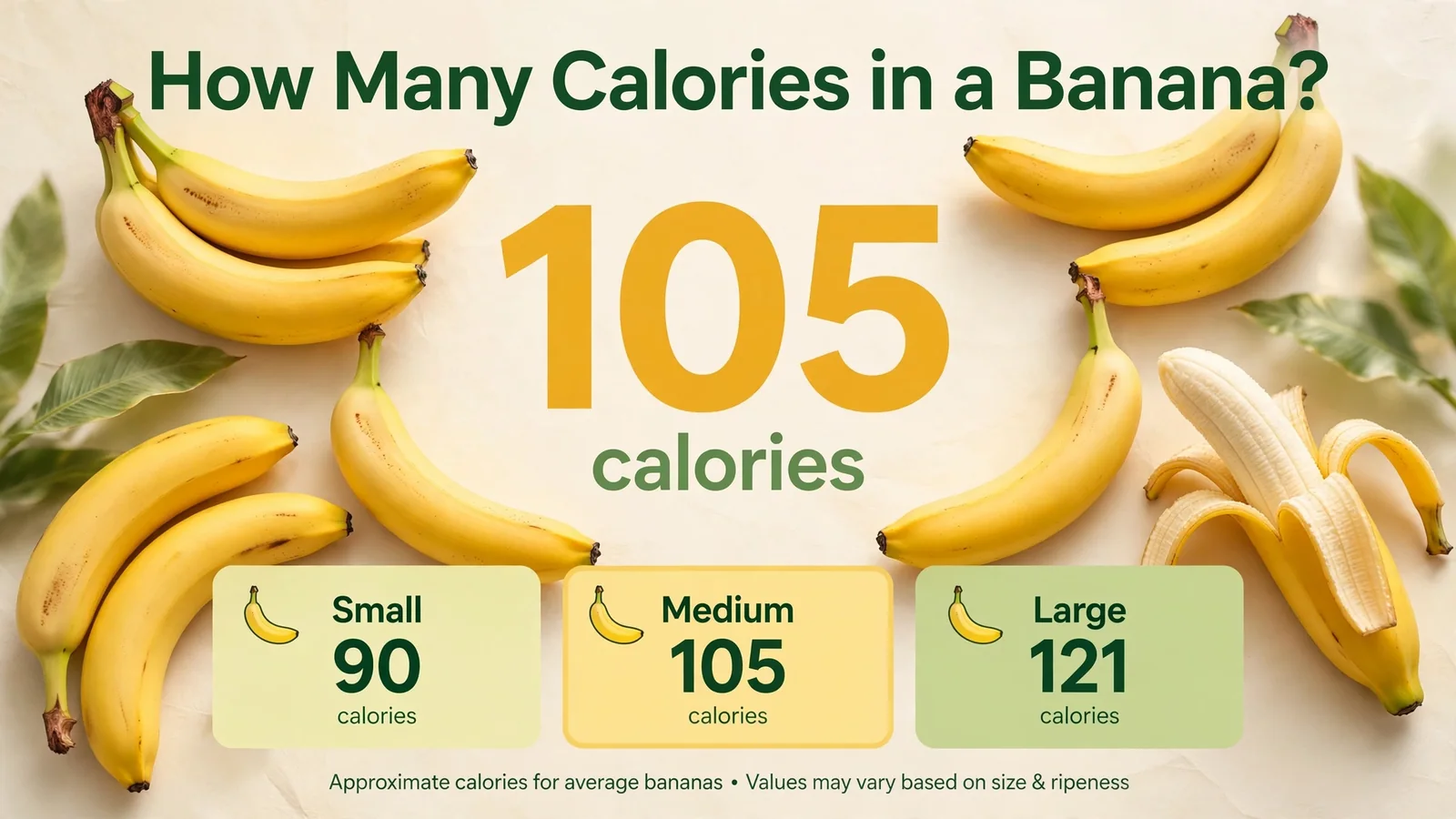
A medium banana has 105 calories. If you searched for how many calories in a banana, that is your answer. But the size of the banana matters more than most people think, and the gap between a small banana and an extra large one is bigger than a snack bar.
Bananas sit in a strange middle ground: not as low in calories as berries, not as heavy as dried fruit, and wrapped in their own perfect portion packaging. In this guide, we break down how many calories are in a banana of every size, the full nutrition facts, how banana calories compare to other fruits, and how they fit into a weight loss plan.
How Many Calories Are in Different Banana Sizes?
Banana sizes vary a lot, and so do their calories. The numbers below come from the USDA FoodData Central database, which is the reference most nutrition labels and diet apps use. A medium banana, the size most people buy, lands right at 105 calories.
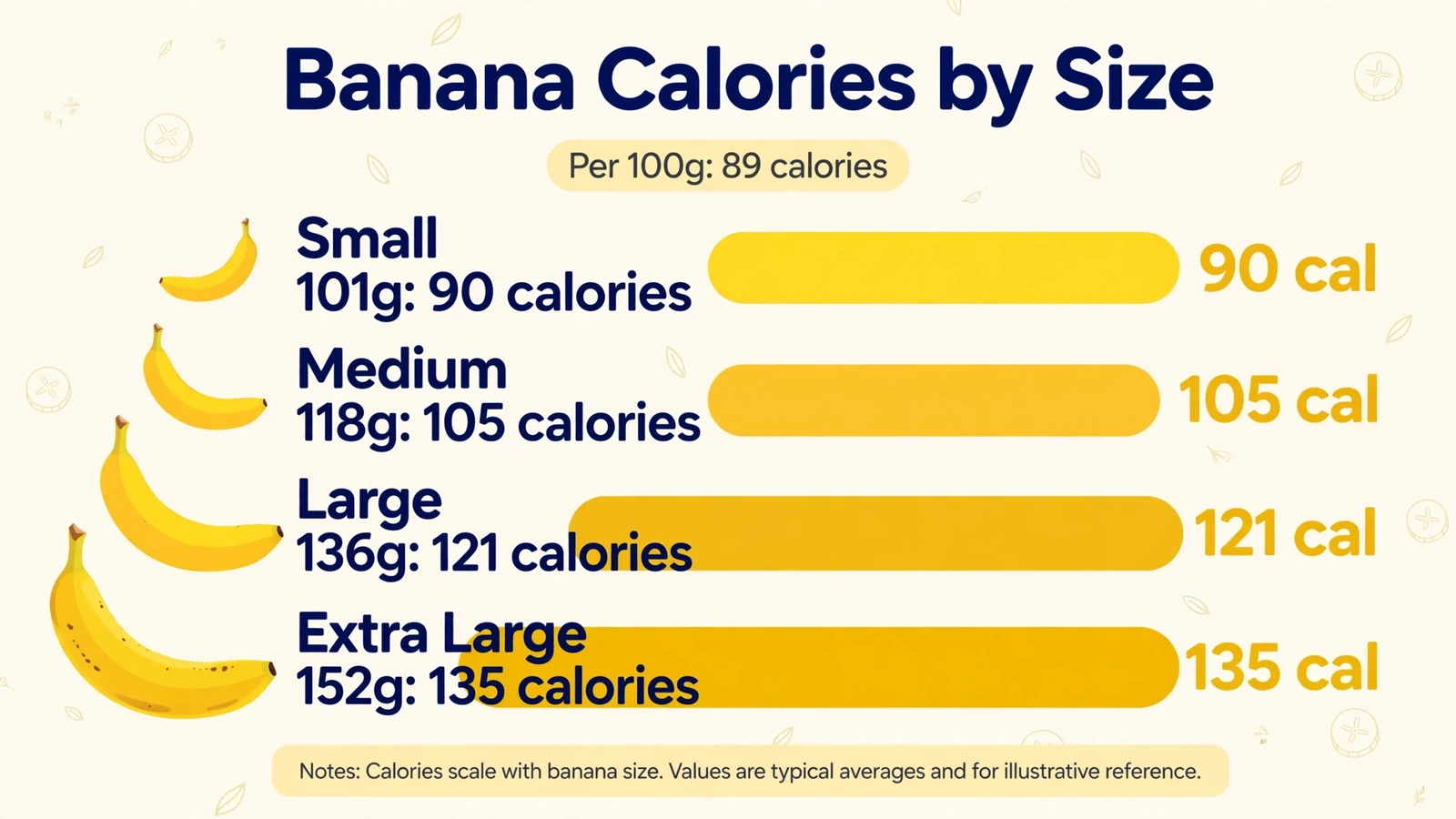
Here is the quick reference:
| Banana Size | Weight | Calories |
|---|---|---|
| Small | 101 g | 90 |
| Medium | 118 g | 105 |
| Large | 136 g | 121 |
| Extra Large | 152 g | 135 |
| Per 100 g | 100 g | 89 |
The gap between a small and an extra large banana is 45 calories. Over a year of daily bananas, that is more than 16,000 calories. Not a crisis, but worth knowing if you count closely.
For perspective, one small banana has about the same calories as a cup of strawberries, a medium banana matches roughly one slice of bread, and a large banana is close to a single digestive biscuit. Per 100 grams, banana calories sit right between grapes and mango.
What Are the Nutrition Facts for a Banana?
Calories are only part of the story. A medium banana delivers a solid mix of carbs, fiber, vitamins, and minerals, which is why it keeps you full longer than 105 calories of candy would.
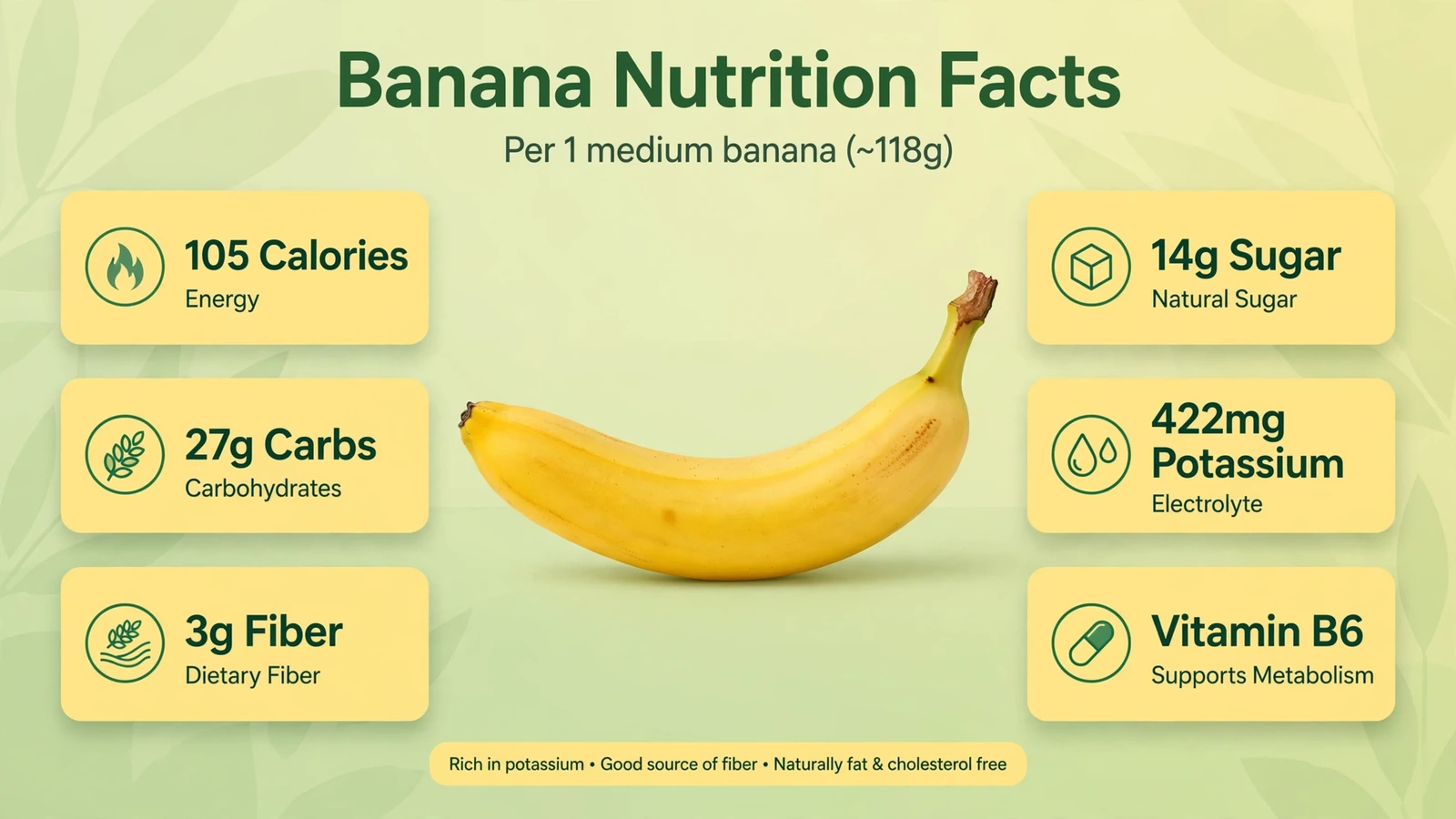
Per medium banana (118 g):
| Nutrient | Amount |
|---|---|
| Calories | 105 |
| Carbohydrates | 27 g |
| Fiber | 3.1 g |
| Sugar | 14.4 g |
| Protein | 1.3 g |
| Fat | 0.4 g |
| Potassium | 422 mg |
| Vitamin C | 10.3 mg |
| Vitamin B6 | 0.4 mg |
| Magnesium | 32 mg |
Per 100 g, the numbers scale down neatly: 89 calories, 23 g of carbs, 2.6 g of fiber, 12 g of sugar, and 358 mg of potassium.
The potassium number is the famous one: about 12 percent of the daily value, which supports healthy blood pressure and muscle function. Vitamin B6 is also notable, covering roughly a quarter of what most adults need per day.
Do Bananas Have a Lot of Sugar and Carbs?
A medium banana has about 14 grams of sugar and 23 grams of carbs. That sounds high next to a handful of raspberries, but the type of carbs matters. Bananas carry their sugar inside fiber and water, which slows digestion and keeps blood sugar from spiking the way a soda would.
The fiber, about 3 grams per medium banana, is doing quiet work here. It slows how fast the sugar reaches your bloodstream and helps you feel full after eating. This is also why the calories in a banana behave differently in practice than the same number of calories from juice or sweets.
The glycemic index of a ripe banana sits in the moderate range, around 51. Higher than an apple, far lower than white bread. Pairing a banana with protein, like peanut butter or a handful of nuts, softens the blood sugar impact further.
Are Green Bananas Lower in Calories?
Green bananas are not lower in calories, at least not by much. An unripe banana has roughly the same calorie count as a ripe one of the same size. What changes is the type of carbohydrate inside.
Unripe bananas are rich in resistant starch, a carb that resists digestion in the small intestine. As the banana ripens, that starch converts into simple sugars, which is why ripe bananas taste sweeter. A green banana may keep you full a little longer because of the resistant starch, and it tends to cause a smaller blood sugar rise.
The practical difference is small. If you prefer a spotted ripe banana, do not switch to green ones for calorie reasons. The calories in a banana are essentially the same at every stage of ripeness, so choose the one you enjoy.
Do Bananas Help or Hurt Weight Loss?
Bananas can fit perfectly well into a weight loss plan. At 105 calories for a medium banana, they are a satisfying snack that replaces far worse options. Research on fruit intake and weight consistently shows that people who eat more whole fruit, bananas included, tend to manage their weight better over time.
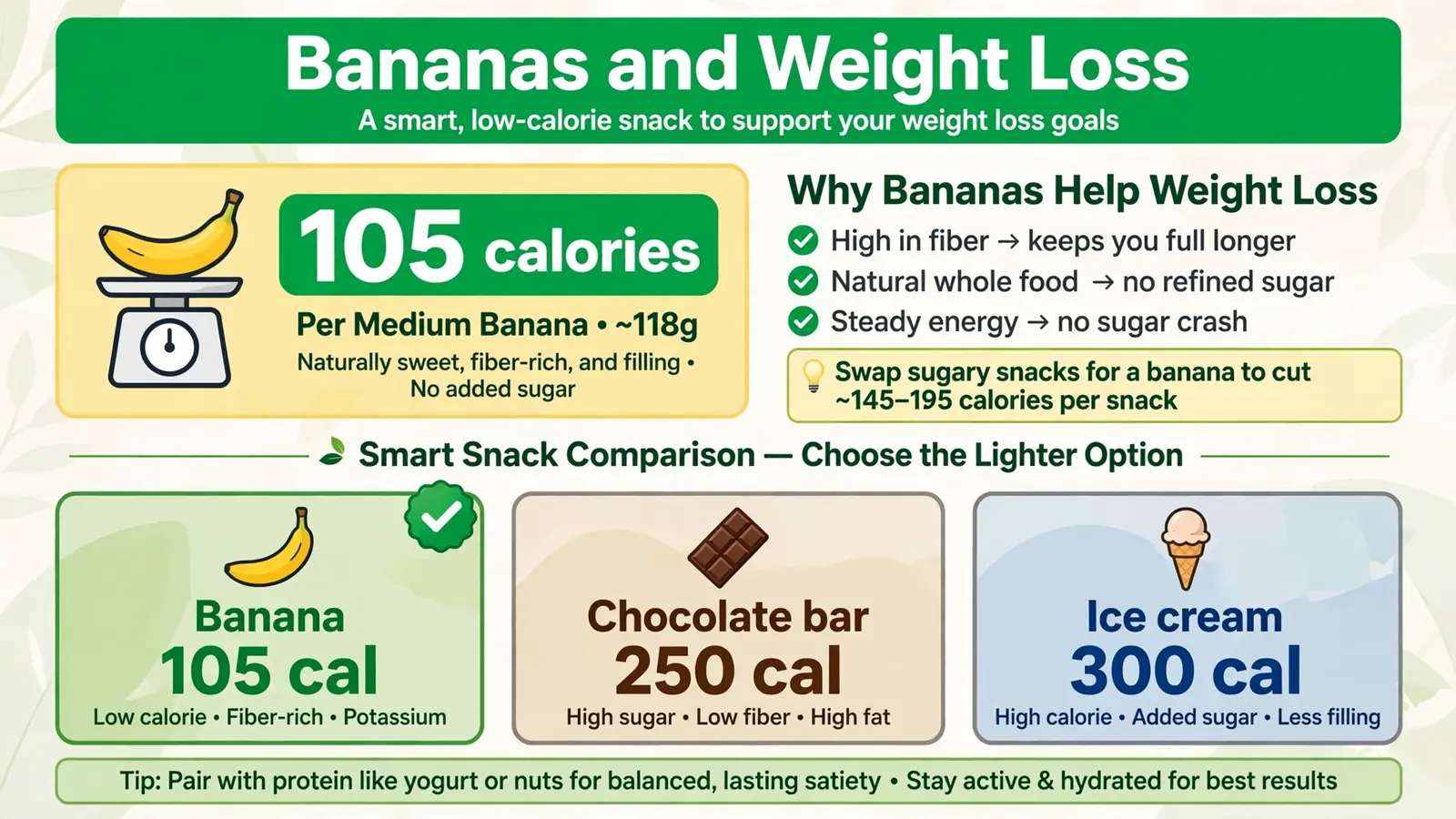
Fiber and resistant starch help you feel full, which means fewer impulse snacks later. A banana before a workout is a classic choice: quick energy that does not sit heavy. A banana after dinner beats a bowl of ice cream by roughly 200 calories and still feels like a treat.
Where people go wrong is not with the banana itself but with what goes on it. A banana with two tablespoons of chocolate spread is a 300-calorie dessert, not a 105-calorie snack. Keep toppings light, or eat it plain, and banana calories stay firmly on your side.
If you are tracking daily intake, a calorie calculator can show you exactly how a banana fits into your personal budget. And if you want to see how your weight trend lines up with your diet, a BMI calculator gives you a quick read on where you stand.
How Do Banana Calories Compare to Other Fruits?
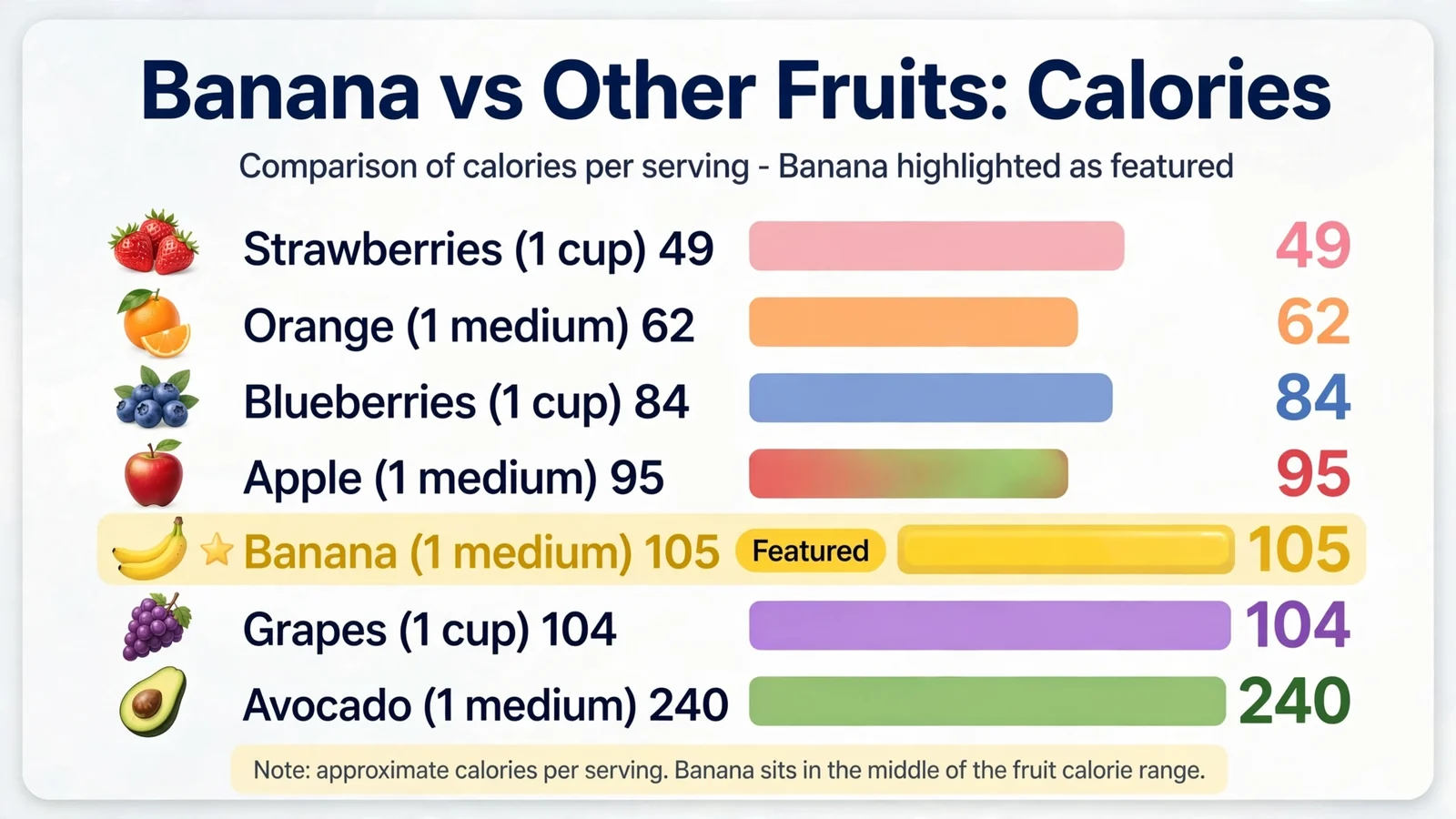
Bananas sit in the middle of the fruit calorie range. Here is how one medium fruit, or a comparable serving, stacks up:
| Fruit | Serving | Calories |
|---|---|---|
| Strawberries | 1 cup | 49 |
| Blueberries | 1 cup | 84 |
| Orange | 1 medium | 62 |
| Apple | 1 medium | 95 |
| Mango | 1 cup | 99 |
| Grapes | 1 cup | 104 |
| Banana | 1 medium | 105 |
| Avocado | 1 medium | 240 |
Banana calories land close to a cup of grapes and a medium apple. Berries are lighter, avocado much heavier. None of this makes bananas a bad choice: a banana is a moderately filling fruit that earns its calories with fiber, potassium, and grab-and-go convenience.
How Many Bananas Can I Eat Per Day?
For most people, one to two bananas a day is a sensible range. There is no magic number, but two practical limits are worth keeping in mind.
First, calories. Two medium bananas add 210 calories to your day. That is fine inside most calorie budgets, but if you are on a strict deficit, it is worth logging. Your personal number depends on your maintenance calories, which a Harris-Benedict BMR calculation can estimate for you.
Second, variety. Bananas are nutritious, but no single fruit covers everything. If bananas crowd out berries, citrus, and other fruits, you miss out on different antioxidants and vitamins. Think of bananas as one member of a fruit team, not the whole roster.
People with kidney conditions should talk to a doctor about potassium intake. For everyone else, the sugar in bananas is natural fruit sugar wrapped in fiber, and normal amounts are nothing to worry about.
Frequently Asked Questions
How many calories are in a banana?
A medium banana (118 g) has 105 calories. Small bananas have about 90, large ones about 121, and extra large bananas around 135. Per 100 grams, bananas contain 89 calories.
How many calories in a banana per 100g?
Bananas have 89 calories per 100 grams. That works out to roughly 23 grams of carbs, 2.6 grams of fiber, 12 grams of sugar, and 358 mg of potassium in the same amount.
Do bananas make you gain weight?
No single food makes you gain weight on its own. Weight gain comes from eating more calories than you burn over time. At 105 calories, a medium banana is a filling snack that fits easily into most diets.
Are bananas good for weight loss?
Yes, bananas can support weight loss. Their fiber and water content help you feel full, and 105 calories is modest for a snack. Just watch high calorie toppings like chocolate spread or extra spoonfuls of peanut butter.
How much potassium is in a banana?
A medium banana has about 422 mg of potassium, roughly 12 percent of the daily value for adults. It also provides meaningful amounts of vitamin B6 and vitamin C.
Can diabetics eat bananas?
Most people with diabetes can eat bananas in moderation. The fiber slows sugar absorption, and pairing a banana with protein or fat helps further. Portion size matters, so a small banana is often the better choice.
Conclusion
So, how many calories in a banana? The answer most people need is 105, the amount in a standard medium banana. From there it scales with size: 90 for small, 121 for large, 135 for extra large, and 89 per 100 grams. The numbers come from the USDA FoodData Central database, which you can browse yourself at USDA FoodData Central for the full nutrient breakdown.
Bananas earn their place: portable, affordable, and genuinely filling for 105 calories. The Harvard Nutrition Source offers solid guidance on how fruit fits into a balanced diet at Harvard Nutrition Source, and bananas show up there as a worthwhile everyday choice.
2 thoughts on “How Many Calories in a Banana? Complete Size Chart & Facts”