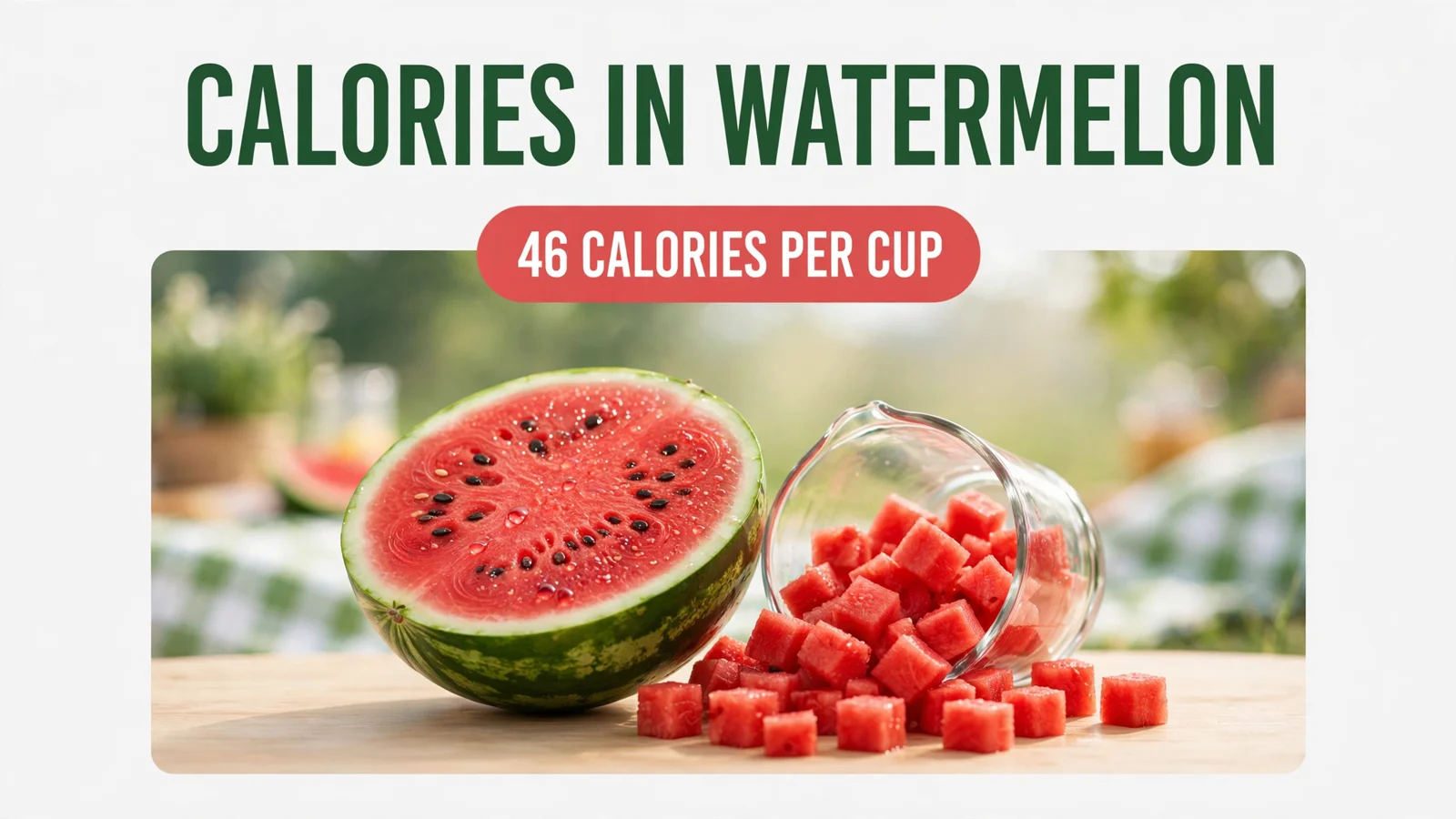
One cup of diced watermelon (about 154 grams) contains just 46 calories. That means the calories in watermelon are among the lowest of any fruit you can buy, which is great news if you love big, satisfying servings. You can eat a full bowl of juicy watermelon for fewer calories than a single cookie, and that is exactly why dietitians keep recommending it.
In this guide, we break down the calories in watermelon by cup, slice, wedge, and 100 grams. You will also get the full nutrition facts, the truth about its sugar content, and a side-by-side calorie comparison with other popular fruits. Every number below comes from USDA FoodData Central data, so you can trust what you are reading.
How Many Calories in a Cup of Watermelon?
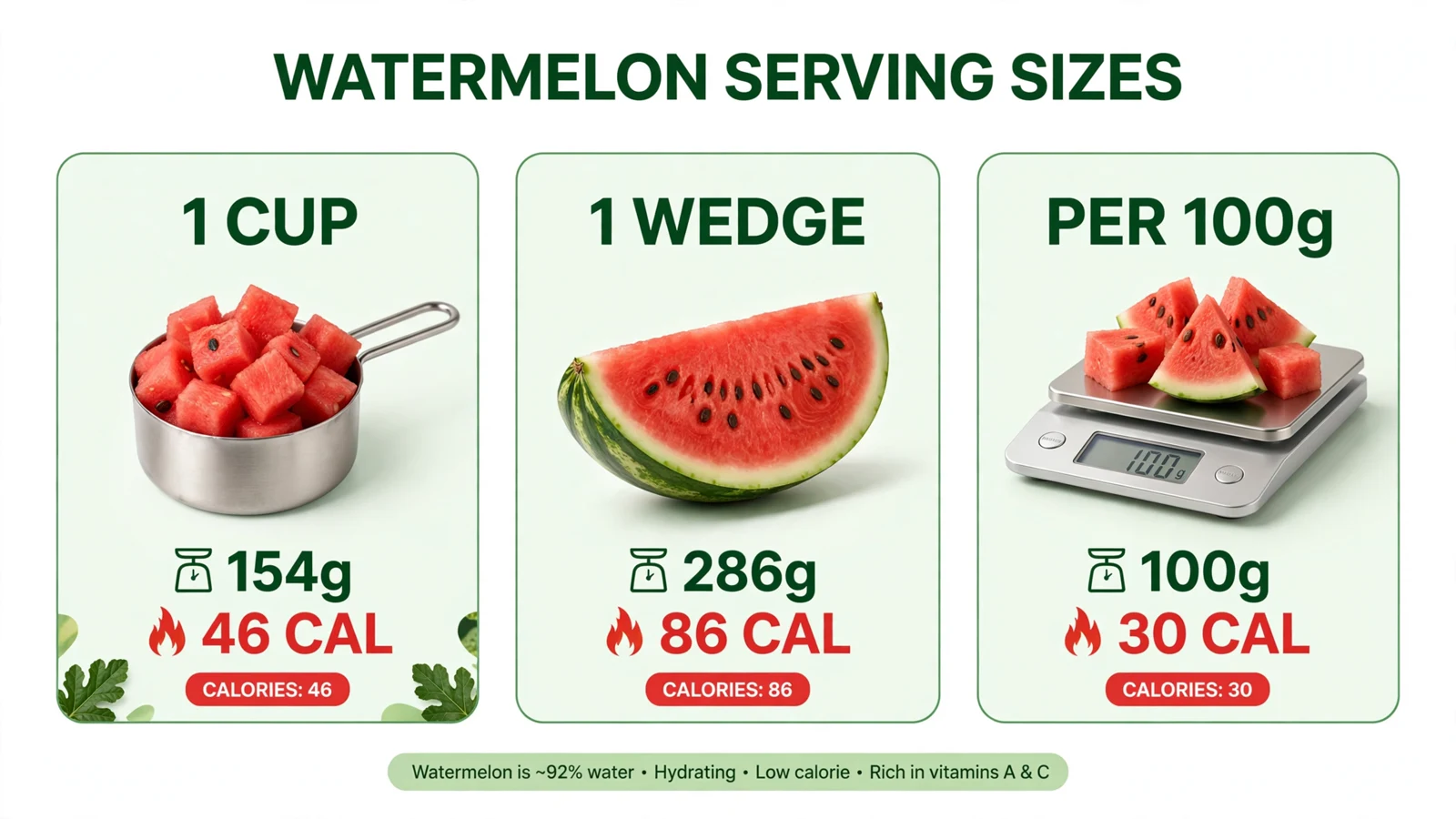
A standard 1-cup serving of diced watermelon (154 g) has 46 calories. Scooped into balls instead of cubes? The weight is the same, so a cup of watermelon balls also has 46 calories. If you eat it the classic summer way, off the rind, one wedge (1/16 of a whole melon, about 286 g) gives you roughly 86 calories. And if you weigh your food, 100 grams of watermelon works out to exactly 30 calories, which makes the math easy.
| Serving | Weight | Calories |
|---|---|---|
| 1 cup diced | 154 g | 46 |
| 1 cup watermelon balls | 154 g | 46 |
| 1 wedge (1/16 of a melon) | 286 g | 86 |
| 100 grams | 100 g | 30 |
Keep in mind that the calories in watermelon barely change between seeded and seedless varieties, so pick whichever you prefer. The seeds themselves add almost nothing unless you eat them by the handful, and even then the difference is tiny. What matters far more is the serving size you scoop, not the variety you buy.
What Are the Nutrition Facts for Watermelon?
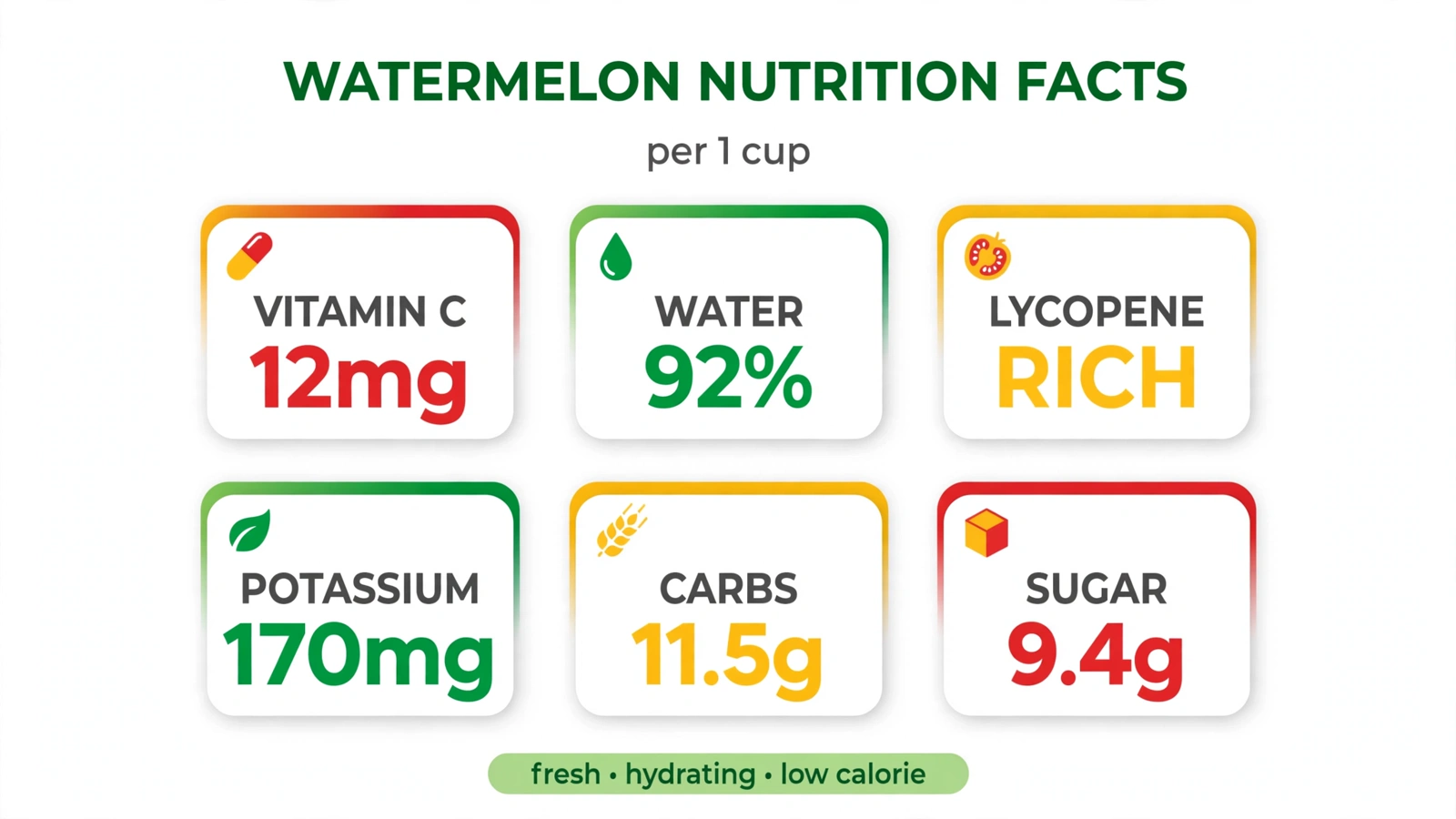
The calories in watermelon tell only half the story. What makes this fruit special is how much nutrition rides along with those 46 calories. One cup of diced watermelon delivers about 11.5 grams of carbohydrates, 9.4 grams of natural sugar, 12 milligrams of vitamin C (around 13 percent of your daily needs), and roughly 170 milligrams of potassium. It is also about 92 percent water, which explains why a cup of watermelon feels so much more filling than its calorie count suggests.
Then there is lycopene. That deep red color is a sign of this powerful antioxidant, and watermelon contains more lycopene per serving than raw tomatoes. Researchers link lycopene to heart health and healthy blood pressure, so you are getting genuine functional benefits here, not just sweet water. A little vitamin A from beta-carotene rounds out the package, supporting healthy skin and eyes.
Is Watermelon Good for Weight Loss?
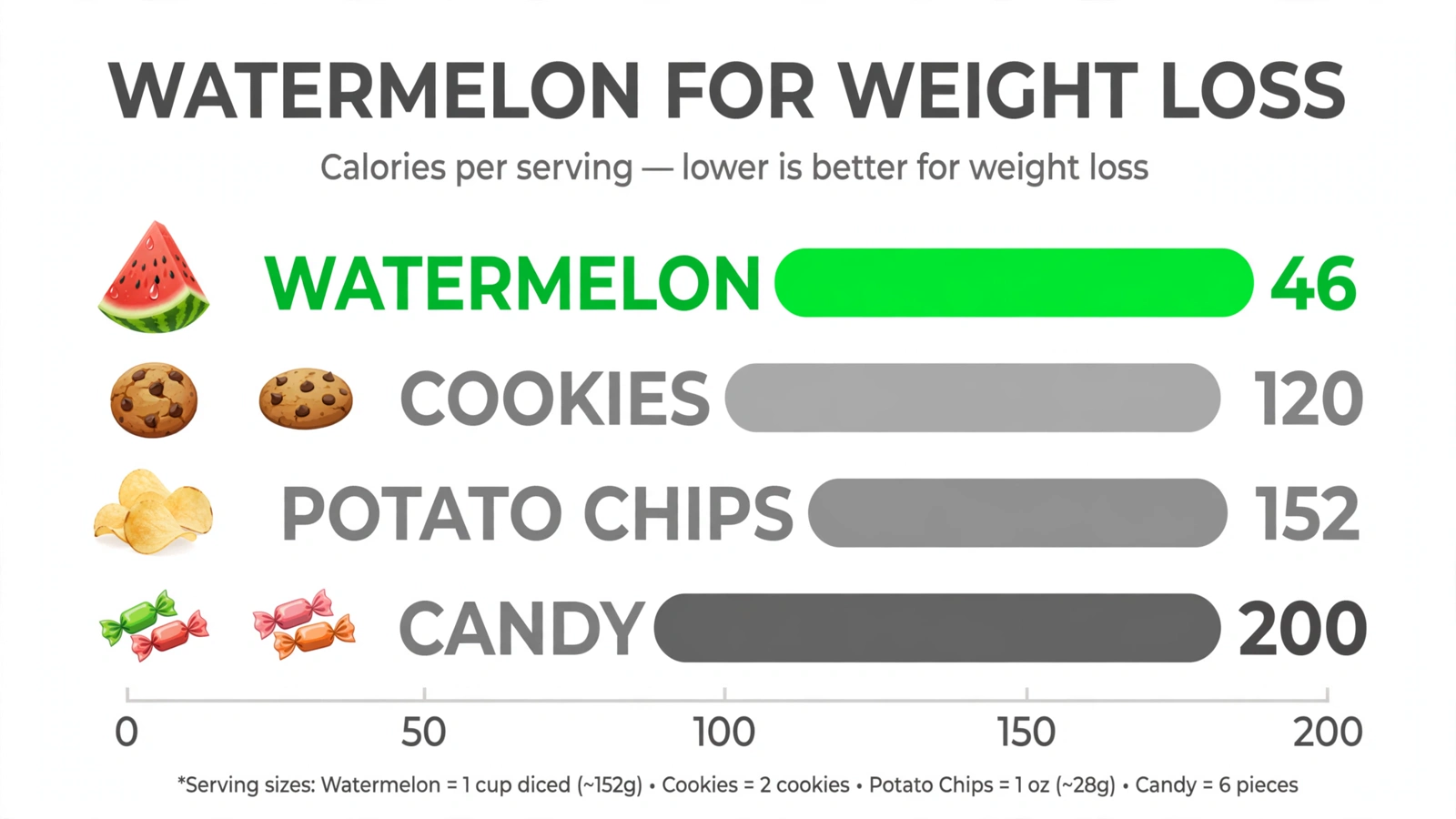
Yes, watermelon is one of the best fruits you can eat for weight loss. The low calories in watermelon combine with its high water content to create what nutrition researchers call low energy density: a lot of food volume for very few calories. Foods like this help you feel full while naturally eating less, which is the whole game when you are trying to lose weight.
A simple swap makes the point clear. Replace your usual 3 p.m. cookie (around 120 calories) with a cup of watermelon (46 calories) and you save 74 calories a day without feeling deprived. Keep that one habit for a month and you have cut more than 2,200 calories, close to two-thirds of a pound of body fat, from a single tiny change. Once you know the calories in watermelon by heart, portioning it becomes second nature. Few diet tweaks are this painless.
To see exactly where watermelon fits in your own plan, use our free calorie calculator to find your personal daily target. Once you know your number, budgeting 46 calories for a refreshing cup of watermelon becomes the easiest decision of your day.
How Do Watermelon Calories Compare to Other Fruits?
Put the calories in watermelon next to other popular fruits and the difference is striking. Only strawberries come close among everyday fruits, while bananas and grapes carry more than double the calories per serving:
| Fruit | Typical serving | Calories |
|---|---|---|
| Watermelon | 1 cup diced (154 g) | 46 |
| Strawberries | 1 cup (152 g) | 49 |
| Orange | 1 cup sections (180 g) | 85 |
| Apple | 1 medium (182 g) | 95 |
| Grapes | 1 cup (151 g) | 104 |
| Banana | 1 medium (118 g) | 105 |
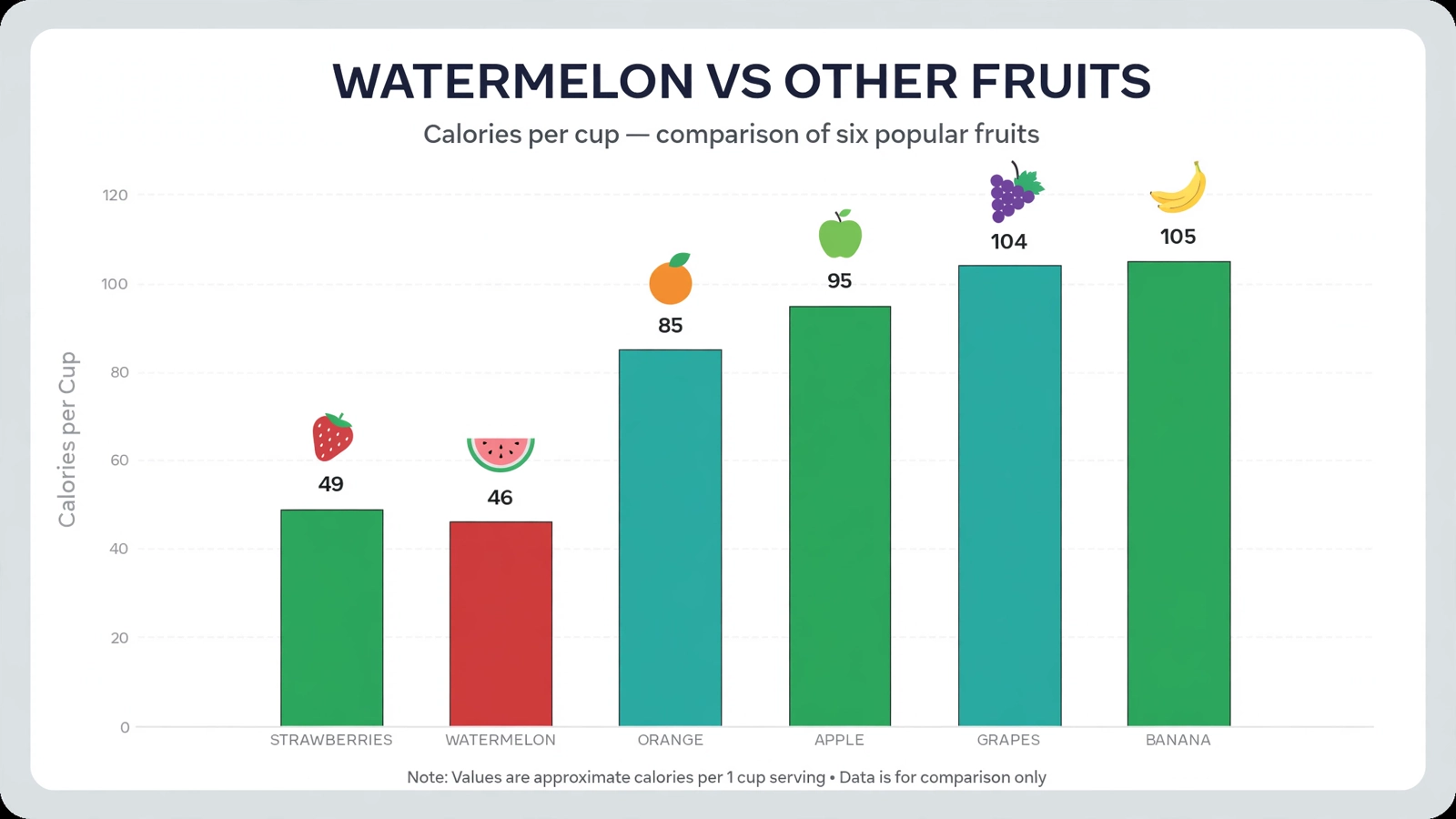
Swapping a banana for a cup of watermelon saves you nearly 60 calories while giving you a bigger, juicier portion to enjoy. That volume advantage is exactly why watermelon beats denser fruits for anyone watching their intake. When your snack looks generous on the plate, sticking to your calorie budget stops feeling like a sacrifice.
Does Watermelon Have a Lot of Sugar?
If the calories in watermelon are so low, why does it taste so sweet? A cup contains about 9.4 grams of natural sugar, which is moderate for fruit and far less than the 23 grams in a cup of grapes or the 14 grams in a medium banana. Your taste buds notice the sweetness because watermelon has very little fat, protein, or fiber to mask it, not because it is loaded with sugar.
One honest caveat: watermelon has a high glycemic index (around 72), which means its carbohydrates digest quickly. But glycemic index is only half the picture. The glycemic load, which accounts for the actual carbs in a serving, is about 5 per cup, and anything under 10 counts as low. For most people this is a non-issue. If you manage diabetes, enjoy watermelon in 1-cup portions, ideally with some protein or healthy fat, and check with your doctor about what fits your plan.
How Much Watermelon Can I Eat in a Day?
For most healthy adults, 1 to 2 cups of watermelon a day is a sensible amount. That is only 46 to 92 calories, a tiny slice of a typical 2,000-calorie diet. Wondering how the calories in watermelon fit your personal budget? It helps to know your numbers first: check your BMI to see where you stand, then calculate your BMR with the Harris-Benedict formula to learn exactly how many calories your body burns at rest.
Could you eat more? Probably, but there is a practical ceiling. Watermelon’s sugar and water content can cause bloating or send you running to the bathroom if you overdo it, especially past 3 or 4 cups in one sitting. Athletes sometimes eat larger amounts after workouts for hydration and citrulline, an amino acid in watermelon that may ease muscle soreness. For everyday snacking, though, a cup or two hits the sweet spot.
Frequently Asked Questions
How many calories are in a whole watermelon?
A medium whole watermelon (about 20 pounds) yields 10 to 11 cups of edible flesh, so the total calories in watermelon that size come to roughly 460 to 500. That is less than two candy bars for an entire melon.
Does watermelon juice have more calories than fresh watermelon?
Fresh-pressed juice with no added sugar has about the same calories per cup as diced watermelon, roughly 46 to 50. Store-bought juice often contains added sugar that pushes the count higher, so always read the label before you buy.
Is watermelon keto-friendly?
Not for a strict keto diet. At 11.5 grams of carbs per cup, watermelon does not fit a plan that caps daily carbs at 20 to 30 grams. A small half-cup serving can work on a more relaxed low-carb approach.
Does watermelon raise blood sugar?
It can raise blood sugar because of its high glycemic index, but the effect stays mild thanks to a low glycemic load of about 5 per cup. Pairing it with protein or fat slows absorption even more.
Can I eat watermelon at night while dieting?
Yes. The calories in watermelon do not change after dark, and a 46-calorie cup is one of the lightest evening snacks available. Just avoid the trap of eating half a melon in one sitting.
How many calories are in watermelon rind?
The pale rind is edible and very light, about 30 calories per 100 grams, similar to the flesh. Most people pickle it or blend it into smoothies instead of eating it raw.
Conclusion
To sum it up, the calories in watermelon are refreshingly low at 46 per cup, 30 per 100 grams, and 86 per wedge, with every figure backed by USDA FoodData Central data. For that small calorie price you get vitamin C, potassium, lycopene, and a serious hydration boost, a combination most snacks cannot touch.
Make watermelon a staple in your diet and keep portions sensible, about one to two cups a day for most people. The NIH guide to sensible food portions is a helpful refresher on serving sizes, and pairing smart portions with a daily calorie target keeps your whole eating plan on track.