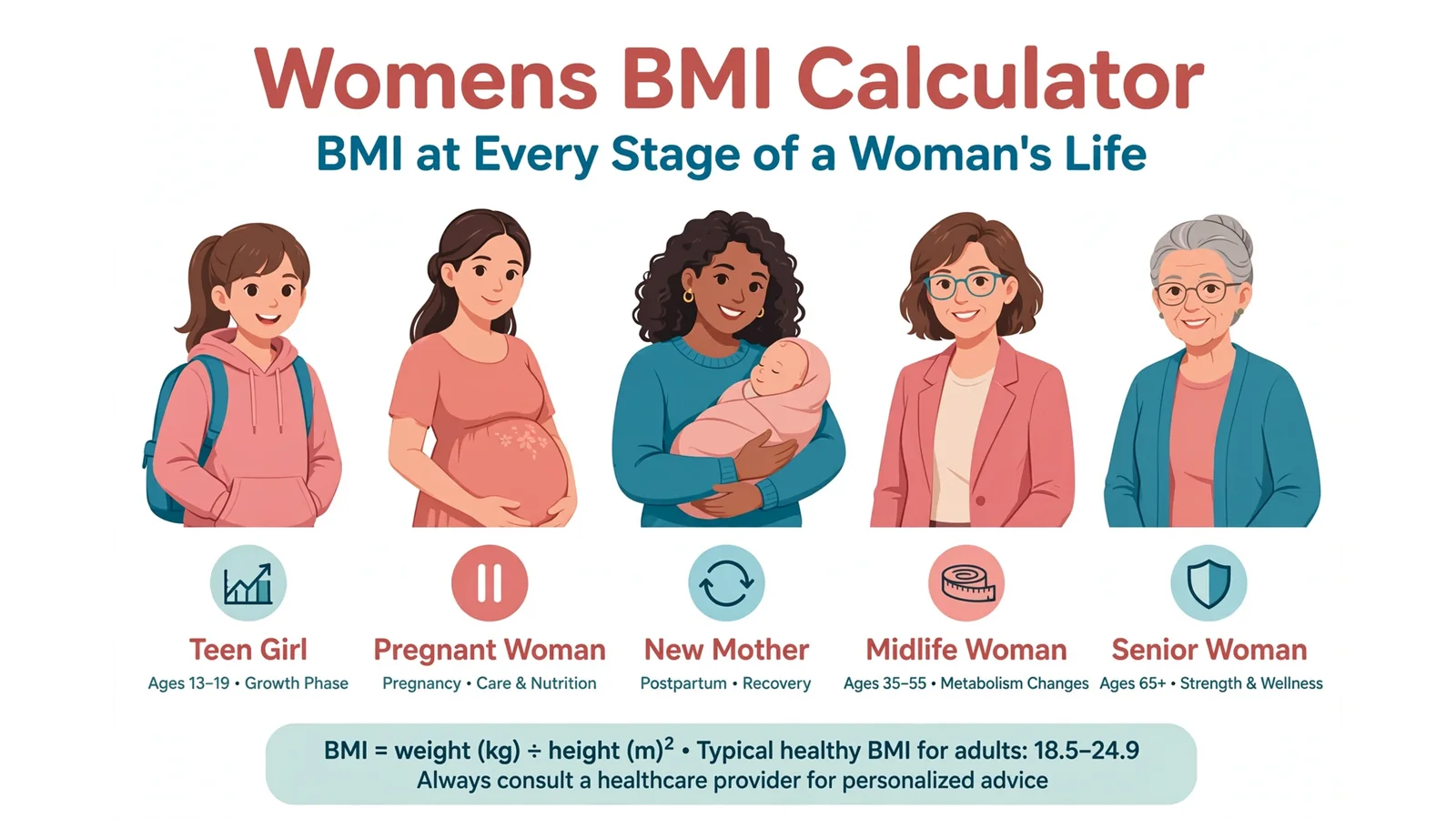
A womens BMI calculator returns the same kind of number at 16 and at 60, but that number means very different things at each stage of a woman’s life. In the teens it follows growth charts, in pregnancy it steps aside for gain guidelines, and after menopause it needs waist size and muscle mass beside it.
This guide follows BMI through puberty, pregnancy, postpartum, perimenopause, and older age: when a womens BMI calculator fits, when it should step back, and which companion measures fill the gaps.
What Is a Womens BMI Calculator?
A womens BMI calculator is an online tool that estimates body fat from height and weight for female users across all ages. While the formula never changes, its interpretation does: for girls under 20 it uses growth percentiles, for pregnant women it is set aside, and for older women it works best paired with waist and muscle measures.
A woman might check her BMI at 25 for a fitness baseline, pause it at 32 during pregnancy, return at 35 postpartum with new expectations, and read it differently at 55 after menopause. The calculator stays the same. She does not.
How Does BMI Work During Puberty and the Teen Years?
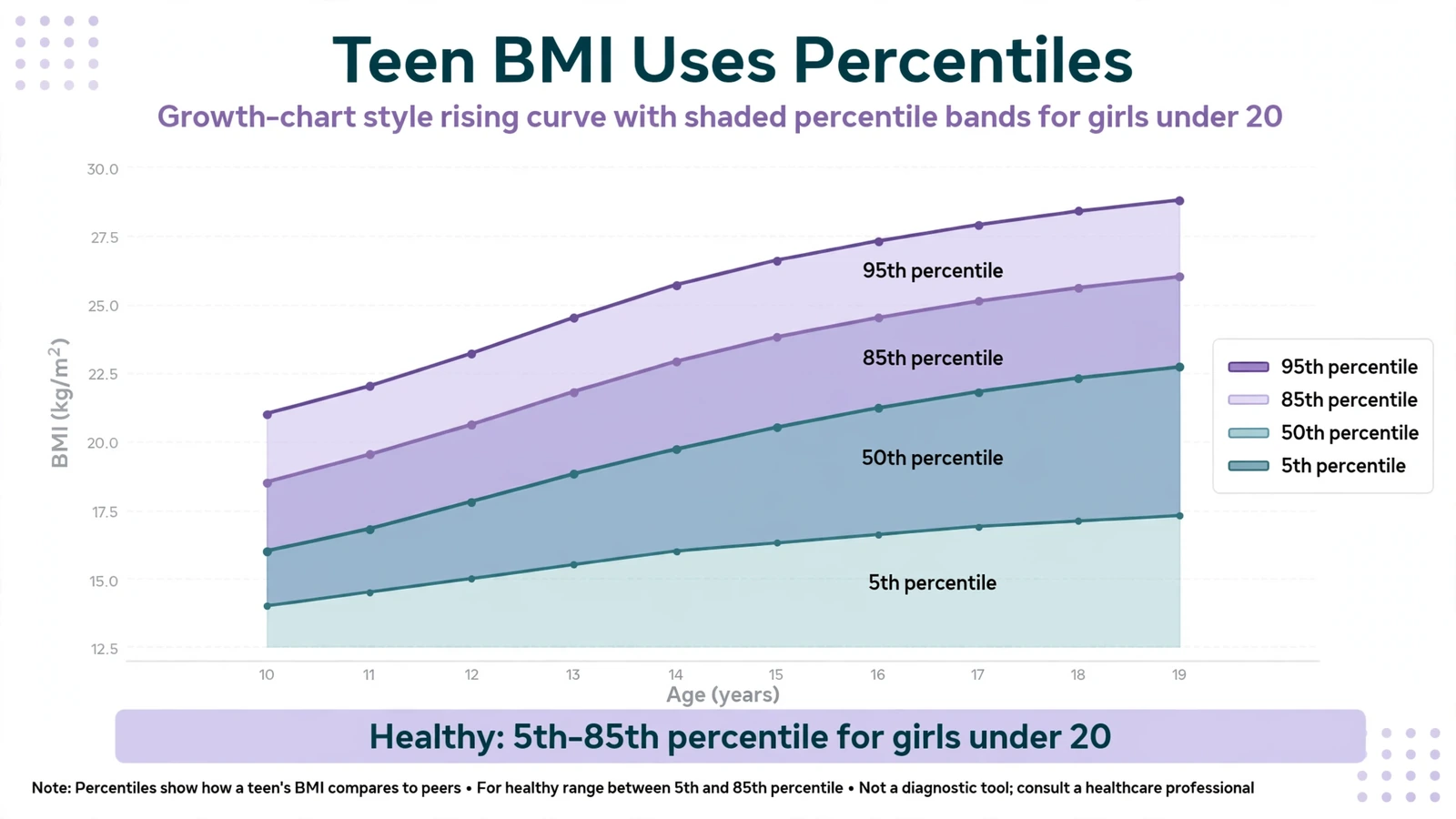
Under 20, BMI is never read against adult categories. A girl’s BMI is plotted as a percentile against girls her age, since bodies grow at wildly different rates in puberty.
The 5th to 85th percentiles count as healthy weight for teens, 85th to 95th signals overweight, and 95th or above signals obesity. The bands shift with age, so a 13-year-old and a 17-year-old with the same BMI can land in different categories.
Puberty adds natural, necessary body fat, especially around hips and thighs. For teens, always use the BMI-for-age version of a womens BMI calculator, and take any weight concern to a pediatrician, not a home diet plan. Growth spurts also make single readings unreliable: a girl can read “overweight” just before a height spurt and average three months later.
Should I Use a Womens BMI Calculator During Pregnancy?
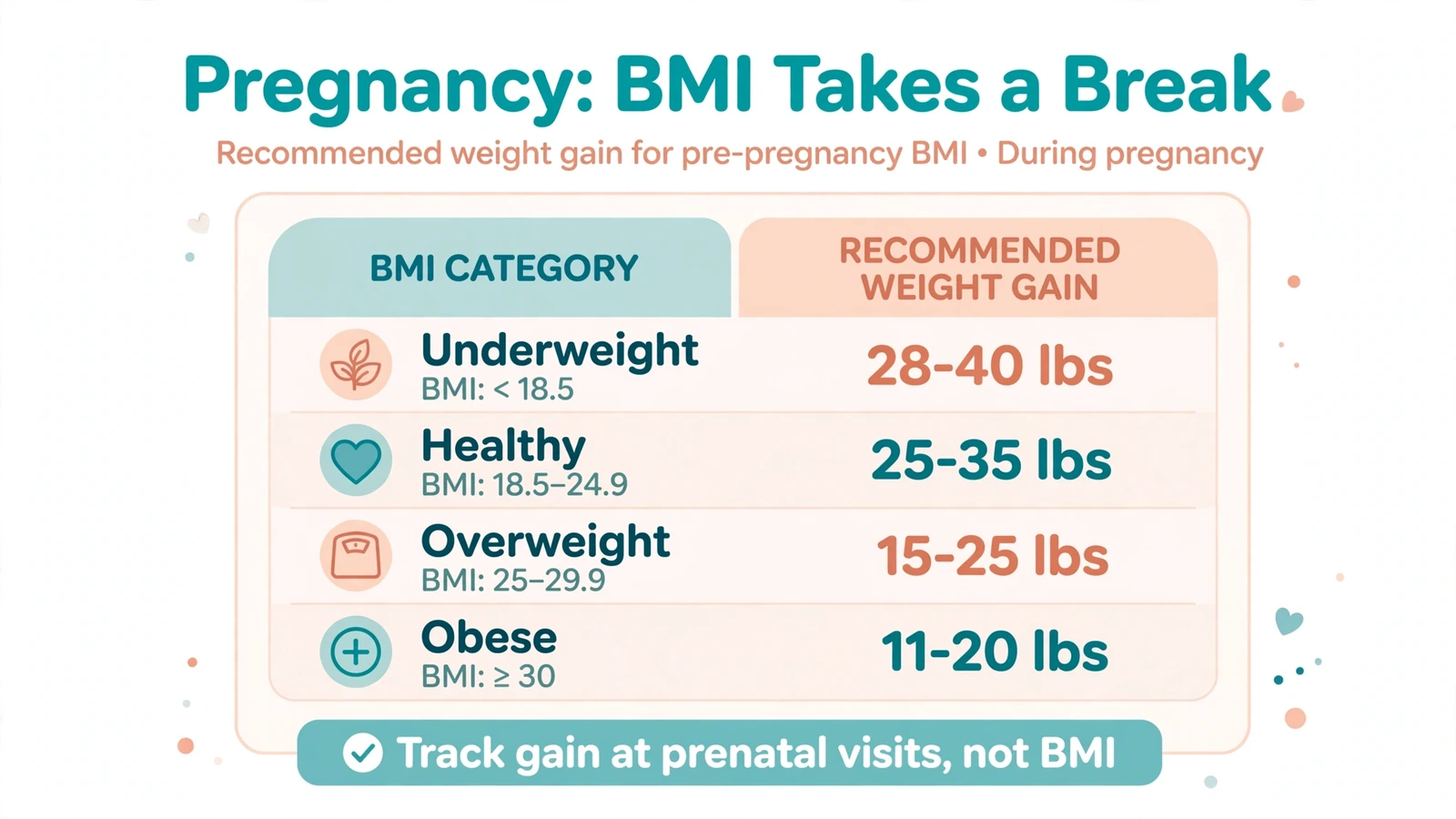
No. This is the one life stage where BMI takes a complete break. Weight gain is expected and healthy, and one number cannot separate the baby, placenta, amniotic fluid, extra blood volume, and maternal fat.
Instead, doctors use pre-pregnancy BMI to set a weight gain target:
| Pre-Pregnancy BMI | Category | Recommended Total Gain |
|---|---|---|
| Below 18.5 | Underweight | 28 to 40 lbs (12.5 to 18 kg) |
| 18.5 to 24.9 | Healthy weight | 25 to 35 lbs (11.5 to 16 kg) |
| 25.0 to 29.9 | Overweight | 15 to 25 lbs (7 to 11.5 kg) |
| 30.0 and above | Obese | 11 to 20 lbs (5 to 9 kg) |
The logic: the higher your starting BMI, the less extra weight is recommended. Twin pregnancies have their own higher ranges.
If you are pregnant, set the womens BMI calculator aside, track gain at prenatal visits, and return to BMI after weight stabilizes.
What Happens to BMI After Giving Birth?
Postpartum is a transition, not a deadline. Retaining pregnancy weight for months is physiologically normal while hormones recalibrate.
Breastfeeding burns roughly 300 to 500 extra calories a day, aiding gradual loss, but it is not a method to force. Crash dieting while nursing can cut milk supply and drain needed energy. Wait until your six-week checkup before intentional weight loss, then cap it at about a pound a week.
A realistic timeline: noticeable change by three months, steady progress through six to nine, a stable baseline around one year. If BMI has not neared its pre-pregnancy range by twelve months, talk to your doctor, since postpartum thyroid shifts are common and easily tested.
When you return to a womens BMI calculator postpartum, compare against your pre-pregnancy number, not someone else’s timeline.
How Do Perimenopause and Menopause Change BMI?
Perimenopause often brings a frustrating mystery: the scale creeps up though nothing about eating or exercise changed.
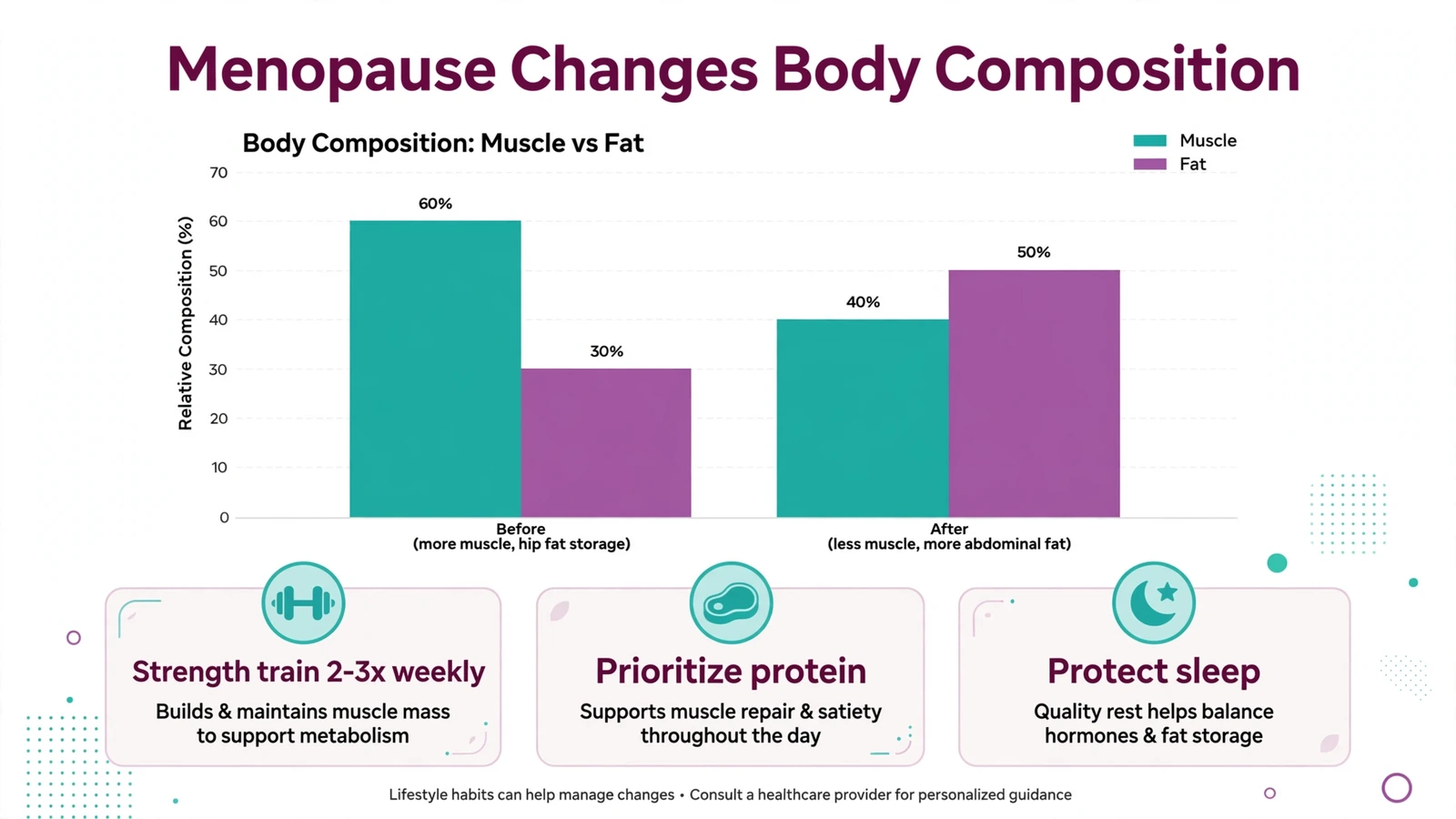
The driver is hormonal. As estrogen falls, fat storage shifts from hips and thighs to the abdomen, and visceral fat rises. Meanwhile muscle declines roughly 3 to 8 percent per decade after 30 without strength training, slowing resting metabolism, so the same meals maintain a slightly higher weight.
Two women can share a BMI of 27 while the postmenopausal one carries more visceral fat and less muscle. Same number, different health picture. This is where BMI most needs companions: a waist measurement catches the abdominal shift, and tracking strength catches the muscle story.
The answer is adjustment, not despair. Strength train two to three times a week, prioritize protein more than you did at 30, and protect sleep, since poor sleep drives hunger hormones.
What Does BMI Mean for Women Over 60?
In older age the ideal may surprise you. Geriatric research repeatedly finds BMIs of 25 to 27 linked with lower mortality after 65 than the low end of the “healthy” range, a pattern called the obesity paradox of aging.
The likely reason is reserve: a little extra weight buffers against illness, frailty, and fractures. Preserving muscle and bone matters far more than hitting 22; strength, balance, and mobility predict independence in a way BMI never will.
That does not make 35 fine after 60; higher BMIs still raise risks for joints, diabetes, and heart disease. But a BMI of 26 with daily walks and light weights beats a BMI of 21 with a sedentary, muscle-losing lifestyle. Over 60, set your personal target with your doctor rather than chasing the chart.
Is Waist Size a Better Measure Than BMI for Women?
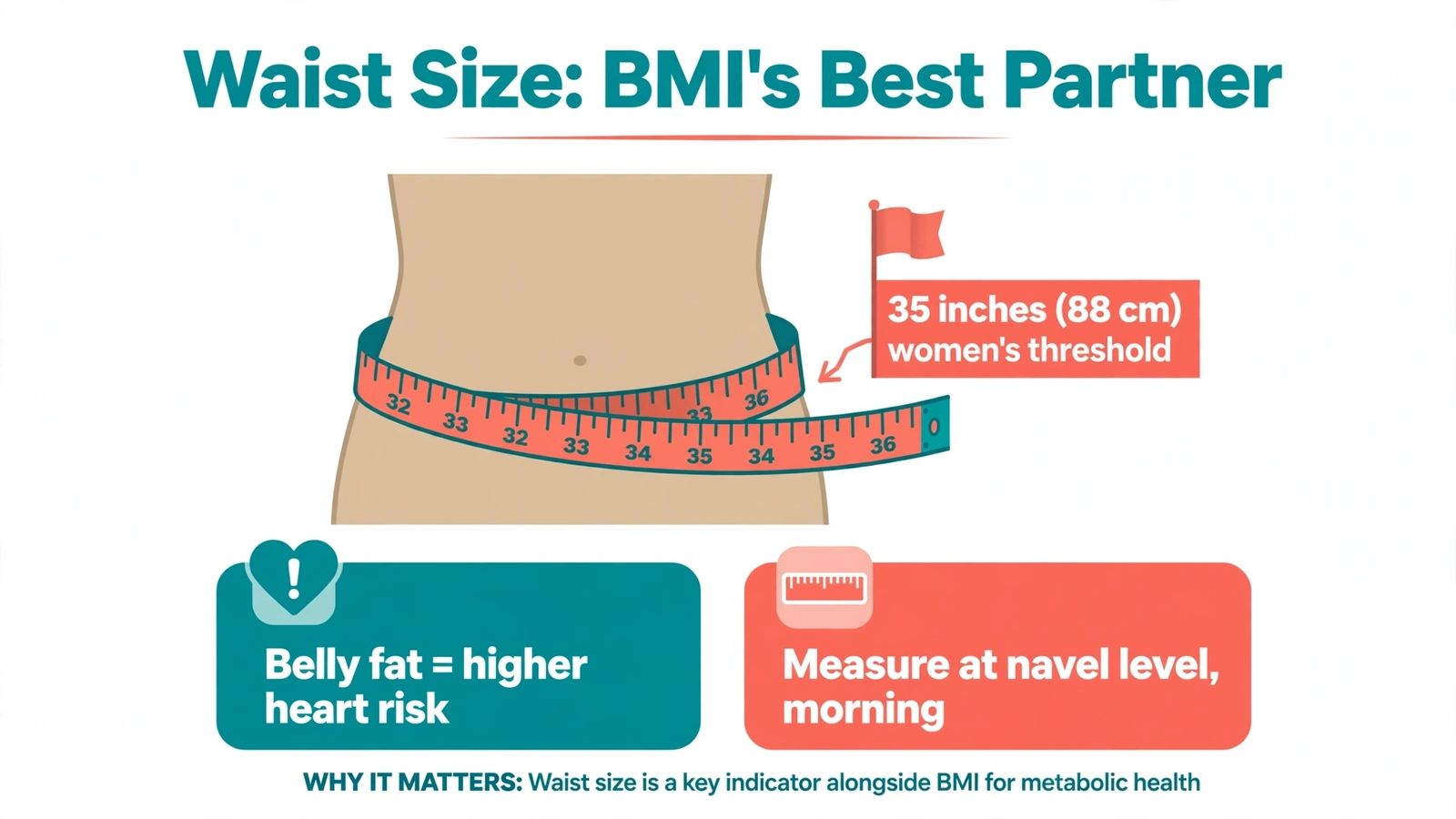
For many women, especially from midlife on, waist circumference is BMI’s most useful partner. It captures abdominal fat directly, which links more strongly to heart disease, type 2 diabetes, and metabolic syndrome than total body fat does.
The threshold for women is 35 inches (88 cm); above it, risks rise whatever BMI says. This creates “normal BMI, high waist,” where BMI looks fine but visceral fat is elevated. Without the tape, she would never know.
Measure in the morning: stand relaxed, find the midpoint between your lowest rib and hip bone, wrap the tape around your bare abdomen, and breathe out before reading.
The best lifelong approach is layered: BMI for the big picture, waist for distribution, plus attention to muscle, energy, and blood work. No single number tells the whole truth, but together they tell a story you can act on. Get your baseline with our free BMI calculator, then add a waist measurement.
Frequently Asked Questions
At what age do women switch from BMI percentiles to adult BMI?
At 20. Below that, BMI uses sex-specific growth percentiles; from 20 on, the adult categories (18.5 to 24.9 healthy) apply for life.
What is a healthy BMI for a pregnant woman?
There is no BMI target during pregnancy. Your pre-pregnancy BMI sets your recommended gain: 25 to 35 pounds from a healthy start, less if higher, more if lower. Your doctor tracks it at each visit.
Why did my BMI go up after menopause if I eat the same?
Falling estrogen shifts fat to the abdomen and speeds muscle loss, lowering metabolism. The diet that held weight at 45 can add it at 55. Strength training and protein beat eating less.
Can my BMI be normal but my waist size too high?
Yes, more often than women realize. A healthy BMI with a waist over 35 inches suggests elevated visceral fat and real metabolic risk, which is why doctors recommend measuring both.
How long does it take for BMI to return to normal after birth?
Most see steady progress over six to nine months, stabilizing around one year. If weight stalls for months despite healthy habits, ask your doctor to check your thyroid.
Is BMI accurate for women over 65?
It is less informative than in midlife. Around 25 to 27 may link with better outcomes after 65, and muscle and bone matter more than the number. Use BMI as one input among strength, balance, mobility, and blood work.
Conclusion
A womens BMI calculator is most powerful in context: percentiles in the teens, gain guidelines in pregnancy, patience after birth, and waist size plus muscle through perimenopause and beyond. The math never changes, but you do.
Your next step depends on your stage. If you are not pregnant, check your numbers with our free BMI calculator and add a waist measurement. Planning a pregnancy or navigating menopause? Bring both numbers to your next doctor’s visit.
For reference, the National Heart, Lung, and Blood Institute’s BMI tables show the adult categories, and the CDC’s child and teen BMI calculator page explains percentiles for younger users.
1 thought on “Womens BMI Calculator: Your BMI Through Every Stage of Life”