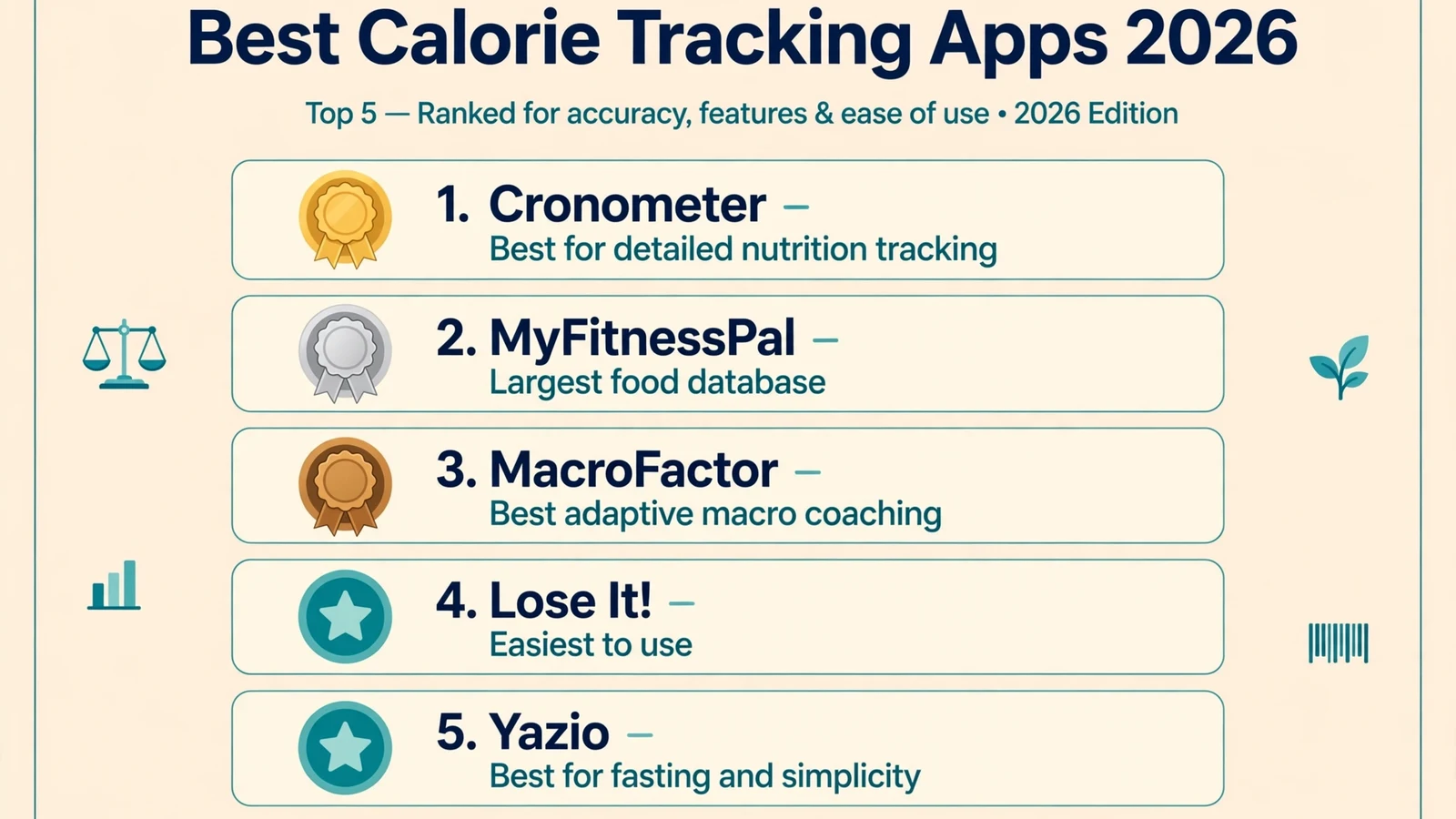
Choosing the best calorie tracking apps in 2026 comes down to one question: do you want the biggest food database, the most accurate data, or the smartest coaching? Our top pick for most people is Cronometer. Its free plan includes barcode scanning, custom macro goals, and lab-verified nutrition data, which is more than most rivals give away.
We logged real meals for weeks in the five biggest trackers: MyFitnessPal, Cronometer, Lose It!, Yazio, and MacroFactor. We compared database size, barcode scanning, macro tracking, free vs premium tiers, wearable integration, and TDEE syncing. Here is how the best calorie tracking apps of 2026 actually compare, minus the marketing fluff.
Before you download anything, run your numbers through our calorie calculator so you start with a sensible daily target.
What Is the Best Calorie Tracking App in 2026?
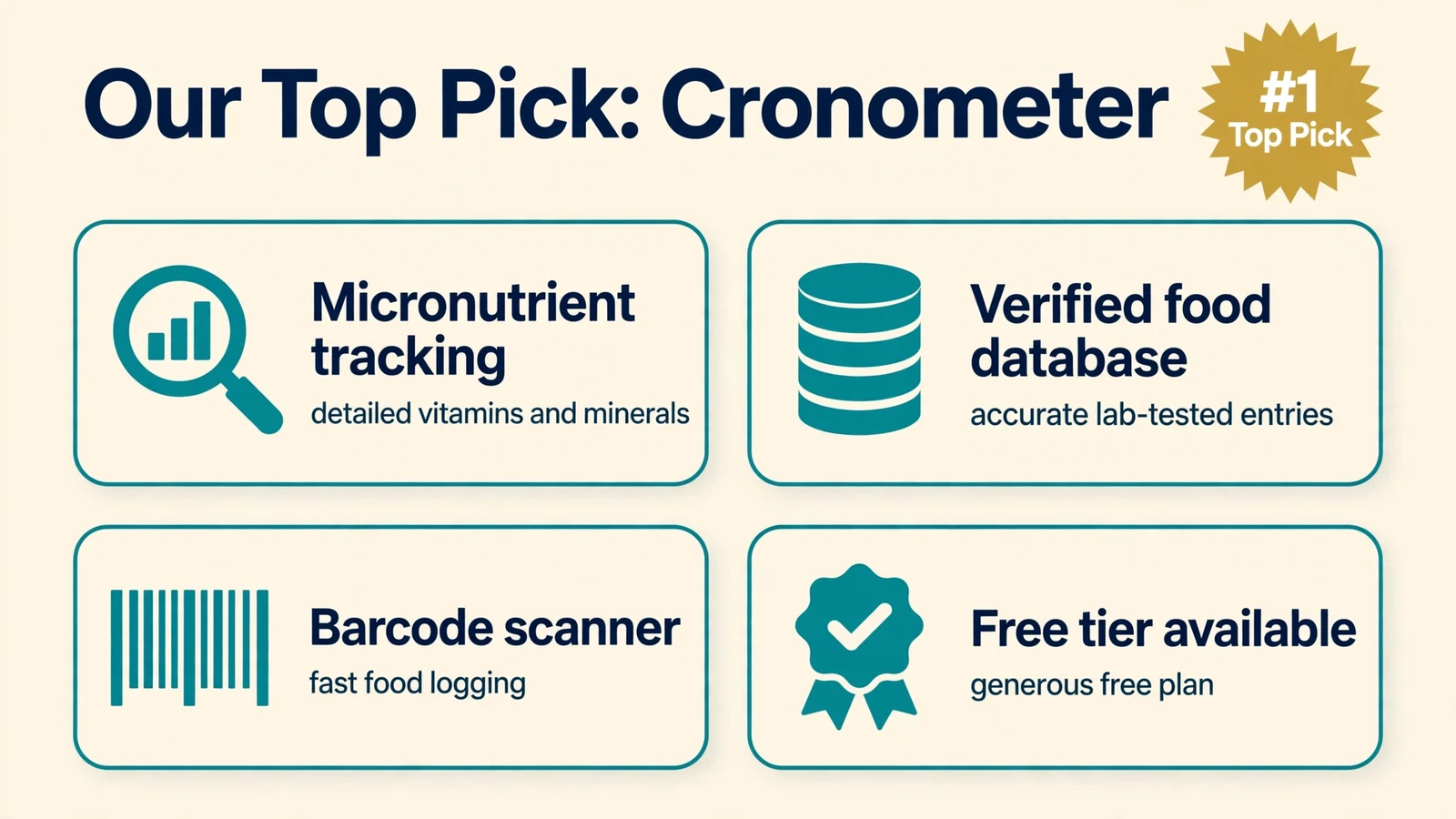
Cronometer is the best calorie tracking app for most people in 2026. Its free plan includes barcode scanning, custom macro targets, and a food database built on lab-analysed sources like the USDA and NCC databases. That mix is rare: MyFitnessPal moved barcode scanning behind a paywall, and MacroFactor has no free plan at all.
The right app still depends on how you eat. Chain-restaurant regulars will find meals faster in MyFitnessPal’s giant database, and lifters will get more from MacroFactor’s weekly adaptive check-ins. Quick comparison:
| App | Best for | Free plan | Premium (US, per year) | Food database |
|---|---|---|---|---|
| Cronometer | Most people | Yes, generous | Gold ~$60 | Curated, verified entries |
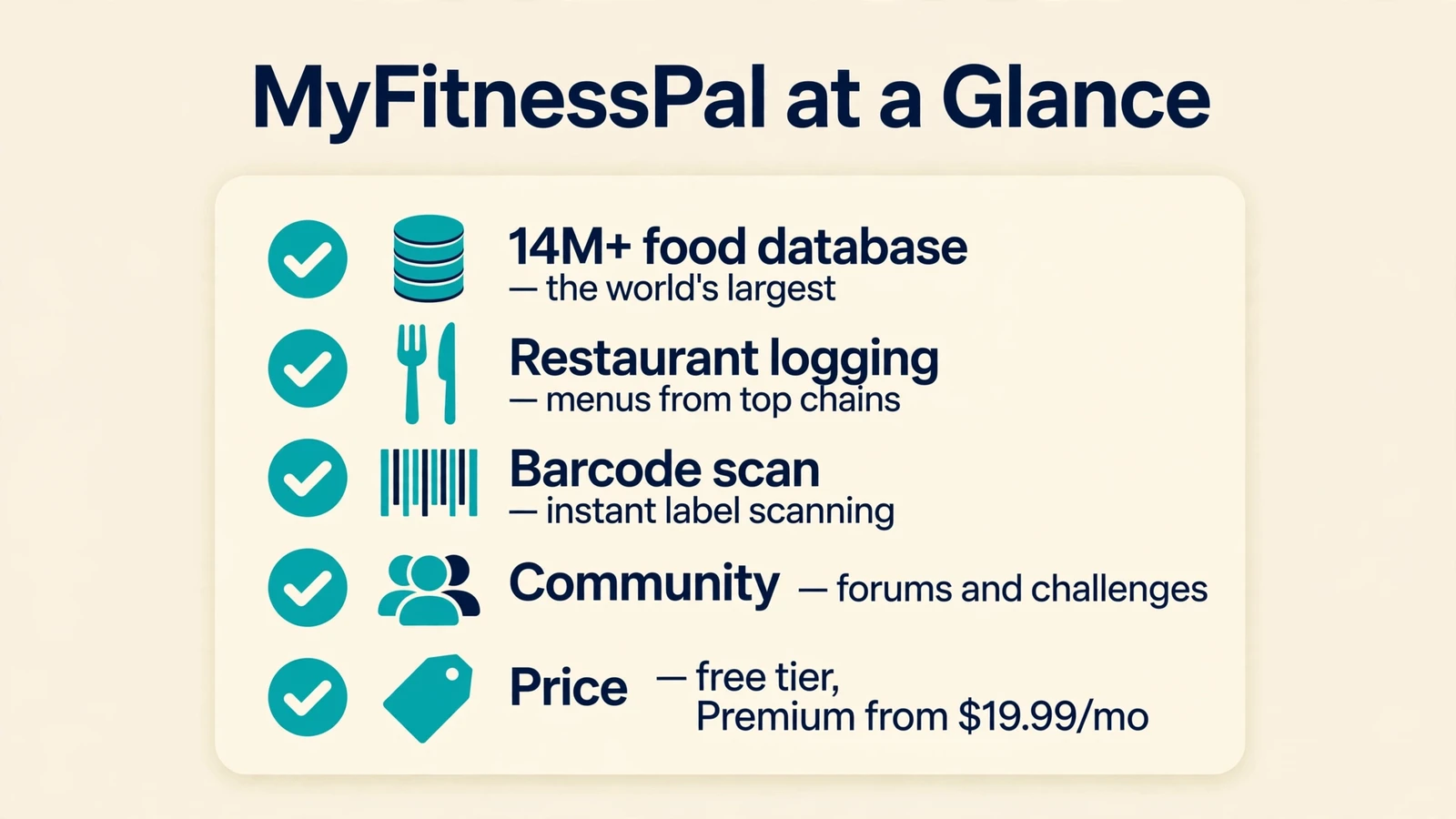
| MyFitnessPal | Packaged and restaurant food | Yes, with ads | $79.99 | 20M+ entries |
| MacroFactor | Adaptive macro coaching | 7-day trial only | $71.99 | 1.36M verified entries |
| Lose It! | Simple weight-loss diary | Yes | ~$80 | 32M+ entries |
| Yazio | Fasting and recipes | Yes, with ads | ~$48 | Smaller, EU-focused |
Prices are US list prices at the time of writing, so check the checkout screen before subscribing.
How We Compared the Top Calorie Counter Apps
We scored each app on five things: database size and whether entries are verified or user-submitted, logging speed, what the free plan keeps, macro and micronutrient depth, and wearable integration with TDEE syncing. We also used published test data. A 2026 independent study logged the same 180 weighed meals in six trackers and found real gaps: MacroFactor averaged 4.8% calorie error, Cronometer 6.8%, Lose It! 9.4%, and MyFitnessPal 11.2%. Those numbers shape how we rank the best calorie tracking apps below.
Free vs Premium: What You Actually Lose
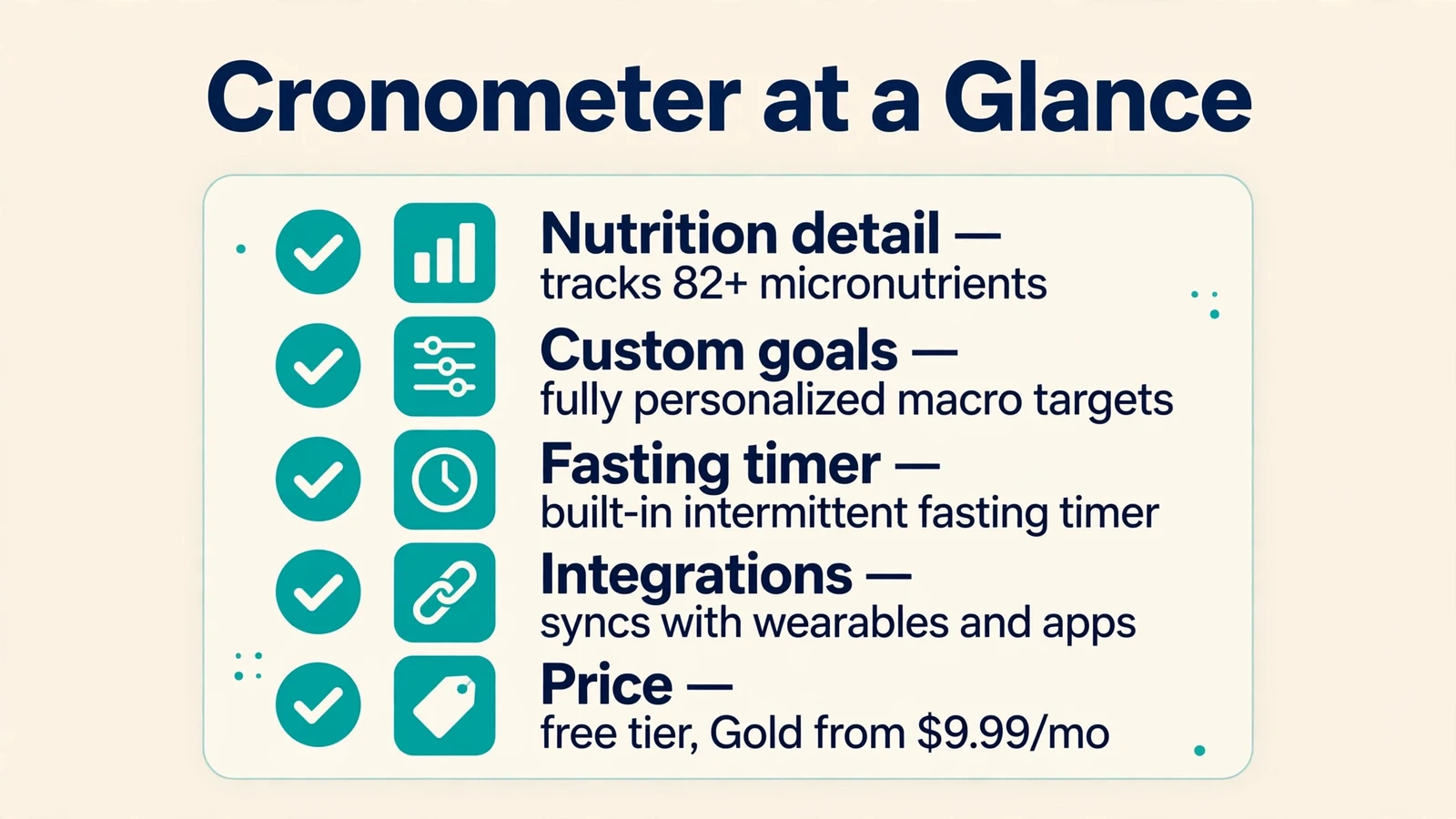
Cronometer’s free tier is the most generous: barcode scanning, custom macros, and 80+ nutrients cost nothing. Yazio’s free plan covers logging and its fasting timer, but analytics sit behind Pro. MyFitnessPal’s free tier shows ads and locks barcode scanning, voice logging, and meal scanning behind Premium at $79.99 a year. Lose It! reserves photo and voice logging for Premium too. MacroFactor offers only a 7-day trial before its $71.99 yearly plan. Rule of thumb: if an app gates the barcode scanner, the free version will slow you down every day.
Wearable Integration and TDEE Syncing
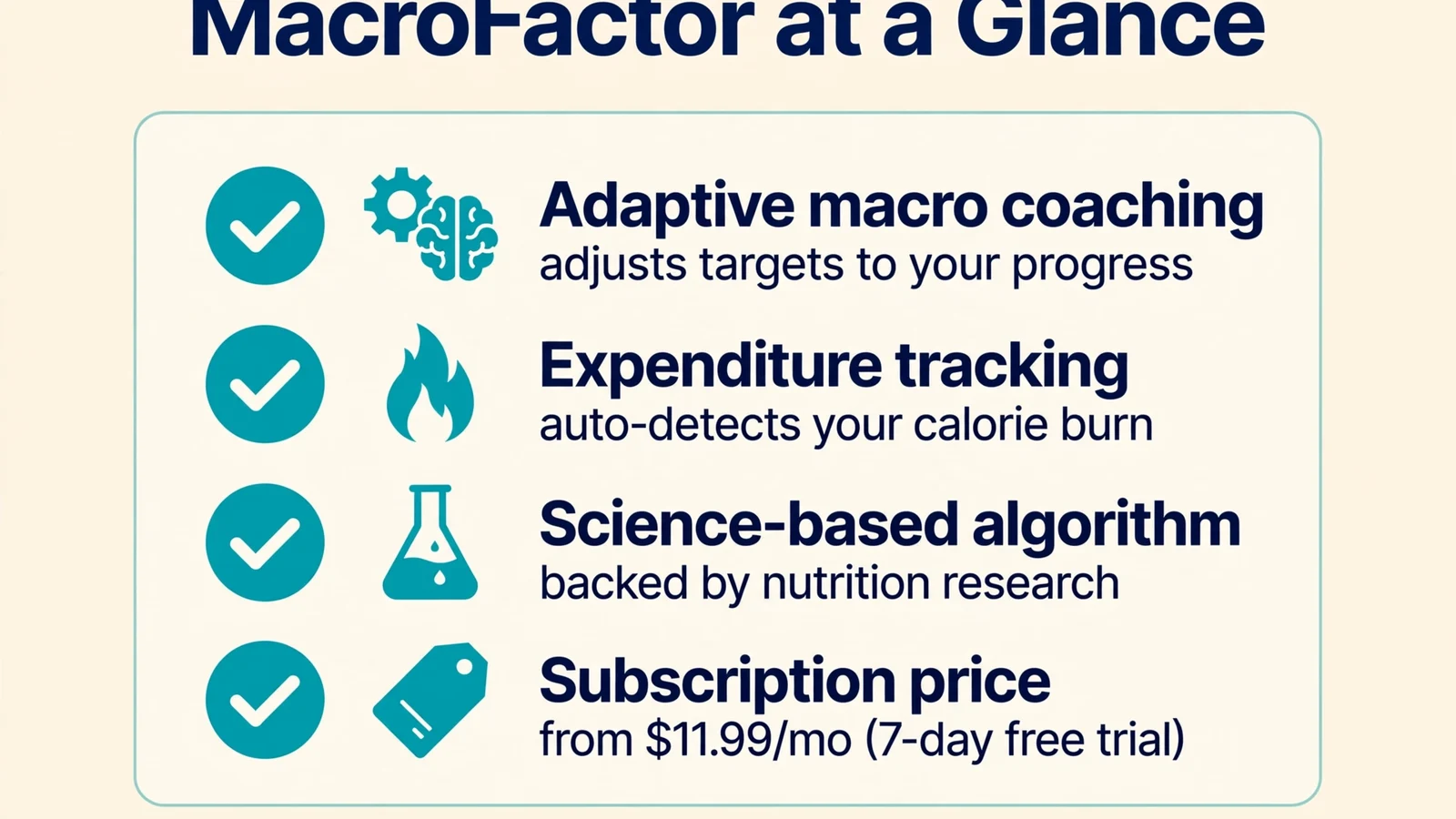
All five sync with Apple Health and Google Fit and offer Apple Watch apps, so workouts land in your diary automatically. TDEE syncing splits them. MacroFactor estimates your real expenditure from logged intake and weight trend, then adjusts calories and macros at a weekly check-in. Cronometer and MyFitnessPal simply add exercise calories back to your budget. Yazio and Lose It! adjust for activity but never adapt your targets. If your weight stalls, MacroFactor’s approach is genuinely different.
Cronometer: The Best Overall Calorie Tracking App
Open Cronometer and the first thing you notice is restraint. The diary is a clean timeline, and searching a food returns one verified entry instead of forty user-submitted guesses. Every entry traces back to a curated source, and the app tracks more than 80 nutrients, from magnesium to omega-3s. Barcode scanning just works, even free.
The trade-off is breadth. Chain restaurants and packaged snacks are thinner here than in MyFitnessPal, so eating out means more custom entries. Gold, around $60 a year, adds fasting timers and deeper trends. Most people never need it, which is why Cronometer tops our best calorie tracking apps list.
MyFitnessPal: Best for Packaged and Restaurant Food
No one beats MyFitnessPal at finding an obscure snack. With 20 million-plus foods, the search bar rarely comes up empty, and restaurant coverage is the deepest here. Logging is fast once your meal history builds up.
The catch is the free plan. Barcode scanning, voice logging, and meal scanning moved to Premium ($19.99 a month or $79.99 a year), and free users see ads. The database is mostly user-submitted, so one granola bar can appear five times with five calorie counts. It also posted the widest error in independent testing, 11.2%. If you eat packaged or chain food and do not mind paying, it is still the fastest logger around.
MacroFactor: The Best Adaptive Macro Coach
MacroFactor was built for people tired of static targets. Log food and weight, and each week the app recalculates your expenditure from your actual data and nudges calories and macros. Miss protein twice and it adjusts the plan instead of scolding you. No red warnings, no streak-shaming.
The database holds 1.36 million verified foods with barcode scanning, tracking 57 nutrients. The catch: no free tier, just a 7-day trial, at $11.99 a month or $71.99 a year. It also demands consistency, since the algorithm needs complete logs. For structured cuts and bulks, nothing here adapts like it.
Lose It!: The Easiest Tracker for Simple Weight Loss
Lose It! is the friendliest on-ramp here. Onboarding takes two minutes, the diary is uncluttered, and the Snap It camera guesses meals from a photo. The shrinking daily budget bar is weirdly motivating.
Simplicity has a price. Barcode, photo, and voice logging need Premium, now around $80 a year after a 2026 increase. Macro tracking stays shallow next to Cronometer or MacroFactor. For a gentle daily routine without micronutrient deep-dives, it remains one of the best calorie tracking apps for beginners.
Yazio: The Best Pick for Intermittent Fasting Fans
Yazio is the only tracker here that treats fasting as a headline feature. The timer covers 16:8, 5:2, and custom windows right beside your calorie budget, the recipe library is strong, and Pro is the cheapest paid plan in this roundup at around $48 a year, often less on promo.
The database is smaller and Euro-focused, so American packaged foods can be hit or miss, and there is no web app. Free-tier ads are pushy. If you fast and want one app for the timer and the food log, Yazio earns its place.
Frequently Asked Questions
Which of the best calorie tracking apps is best for weight loss?
Lose It! is the gentlest start, while Cronometer gives the most trustworthy numbers for free. The deficit matters more than the app, so set your target with a free calorie calculator and follow a beginner-friendly calorie deficit meal plan.
What is the best free calorie tracking app?
Cronometer, clearly. Barcode scanning, custom macros, and 80+ nutrients are free, features others charge for. Yazio is the runner-up if you want a fasting timer too.
Is MyFitnessPal still worth paying for in 2026?
If you eat packaged or restaurant food often, its huge database saves real time daily, and $79.99 a year is fair. Home cooks get better data free from Cronometer.
Which calorie tracking app is the most accurate?
In a 2026 test of 180 weighed meals, MacroFactor averaged 4.8% error and Cronometer 6.8%, ahead of Lose It! at 9.4% and MyFitnessPal at 11.2%. Your portion estimate still matters most: weighing beats eyeballing.
Do these apps sync with my Apple Watch or Fitbit?
Yes. All five connect to Apple Health and Google Fit with Apple Watch apps, so activity flows in automatically. MacroFactor also folds activity and weight trend into weekly target changes.
How do I set my daily calorie target before tracking?
Use a calculator that factors age, height, weight, and activity instead of an app default. Our free calorie calculator tool gives maintenance and deficit targets in under a minute, and our BMI calculator helps you pick a sensible goal weight.
Can a calorie tracking app replace a dietitian?
No. Apps build awareness and accountability but cannot diagnose deficiencies or adapt plans to medical conditions. With diabetes, disordered eating patterns, or pregnancy, see a registered dietitian first.
Conclusion
No single winner exists among the best calorie tracking apps, only the right one for your habits. Cronometer suits most people because its free plan is genuinely complete. MyFitnessPal wins on database size, MacroFactor on adaptive coaching, Lose It! on simplicity, and Yazio on fasting.
Start with numbers, not the app store. Use our tool to calculate your daily calorie needs, try Cronometer free for two weeks, and log honestly. The best calorie tracking apps only work if you open them daily, so pick the one you will actually use at dinner. For a second opinion on the accuracy figures, see this independent 2026 accuracy comparison of popular calorie trackers, and read the CDC’s guidance on healthy eating for a healthy weight before setting aggressive goals.
1 thought on “Best Calorie Tracking Apps | 5 Top Picks to Make Every Calorie Count”